This study delves into the notion of AI agentic architectures for autonomous data engineering pipelines and investigates the potential benefits of intelligent agents in enhancing automation, resilience, and decision-making processes in contemporary data ecosystems.
Harsh Verma· International journal of res...· 0 citations
A new scientific object – the Autonomous Recovery Efficiency Score (ARES) – is introduced – a quantitative measure of autonomous resilience, as well as a supporting foundation for future autonomous self-healing AI agentic infrastructure.
Harsh Verma· International Journal of Sci...· 1 citation
The speed of cloud computing and artificial intelligence, which have transformed the way software applications are designed and deployed. The cloud-based AI systems provide a scalable, adaptable, and cost-efficient solution to build intelligent systems capable of processing large amounts of data and running complicated...
Harsh Verma· World Journal of Advanced Re...· 0 citations
Reach audiences
Advertise in front of researchers, engineers, and readers.
Reliability Beyond Accuracy in Crop Classification Benchmarks (Supplementary Materials)Introduction: Near-perfect crop-label accuracy can conceal uncertainty, perturbation sensitivity, and weak explanations. This study evaluates these reliability dimensions without treating benchmark classification as agronomic recomme...
Kwan Hong TAN· Zenodo (CERN European Organi...· 0 citations
Reliability Beyond Accuracy in Crop Classification Benchmarks (Supplementary Materials)Introduction: Near-perfect crop-label accuracy can conceal uncertainty, perturbation sensitivity, and weak explanations. This study evaluates these reliability dimensions without treating benchmark classification as agronomic recomme...
Kwan Hong TAN· Zenodo (CERN European Organi...· 0 citations
This thesis investigates the complex and often contentious question of whether predictive models are epistemically superior to causal models. It challenges the simplistic dichotomy that often frames this debate, arguing that the epistemic superiority of a model is not an intrinsic property but is contingent upon the sp...
Kwan Hong TAN· Zenodo (CERN European Organi...· 0 citations
This thesis investigates the complex and often contentious question of whether predictive models are epistemically superior to causal models. It challenges the simplistic dichotomy that often frames this debate, arguing that the epistemic superiority of a model is not an intrinsic property but is contingent upon the sp...
Kwan Hong TAN· Zenodo (CERN European Organi...· 0 citations
This paper explores the complex and often contradictory relationship between hyperconnectivity and democracy. Drawing on novel theoretical frameworks inspired by quantum mechanics, network science, and temporal dynamics, we argue that the hyperconnected world is not simply an extension of the classical political landsc...
Kwan Hong TAN· Zenodo (CERN European Organi...· 0 citations
This paper explores the complex and often contradictory relationship between hyperconnectivity and democracy. Drawing on novel theoretical frameworks inspired by quantum mechanics, network science, and temporal dynamics, we argue that the hyperconnected world is not simply an extension of the classical political landsc...
Kwan Hong TAN· PhilPapers (PhilPapers Found...· 0 citations
Jennifer Neville did not want to go into computer science—but that’s exactly where she landed. Neville discusses the starts and stops that led to her professional sweet spot and her work identifying “surprising failures” making it hard for AI to handle complexity. The post What AI gets wrong and what failure teaches us appeared first on Microsoft Research.
MIT News · Artificial Intelligence· news.mit.eduOct 2, 2026
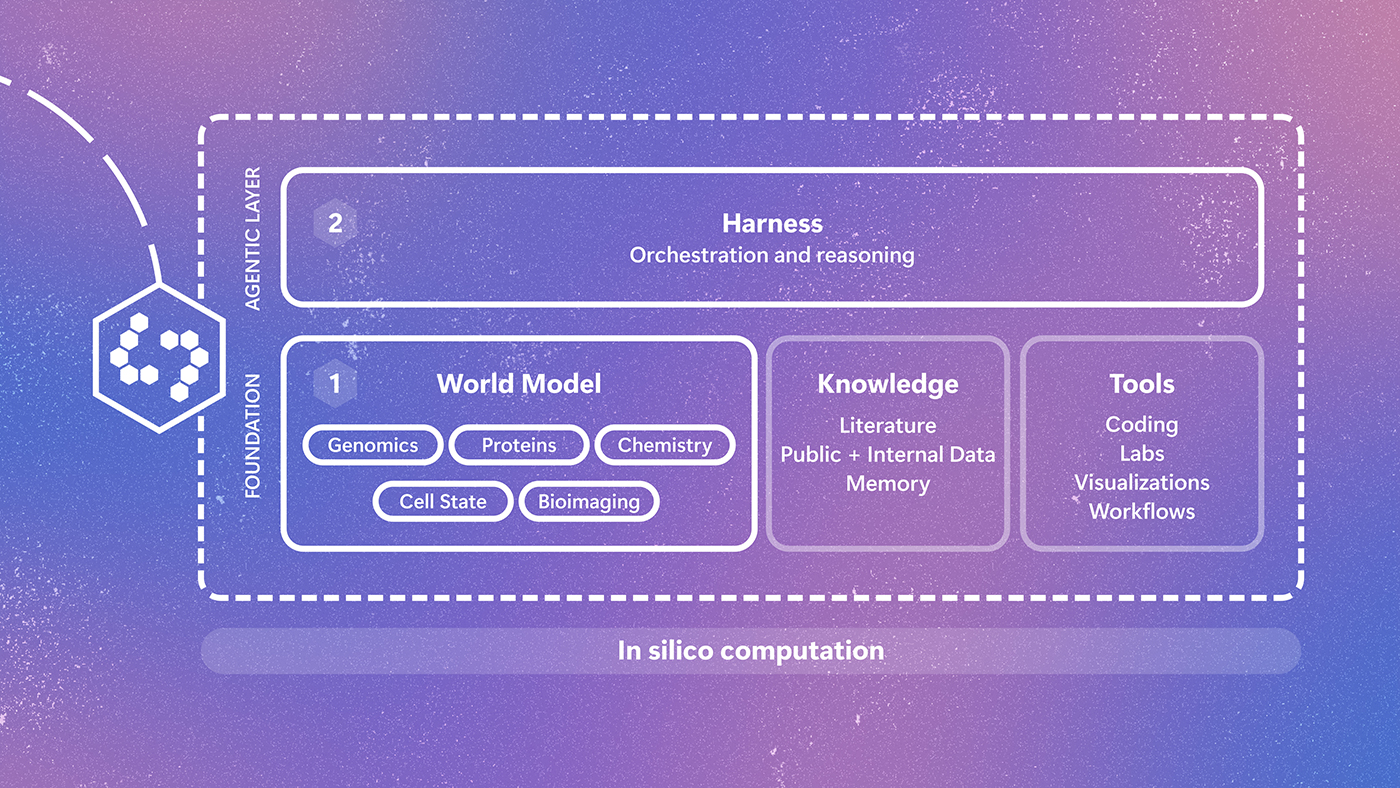
Biology doesn't operate in silos, and neither should the AI representation of it. Quine is an early-stage research effort to create a multimodal world model of biology. By connecting insights across biological scales and modalities, Quine helps scientists computationally search a space far larger than intuition allows and prioritize hypotheses before they reach the lab. Experimental results provide important feedback, helping researchers sharpen future research directions. The post Introducing Q…