A thin-slab interaction model and an interaction-driven quantum kernel constructed from entangled Pauli-string feature maps that achieves the highest mean accuracy and F1 on Credit Card Fraud Detection and ranks second on IEEE-CIS Fraud Detection.
Quantum Architecture Search (QAS) automates the design of parameterized quantum circuits for variational quantum algorithms, yet existing benchmarks organize instances by molecular identity or qubit count -- criteria agnostic to Hamiltonian structure -- and rely solely on energy accuracy, which cannot detect structural...
Jiayang Niu, Akib Karim, Yan Wang et al.· 1 citation
A5 is developed, a fluorogenic substrate for aldehyde dehydrogenase 2 (ALDH2) that exhibits high isoform selectivity and a >240-fold signal enhancement over the standard NADH assay, and enables quantitative imaging of ALDH2 activity across multiple biological scales.
Rongrong Tao, Yu Chen, Taorui Yang et al.· Journal of the American Chem...· 4 citations
This work proposes LumiCharge, a novel atomic charge prediction framework that incorporates high-order spherical harmonics convolutions and explicitly models multibody interactions, and demonstrates exceptional extrapolation capability and robustness across molecules of varying sizes, effectively overcoming the limitat...
Qun Su, Hui Zhang, Qiaolin Gou et al.· Journal of Physical Chemistr...· 2 citations
Reach audiences
Advertise in front of researchers, engineers, and readers.
PepBAN is introduced, a deep learning framework for modeling PepPI predictions that effectively learns the pattern of pairwise local interactions, enables the identification of key residues participating in the peptide-protein interactions, and offers an intuitive approach to interpret the underlying mechanisms of PepP...
Shuaiyan Li, Xiaorui Wang, Yuchen Zhu et al.· Journal of Chemical Informat...· 4 citations
This study proposes SynGFN, which models molecular design as a cascade of simulated chemical reactions, enabling the assembly of molecules from synthesizable building blocks, as a bridge linking molecular design and synthesis, accelerating exploration and producing diverse, synthesizable, high-performance molecules.
Results indicate that BF3 antagonists can synergize with the LBP antagonist to amplify conformational flexibility in H12 and induce anticorrelated dynamics of H12 with H3 and H4, suggesting a promising avenue for enhancing the efficacy and overcoming the resistance in castration-resistant prostate cancer treatment.
Xiaotian Kong, Yushan Zou, Peng Cao et al.· Journal of Chemical Informat...· 1 citation
This work introduces an advanced equivariant graph attention neural network specifically engineered to model long-range atomic electrostatic interactions with high precision, and improves the model's accuracy, generalization, and robustness in complex scenarios.
Qiaolin Gou, Qun Su, Ji-Ke Wang et al.· Journal of Chemical Informat...· 1 citation
PepPCBench enables a robust evaluation of PFNN-based methods and supports their continued development for peptide-protein structure prediction, and highlights the influence of peptide length, conformational flexibility, and training set similarity on prediction accuracy.
Si-Long Zhai, Huifeng Zhao, Ji-Ke Wang et al.· Journal of Chemical Informat...· 13 citations· ⚡1
CarsiDock-Cov is presented, a new paradigm distinguishing itself as the first deep learning (DL)-guided approach for covalent docking, offering an automated and efficient solution that shows considerable promise for accelerating covalent drug discovery and design.
Chao Shen, Hongyan Du, Xujun Zhang et al.· Acta Pharmaceutica Sinica B· 12 citations
CovalentLab is introduced, an interactive computational platform that integrates ligand-based and warhead-based strategies into a unified workflow for the rational design of covalent ligands and enables the prediction and ranking of nine classes of covalent-binding residues in proteins according to their reactivity.
Xi Xue, Xiangying Liu, Xue Liu et al.· JACS Au· 4 citations· ⚡1
The Q‐GEM comprises a GNN embedded with the molecular electronic and complete 3D geometrical structural information as well as several well‐designed multiscale SSL tasks, achieving superior absolute molecular conformation prediction and conformational discrimination.
Zhijiang Yang, Liangliang Wang, Tengxin Huang et al.· Advancement of science· 6 citations
Jennifer Neville did not want to go into computer science—but that’s exactly where she landed. Neville discusses the starts and stops that led to her professional sweet spot and her work identifying “surprising failures” making it hard for AI to handle complexity. The post What AI gets wrong and what failure teaches us appeared first on Microsoft Research.
MIT News · Artificial Intelligence· news.mit.eduOct 2, 2026
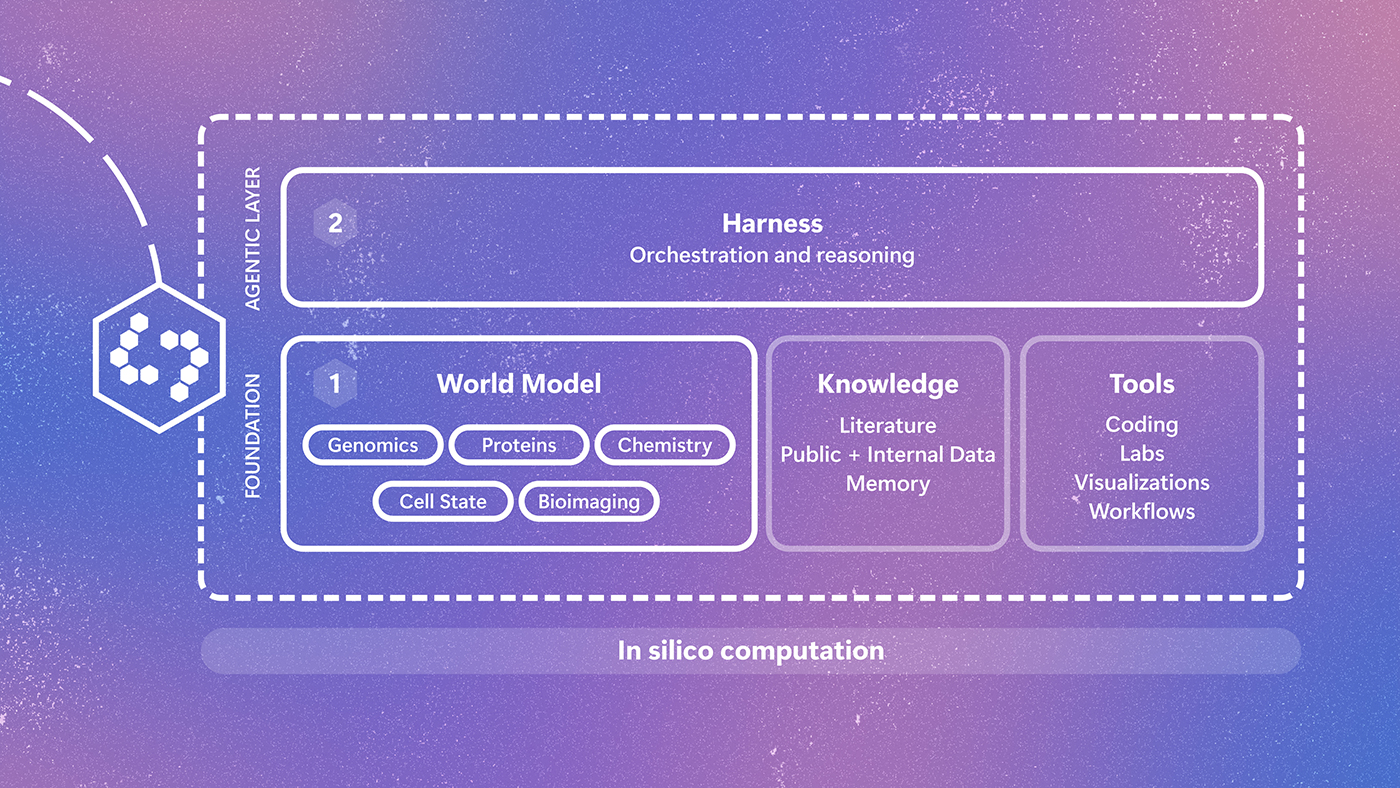
Biology doesn't operate in silos, and neither should the AI representation of it. Quine is an early-stage research effort to create a multimodal world model of biology. By connecting insights across biological scales and modalities, Quine helps scientists computationally search a space far larger than intuition allows and prioritize hypotheses before they reach the lab. Experimental results provide important feedback, helping researchers sharpen future research directions. The post Introducing Q…