This study established a unified model (NRIGN) based on the deep graphic architecture to discriminate agonists and antagonists targeting 26 successful or in-clinical-trial NR targets and achieves an excellent prediction accuracy and is robust enough to be applied in various real-world scenarios.
Kaimo Yang, Dejun Jiang, Qirui Deng et al.· Journal of Chemical Informat...· 2 citations
This study presents ECloudGen, which uses latent diffusion to generate electron clouds from protein pockets and decodes them into molecules, and adopts two-stage training, which expands the chemical space accessible to generative drug design.
Abstract Cyclic peptides represent a highly promising class of biopharmaceutical scaffolds. The screening of cyclic peptides against protein targets can be greatly facilitated using computational approaches, especially molecular docking. However, it remains a crucial challenge to accurately predict protein–cyclic pepti...
A unified benchmarking framework is established that enables systematic evaluation of docking methods across diverse tasks and provides critical insights into the strengths and limitations of current docking strategies, thereby informing future developments in protein-protein docking research.
Linlong Jiang, Ke Zhang, Kai Zhu et al.· Journal of Chemical Informat...· 3 citations
Reach audiences
Advertise in front of researchers, engineers, and readers.
Macrocycle-DB is presented, the most extensive online database dedicated to macrocycles, featuring 45 525 compounds, including 76 approved drugs and 105 clinical candidates that target 2533 proteins.
Advances in elucidating the molecular mechanisms underlying AR conformational regulation are summarized and progress in the structure-based design and development of novel AR antagonists are highlighted, highlighting the power of computation-driven approaches in drug discovery.
Xin Chai, Tingjun Hou, Dan Li· Accounts of Chemical Researc...· 0 citations
NavDB is a specialized and open-access database focusing on VGSC modulators and targets that integrates 8023 curated data records covering 5168 compounds, including small molecules, toxins, drugs, and peptides, along with comprehensive annotations on biological activity, druggability, and structural feature.
Gaoang Wang, Jiahui Yu, Haiyi Chen et al.· Journal of Chemical Informat...· 0 citations
An explainable intelligence computational framework, Symbolic Trajectory-Embedded Dark Causal Interaction Inference (STE-DC2I), which combines symbolic trajectory embedding with historical prediction mechanisms to model nonmonotonic oscillatory dependencies between genes in CRC subtypes offers interpretable insights an...
Meng Huang, Huijin Hu, Ming Li et al.· Journal of Chemical Informat...· 0 citations
These results suggest that it will be much time-saving to utilize RAMD with high random force for interaction pathway exploration for both the pathway obvious and unobvious systems if the protein keeps stable in the simulation if the protein keeps stable in the simulation.
Zhiliang Jiang, Mingyun Shen, Zhe Wang et al.· Journal of Chemical Physics· 1 citation
This study leverages an integrated computational strategy combining molecular dynamics simulation, end-point binding free-energy calculation, and enhanced sampling technologies to elucidate the dynamic characteristics of RAS-ligand-CYPA interactions and uncover the dynamic process of stabilizer-mediated KRAS-CYPA stabi...
Kexin Xu, Mingyun Shen, Zhe Wang et al.· Journal of Chemical Informat...· 0 citations
This work aims to discuss the features and the generative performance of different types of molecular generative models for the PROTAC design task and help researchers to better apply these models in practical cases.
Jieyu Jin, Tingjun Hou, Huanxiang Liu et al.· Journal of Chemical Informat...· 0 citations
This Account describes a computational and AI-driven ecosystem for structure-based covalent drug discovery and dives into a suite of cutting-edge, AI-driven computational methods, exploring the potential of deep learning in tasks such as molecular docking, covalent binding site prediction, and lead optimization.
Shi Li, Hongyan Du, Xujun Zhang et al.· Accounts of Chemical Researc...· 4 citations
Jennifer Neville did not want to go into computer science—but that’s exactly where she landed. Neville discusses the starts and stops that led to her professional sweet spot and her work identifying “surprising failures” making it hard for AI to handle complexity. The post What AI gets wrong and what failure teaches us appeared first on Microsoft Research.
MIT News · Artificial Intelligence· news.mit.eduOct 2, 2026
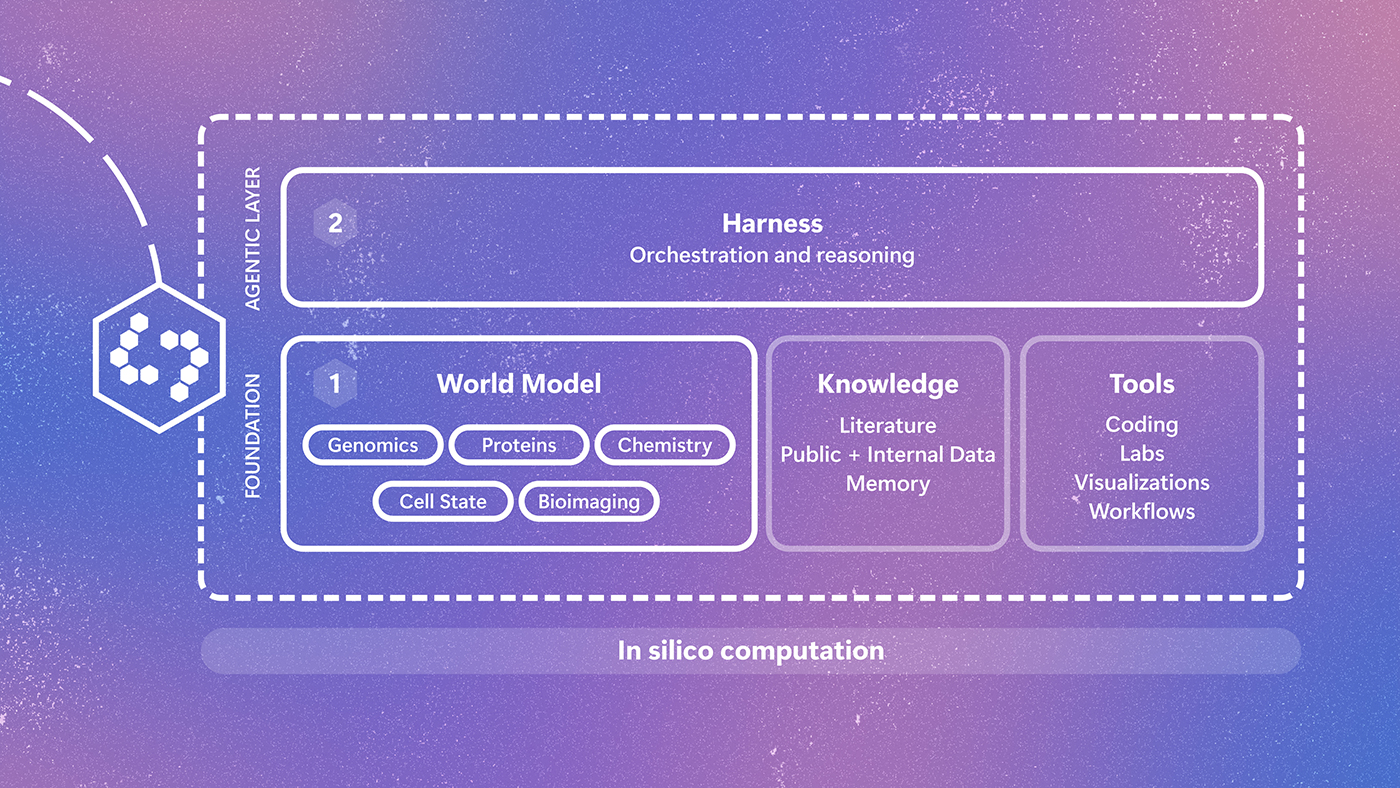
Biology doesn't operate in silos, and neither should the AI representation of it. Quine is an early-stage research effort to create a multimodal world model of biology. By connecting insights across biological scales and modalities, Quine helps scientists computationally search a space far larger than intuition allows and prioritize hypotheses before they reach the lab. Experimental results provide important feedback, helping researchers sharpen future research directions. The post Introducing Q…