Nov 2025· JACS Au· Vol 5, pp. 5676 - 5689· 4 citations· ⚡ 1 influential· 75 references
Medicine
TL;DR
CovalentLab is introduced, an interactive computational platform that integrates ligand-based and warhead-based strategies into a unified workflow for the rational design of covalent ligands and enables the prediction and ranking of nine classes of covalent-binding residues in proteins according to their reactivity.
Abstract
Targeted covalent drugs have demonstrated remarkable potential in disease treatment over the past decades. However, existing methods for covalent drug design are often limited to serine and cysteine, ignoring other potentially ligandable binding sites. Statistical analyses indicate that over 95% of binding pockets contain covalent-binding residues, suggesting that all ligands that targeting these pockets possess the potential to be modified into covalent ligands. To achieve this goal, we introduced CovalentLab, an interactive computational platform that integrates ligand-based and warhead-based strategies into a unified workflow for the rational design of covalent ligands. Leveraging a covalent binding site prediction model constructed on ESM-2 with LoRA fine-tuning, CovalentLab enables the prediction and ranking of nine classes of covalent-binding residues in proteins according to their reactivity and facilitates systematic warhead attachment to ligands using 210 electrophilic groups or user-defined warheads. Using this platform, a comprehensive library of more than 100,000 covalent molecules across 95 targets was generated. Notably, CovalentLab has been successfully applied to various essential real-world targets, identifying wet-laboratory-validated bioactive compounds ranging from TRK orthosteric inhibitors to GAC allosteric inhibitors. By bridging gaps in covalent drug discovery, CovalentLab offers a versatile, publicly accessible resource to expand the druggable targets and accelerate the development of targeted covalent therapies.
Covalent inhibitors bind tightly and persistently to protein targets via covalent links with nucleophilic amino acids, yet unintended covalent modification of irrelevant proteins creates major safety risks and restricts their clinical use. To tackle this issue, researchers have shifted from reactivity-centered design to selectivity-prioritized engineering, a core trend in this field over the last five years. This review summarizes five synergistic tactics to boost covalent inhibitor selectivity. First, strengthening noncovalent binding affinity accurately positions reactive warheads for target residues and lowers off-target interactions. Second, redesigned warheads - new electrophiles for non-cysteine sites and reversible covalent groups with adjustable binding duration - broaden druggable proteins and separate target and off-target binding via kinetic differences. Third, leveraging distinct nucleophilic microenvironments (isoform-specific amino acid variations, allosteric cavities, mutation-generated residues) enhances target-specific recognition. Fourth, structure-based tuning of warhead spatial shapes controls covalent reaction efficiency and selectivity. Fifth, prodrugs deliver active inhibitors locally at disease sites with temporal and spatial precision. Collectively, these innovations validate kinact/Ki as a unified rule balancing efficacy and selectivity. With advancing proteome profiling, computational warhead modeling and conditional electrophile chemistry, covalent inhibitors will tackle hard-to-drug targets with safety comparable to noncovalent medicines.
Shang-Jun Bai, Meng-Han Gao, Qi-Dong You et al.· European journal of medicina...· 0 citations
In the field of drug discovery, targeted covalent inhibitors (TCIs) have become popular due to their ability to form irreversible or reversible covalent bonds with target proteins, most frequently with cysteine. Covalent bonds offer prolonged target engagement, improved potency, and, in some cases, the ability to target proteins previously considered undruggable. TCIs can help in target validation and in obtaining information about protein function and binding sites. However, the development of TCIs is still very complex: it requires fine-tuning the warhead's reactivity to avoid off-target effects and ensure the compound's stability. This review addresses design and chemistry principles of cysteine-targeting covalent inhibitors, with a focus on the diversity of electrophilic warheads currently used or under research. Established motifs are discussed alongside newfound warheads. Recent advances in reversible covalent inhibition, metabolically labile warheads, and fragment-based electrophile screening are also addressed as strategies to improve TCIs specificity and safety. Despite the recent and substantial progress in the field, selectivity and safety remain major limitations for a broad application of TCIs. Therefore, continued innovation in warhead design is critical to develop new TCIs.
Mariana Castelôa, F. Borges, S. Benfeito et al.· European journal of medicina...· 0 citations
Covalent inhibitors have re-emerged as a powerful class of therapeutics due to their prolonged target engagement, ability to decouple pharmacokinetic availability from pharmacodynamic outcome, potential for high selectivity and ability to modulate traditionally 'undruggable' targets. Historically, cysteine residues have dominated covalent drug discovery owing to their unique nucleophilicity and relative scarcity in the proteome. However, the desire to broaden the chemical scope of covalent therapeutics has driven a surge of interest in irreversibly targeting other amino acid residues, such as lysine, serine, tyrosine, threonine and histidine. This review explores the outstanding questions and challenges in developing covalent inhibitors beyond cysteine, highlighting current warhead chemistries, strategies for achieving selectivity, proteomic mapping advances, assessment of the intrinsic reactivity of the electrophiles targeting non-cysteine residues and opportunities for expanding the druggable proteome. We also discuss future directions and the pharmacological implications of non-cysteine covalent modifications in therapeutic contexts.
B. Srinivasan, John B Taylor· British Journal of Pharmacol...· 0 citations
Targeted covalent inhibition is an important strategy in modern drug discovery, with cysteine being the most common residue targeted for covalent ligands. Accurate identification of covalently ligandable cysteines is therefore essential, especially for traditionally "undruggable" targets. However, structure-based methods depend on available and reliable protein structures, while sequence-based methods remain scarce and require further improvement. Here, we present CCSite, a protein language model-based framework for discovering covalently ligandable cysteines from protein sequences. It uniquely integrates low-rank adaptation of ESM Cambrian (LoRA-ESMC) with a cysteine-centered encoder-decoder module to capture local microenvironment features and long-range contextual information. Benchmarking and independent evaluation showed that CCSite achieved competitive performance without requiring 3D structures. Moreover, a real-world application revealed that CCSite was capable of prospectively identifying experimentally validated covalent cysteines, and a large-scale screen of human pathogenic X-to-Cys mutations further identified over 2,000 neo-cysteines as covalently ligandable candidates for future covalent drug development.
Yan-Lin Ren, M. Mou, Yi-Miao Zhu et al.· Journal of Medicinal Chemist...· 0 citations
Targeted covalent inhibitors are a powerful, yet underexplored, class of therapeutics, and current computational covalent screeners are constrained in early drug discovery due to the need for prior knowledge of the target site and limited throughput. We present CovSite, a blind covalent screening tool that identifies candidate reactive residues across the entire protein surface, utilizing only the protein structure and electrophile SMILES. CovSite applies a pipeline of four orthogonal physicochemical filters (nucleophile identification, solvent accessibility, environment-dependent deprotonation prediction, and semi-quantum-mechanical reactivity ranking) to identify potential small-molecule candidate inhibitors. Validated against 2,062 diverse covalent protein-ligand complexes spanning six nucleophilic residue types, CovSite achieves a 98.5% blind target site hit on a held-out benchmark set of 207 cysteine-targeted complexes while reducing the search space by 97.8%. The target-site hit detection exceeds the 53-62% accuracy of popular covalent screening tools operating under non-blind conditions on the same benchmark set. By extending nucleophilic coverage beyond cysteine to include serine, threonine, lysine, histidine, and tyrosine, and completing a screening of a 200-residue protein in two to three minutes on standard hardware, CovSite serves as a platform technology with the potential to address critical gaps in throughput, generalizability, and accuracy in this field of covalent screening. We demonstrate this capability by using CovSite as a blind, ligand-specific approach that enables iterative, machine-learning-driven covalent inhibitor generation that is impractical with existing tools, establishing a foundation for computationally guided covalent drug discovery for novel and understudied targets. TOC Figure
A. Hu, Joe Bailey, Søren C. Spina et al.· bioRxiv· 0 citations
Irreversible covalent inhibitors have garnered significant attention in recent years. Despite encouraging progress, the vast majority contain electrophiles that target the least abundant amino acid, cysteine, substantially limiting target inhibitor design for therapeutic intervention. Here, we generalize 2-ethynylbenzaldehyde as a proximity-induced electrophile for generating irreversible covalent peptide and protein inhibitors that specifically target native lysine residues. Leveraging this warhead, we designed a covalent de novo peptide that potently engages MCL1 to block its interaction with Bak. We show it is faster, more site-selective, and increases potency by 61-fold for MCL1 relative to a sulfonyl fluoride warhead. Additionally, with the guide of a computational script to predict "reactive hotspots" at the protein level, we developed a minibinder that labels PD-L1 in vitro and in live cells, displays a slower off-rate, and potently blocks the native PD-1 and PD-L1. These results establish isoquinolinium capture as a promising strategy to inhibit protein-protein interactions and for the development of novel covalent peptide and protein therapeutics.
Paul M. Levine, Patrick W. Erickson, Timothy W. Craven et al.· ACS Chemical Biology· 0 citations
Related blog posts
Microsoft Research Blog· microsoft.comAug 31, 2026
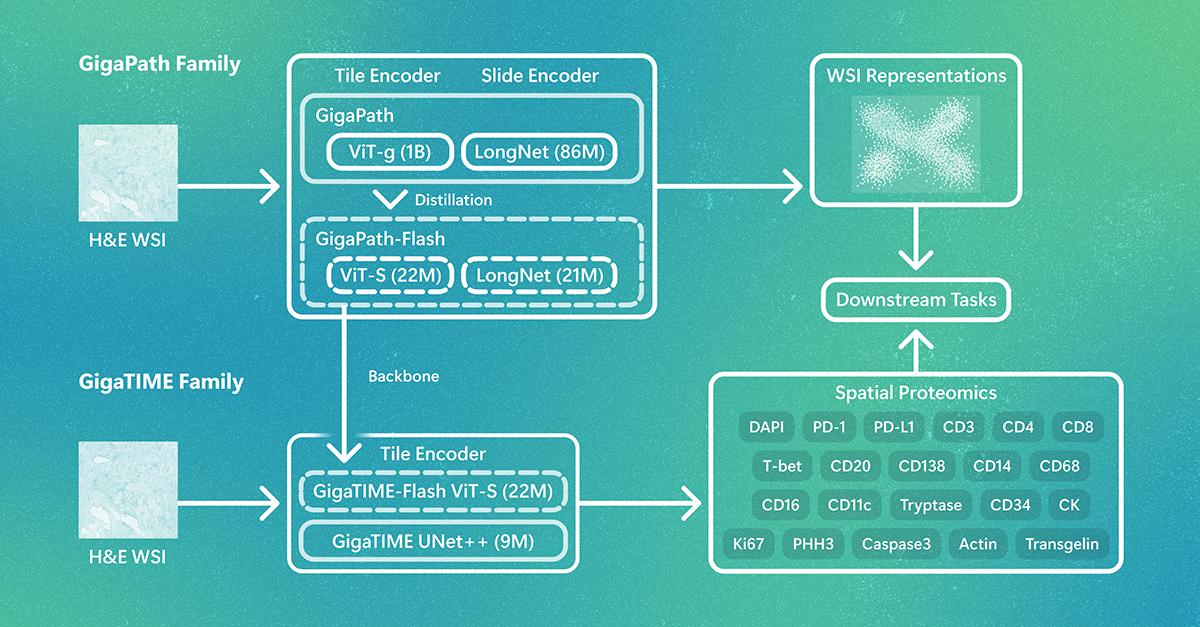
What if pathology foundation models could do more with less? GigaPath-Flash and GigaTIME-Flash cut computational demands while maintaining strong performance, opening the door to larger studies and broader exploration. The post GigaPath-Flash and GigaTIME-Flash: Toward population-scale discovery with efficient pathology foundation models appeared first on Microsoft Research.
Through research and entrepreneurship, Professor Devavrat Shah is helping to design methods that can handle constant decision-making using limited computational resources.