Skip to content

Allosteric Cooperativity Mechanism Investigation of Orthosteric and Allosteric Ligands in Modulating AR Activity: A Molecular Dynamics Study

Oct 2025 · Journal of Chemical Information and Modeling · Vol 65, pp. 11297-11313 · 1 citation · 57 references
Computer Science Medicine

TL;DR

Results indicate that BF3 antagonists can synergize with the LBP antagonist to amplify conformational flexibility in H12 and induce anticorrelated dynamics of H12 with H3 and H4, suggesting a promising avenue for enhancing the efficacy and overcoming the resistance in castration-resistant prostate cancer treatment.


Abstract

The androgen receptor (AR) represents a pivotal therapeutic target for prostate cancer. However, existing orthosteric ligand-binding pocket (LBP) antagonists [e.g., enzalutamide (ENZ)] encounter significant obstacles due to resistance-conferring mutations in the LBP. Allosteric antagonists targeting the BF3 site exhibit great potential in overcoming such resistance but have low inhibitory efficacy. In our study, we employed an integrated computational modeling strategy, including Gaussian-accelerated molecular dynamics (GaMD), MM/GBSA free-energy calculations, and elastic network model (ENM)-based signaling communication pathway analyses. This approach is used to probe the cooperativity of allosteric BF3 antagonists [e.g., VPC-13808 (VPC)] with diverse orthosteric LBP ligands [e.g., ENZ and testosterone (TES)] in suppressing AR activity. Herein, four types of AR systems were examined: AR bound to LBP agonist (AR·TES), LBP antagonists (e.g., AR·ENZ), and combinations of LBP agonist/antagonist with BF3 antagonist (e.g., AR·TES·VPC and AR·ENZ·VPC). Results indicate that BF3 antagonists can synergize with the LBP antagonist to amplify conformational flexibility in H12 and induce anticorrelated dynamics of H12 with H3 and H4. This induces the downward movement of H12 and its displacement away from H3/H4, triggering the wide opening of the AF2 binding cleft and substantially reducing the coactivator recruitment. Furthermore, the BF3 antagonist can interact with specific residues (e.g., F673, F826, L830, and Y834) and cooperate with the LBP agonist or antagonist to allosterically perturb the AF2 conformation. Multiple short- and/or long-range BF3→AF2 and LBP→AF2 signaling transition pathways are involved, such as F673→Y834→L722→L812→L744→V746→L873→ENZ→L880/V889/V891. These mechanistic insights establish the foundation for developing novel AR BF3 antagonist and LBP-BF3 combination therapies, suggesting a promising avenue for enhancing the efficacy and overcoming the resistance in castration-resistant prostate cancer treatment.
View source

Similar papers

Jul 2026

Identification of allosteric sites and allosteric inhibitors in the glucose-dependent insulinotropic polypeptide receptor via molecular simulations.

This study provides potential lead compounds for the design of small-molecule allosteric drugs targeting class B1 GPCRs and performs conformational sampling and combined dynamic pocket detection algorithms, MDpocket and FTMove, to identify six characteristic cryptic pockets within the dynamic trajectories.

Zhi Dong, Long Cheng, Qingxin Shi et al. · 0 citations
Open access Aug 2026

Residue Interaction Network Reveals Allosteric Pathways Linking Orthosteric and Intracellular Sites in Class A GPCRs

Understanding how allosteric modulators influence protein dynamics is essential for guiding drug design. This work analyses a total of 45 μs of classical molecular dynamics simulations for four class A G-protein-coupled receptors (GPCRs), namely the Complement C5a receptor (C5AR1), the Purinergic Receptor P2Y (P2RY1), and the Cannabinoid Receptors 1 and 2 (CNR1/CNR2). Protein dynamics is essential to detect the shallow extrahelical binding sites, such as the one found in P2RY1. Current methods for computing Allosteric Communication Networks (ACNs) produce complex outputs requiring expert interpretation. To address this, we focus on the shortest paths of information transfer between the orthosteric and G-protein binding sites in Class A GPCRs. Our retrospective analysis reveals state- and bias ligand-dependent residue interactions along these communication pathways. Furthermore, focusing on the predicted binding site of allosteric modulator EC21a at cannabinoid receptors, the ACN framework was used to prioritize two residues for mutational analysis that may contribute to allosteric communication.

S. Peter, G. Chalhoub, Peter J. McCormick et al. · 0 citations
Open access Aug 2026

Benchmarking Docking Protocols for GPCR Allosteric Modulators

GaMD ensemble docking improved early AM enrichment across all four targets under at least one program, and the Boltz-2 deep-learning program showed minimal sensitivity to GaMD templates and underperformed conventional docking, suggesting its affinity predictions complement rather than replace physics- and empirical-based docking approaches for GPCR AM screening.

T. D. Thompson, Yinglong Miao · 0 citations
Aug 2026

Structure-based elucidation of thiazine inhibitors targeting estrogen receptors alpha: pharmacophore modeling, virtual screening, molecular docking, MD, and DFT approach.

This research developed a promising lead molecule (HIT1) as a therapeutic approach for ER-positive breast cancer through pharmacophore model-based drug design of thiazine derivative targeting ERα via pharmacophore model-based drug design.

M. S. Sanjeev, Bhim Singh, Kailash Jangid et al. · 0 citations
Sep 2026

Computer-aided drug design of quinoxaline based selective oestrogen receptor α modulators for breast cancer therapy: molecular docking, MD simulation, MM-PBSA and ADME/T analysis.

Oestrogen receptor alpha (ERα) is a driver of hormone-dependent breast cancer, yet current therapies are often hindered by drug resistance and adverse effects. In this study, we developed a structure-based virtual screening workflow to identify novel quinoxaline derivatives as computationally prioritized potential ERα modulators. The quinoxaline analogues obtained from PubChem are screened through validated docking model of ERα. The top-ranked candidates were further refined by MD simulations in GROMACS for 300 ns to assess complex stability and interaction persistence, followed by MM-PBSA binding free energy calculations to quantify binding energetics. The prioritized quinoxaline hits exhibited more favourable predicted docking scores than reference ligand, tamoxifen, while MD trajectory analyses indicated stable complex formation with sustained predicted interactions involving key ERα binding site residues. MM-PBSA highlights LIG3 as the most promising lead with a favourable energy (ΔG = -34.15 kcal/mol). Complementary ADMET profiling predicted favourable pharmacokinetic behaviour and low toxicity for the prioritized compounds. This integrated in silico strategy demonstrates that quinoxaline scaffolds, specifically LIG3, represent promising computationally prioritized templates for the further development and experimental evaluation of ERα targeted ligands. These findings provide a reliable computational framework for the prioritization and structural optimization of next-generation anti-breast cancer agents.

A. Sharma, D. Kumar, B. Narasimhan et al. · 0 citations

Related blog posts

Microsoft Research Blog Aug 31, 2026

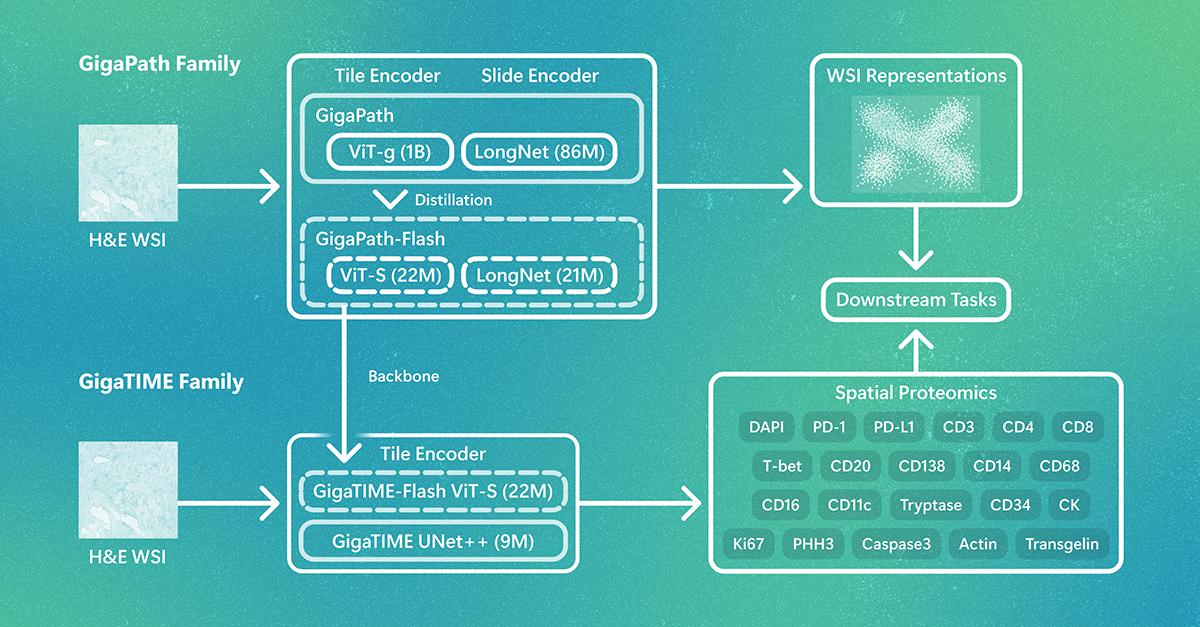
GigaPath-Flash and GigaTIME-Flash: Toward population-scale discovery with efficient pathology foundation models

What if pathology foundation models could do more with less? GigaPath-Flash and GigaTIME-Flash cut computational demands while maintaining strong performance, opening the door to larger studies and broader exploration. The post GigaPath-Flash and GigaTIME-Flash: Toward population-scale discovery with efficient pathology foundation models appeared first on Microsoft Research.

We use cookies to run the site and, with your consent, for analytics and to show ads. See our Cookie Policy.