This work uses learning-based methods to tailor small, non-additive encoders when the noise exhibits sufficient structure, then switch to standard codes once the noise is nearly uniform, and achieves a target logical error rate with far fewer qubits than concatenating stabilizer codes alone.
Nico Meyer, Christopher Mutschler, Dominik Seuss et al.· arXiv.org· 3 citations
Parameterised graph theory studies how the complexity of graph-theoretic problems depends on structural parameters of the input graph. This perspective has proved useful in analysing tensor-network simulation (Markov and Shi, 2008). Its implications for tensor-network representations and tomography are less well unders...
Matthias C. Caro, Natalie McHugh, Sergii Strelchuk· 0 citations
This work proposes a Projected RGD algorithm that achieves dimension-independent linear convergence at unit step size and identifies as unit-step RGD on a totally geodesic submanifold, thereby extending the dimension-independent guarantee to that setting verbatim.
This approach provides a unified framework to handle MLP within both classical and quantum LLMs and shows that the Pythagorean inequality continues to hold in the infinite-dimensional setting whenever the convex information-projection problem attains a finite minimum.
S. Sreekumar, Nir Weinberger· arXiv.org· 0 citations
Reach audiences
Advertise in front of researchers, engineers, and readers.
Quantum error correction (QEC) is essential for scalable quantum computing, yet decoding errors via conventional algorithms result in limited accuracy (i.e., suppression of logical errors) and high overheads, both of which can be alleviated by inference-based decoders. To date, such machine-learning (ML) decoders lack...
This work proposes a novel objective function for tailoring error correction codes to specific noise structures by maximizing the distinguishability between quantum states after a noise channel, ensuring efficient recovery operations.
Nico Meyer, Christopher Mutschler, Andreas K. Maier et al.· Quantum Science and Technolo...· 6 citations
We present quantum speedups for sampling from distributions of the form $\pi\propto e^{-f}$ on $\mathbb{R}^d$. We consider two stochastic oracle models: a stochastic gradient oracle, where $f=\frac{1}{n}\sum_{i=1}^n f_i $ and component gradients $\{\nabla f_i\}_{i \in [n]}$ are available, and a stochastic evaluation or...
Guneykan Ozgul, Xiantao Li, Mehrdad Mahdavi et al.· 0 citations
Quantum MeanFlow (QMF), the quantum analogue of the MeanFlow formulation, is established as a viable method for single-step quantum generative sampling, saving on quantum circuit evaluations per generated sample.
Ashish Joshi, Eshaan Mistry, T. Koyama· 0 citations
Angle-encoded quantum kernels on tabular data collapse when the feature map is wider than the intrinsic dimension of the data. We propose the correlation fractal dimension D2 as an a priori qubit budget: encode D2 coordinates chosen by FD-ASE instead of the PCA-95% width or all E attributes. On nine data sets and a sta...
A conceptual and mathematical framework for unsupervised representation learning from quantum data is developed, uncovering a hierarchy tied to the positive-partial-transpose (PPT) criterion from entanglement theory and allowing genuinely quantum visible-latent correlations.
Robin Lorenz, Eric Brunner, Marcello Benedetti· 0 citations
This work studies hybrid quantum-classical neural networks for learning routing heuristics and identifies encoder feed-forward replacement as a viable hybrid-module compression strategy for neural combinatorial optimization.
M. Ritt, Alexsandro Santos da Rosa, Marcos Vinicius Reballo et al.· 0 citations
This paper introduces QXymb, a general framework for constructing observational declarative twins of quantum circuits, and develops QILP-0, its first complete order-0 specialization, which constructs a finite multi-valued propositional logic program from observed circuit behaviour within a declared observational scope.
Marina de la Cruz Echeandía, C. Alonso, Tony Ribeiro et al.· 0 citations
Jennifer Neville did not want to go into computer science—but that’s exactly where she landed. Neville discusses the starts and stops that led to her professional sweet spot and her work identifying “surprising failures” making it hard for AI to handle complexity. The post What AI gets wrong and what failure teaches us appeared first on Microsoft Research.
MIT News · Artificial Intelligence· news.mit.eduOct 2, 2026
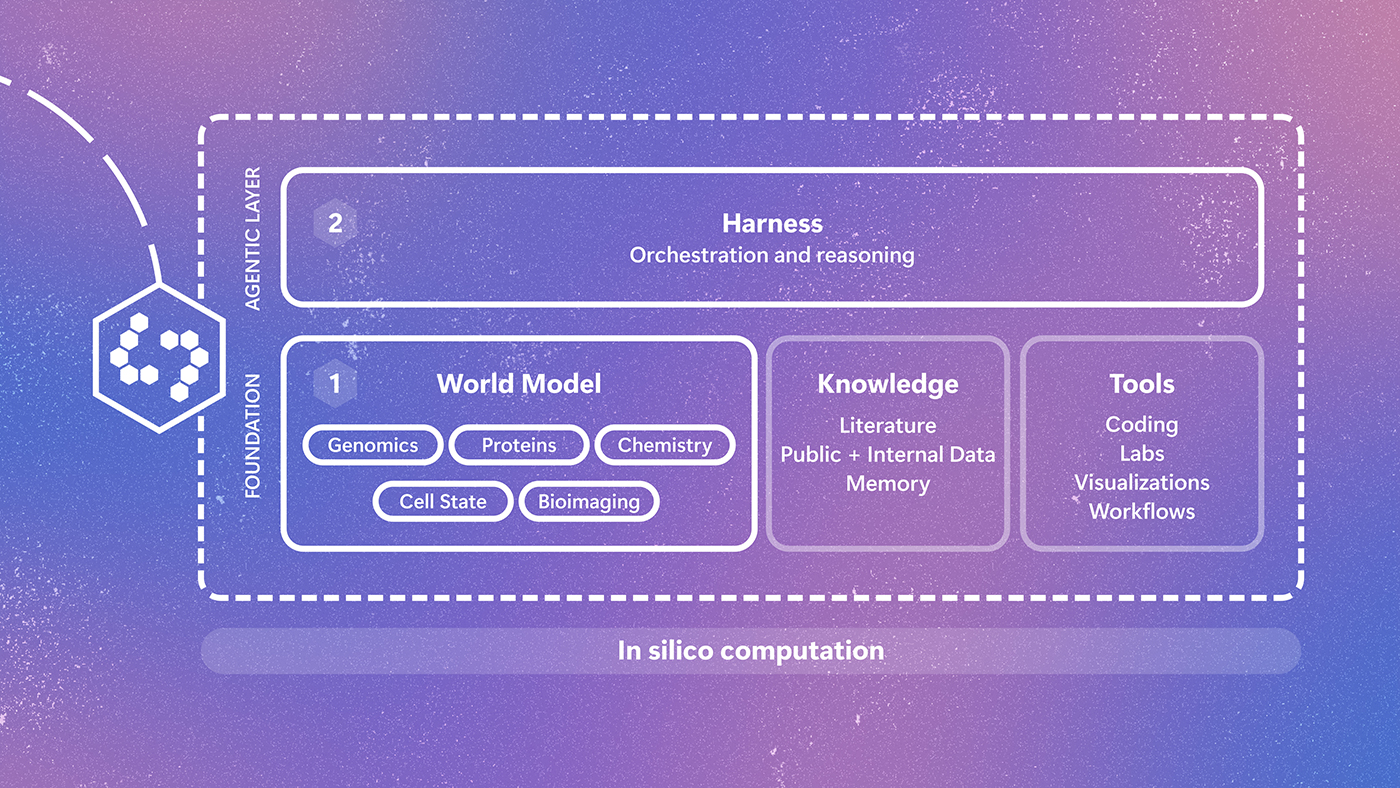
Biology doesn't operate in silos, and neither should the AI representation of it. Quine is an early-stage research effort to create a multimodal world model of biology. By connecting insights across biological scales and modalities, Quine helps scientists computationally search a space far larger than intuition allows and prioritize hypotheses before they reach the lab. Experimental results provide important feedback, helping researchers sharpen future research directions. The post Introducing Q…