Skip to content

Precision Design of Fluorogenic Probes via Orthogonal Tuning of Binding and Photophysics for Isoform-Selective ALDH2 Imaging.

Oct 2025 · Journal of the American Chemical Society · Vol 147, pp. 41768-41778 · 4 citations · 33 references
Medicine

TL;DR

A5 is developed, a fluorogenic substrate for aldehyde dehydrogenase 2 (ALDH2) that exhibits high isoform selectivity and a >240-fold signal enhancement over the standard NADH assay, and enables quantitative imaging of ALDH2 activity across multiple biological scales.

Abstract

Fluorogenic probes that report enzyme activity are essential for studying biological functions. However, designing them for targets with low catalytic turnover and narrow substrate specificity remains a significant challenge. Here, we present a precision design framework that separates the requirements for sensitivity and selectivity by integrating molecular docking, quantum chemical modeling of fluorogenic mechanisms, and targeted fine-tuning of the probe structures. As a proof of concept, we developed A5, a fluorogenic substrate for aldehyde dehydrogenase 2 (ALDH2) that exhibits high isoform selectivity and a >240-fold signal enhancement over the standard NADH assay. A5 enables quantitative imaging of ALDH2 activity across multiple biological scales─in blood samples, live cells, and intact mouse brains─and supports the identification of small-molecule activators with therapeutic potential in an Alzheimer's disease model. This work establishes a modular strategy for creating activity-based probes tailored to challenging enzymatic targets, with broad applications in precision imaging, drug discovery, and mechanistic biochemistry.

View source

Similar papers

Sep 2026

Rational design of a near-infrared fluorescent probe for highly specific sensing carboxylesterase 2 and its applications in bioimaging.

Carboxylesterase 2 (CES2) is a clinically significant serine hydrolase that governs the metabolic activation and detoxification of numerous ester-containing drugs and prodrugs. Despite its pivotal role in liver and colorectal cancer progression, direct in situ imaging of CES2 activity remains challenging due to the sca...

Chia-Hung Li, Tsai-Xuan Lin, Shu-Pao Wu · 0 citations
Aug 2026

Rational design of halogen-substituted near-infrared fluorescent probes for butyrylcholinesterase: from drug screening to imaging and therapeutic evaluation in Alzheimer's disease.

Monitoring butyrylcholinesterase (BuChE) activity is crucial for tracking Alzheimer's disease (AD) progression and evaluating therapeutics; however, high-performance near-infrared (NIR) probes with rapid response and clear design principles remain scarce. Here, we report a series of dicyanoisophorone-based NIR fluoresc...

Lin Jiang, Jianqin Yan, Chaolong Liu et al. · 0 citations
Open access Aug 2026

Subcellular pharmacology of a novel cell-permeable fluorescent phosphodiesterase inhibitor using advanced fluorescence microscopy

Direct visualisation of drug–target engagement within living cells remains a major challenge. Here we develop a cell-permeable fluorogenic analogue of the phosphodiesterase 4 (PDE4) inhibitor rolipram (MAN193), generated by conjugation to fluorescein diacetate. Following intracellular activation, the probe functions as...

Soumyabrata Banik, Michele Anselmi, Jagannath Sathpathy et al. · 0 citations

Advancing bioconjugation through the design and synthesis of fluorogenic tools

Bioconjugation is a foundational strategy across molecular biology, chemical biology, and diagnostic imaging, enabling the selective modification of biomolecules for visualization and tracking of labeling, molecular interactions, and reaction kinetics. Continued demand for improved bioconjugation methodologies has driv...

John M Himmelberg · 0 citations
Open access Aug 2026

A general strategy towards multicolour fluorogenic peptides for wash-free bioassays.

Peptide-based fluorescent probes are valuable tools for live-cell imaging, but conventional labelling approaches often require washing or long incubation, limiting their signal-to-noise ratios. Fluorogenic amino acids (FgAAs) can overcome these limitations, yet their rational design remains challenging owing to the lac...

M. Wong, Lorena Mendive-Tapia, Utsa Karmakar et al. · 0 citations
Open access Jul 2026

A Water-Soluble Fluorogenic Probe to Quantify Azide Concentrations in Biologically Relevant Environments

Fluorogenic probes are highly useful tools for the detection of target molecules in chemical biology and (bio)material science, as they can often be applied in situ and do not depend on purification. Over the past years, a variety of alkyne-based fluorogenic probes have been proposed to detect azides, paving the way fo...

Lotte Gerrits, Lisa Verdellen, M. Peeters et al. · 0 citations

Related blog posts

Microsoft Research Blog Sep 29, 2026

Introducing Quine: An AI research system designed for the complexity of biology

Biology doesn't operate in silos, and neither should the AI representation of it. Quine is an early-stage research effort to create a multimodal world model of biology. By connecting insights across biological scales and modalities, Quine helps scientists computationally search a space far larger than intuition allows and prioritize hypotheses before they reach the lab. Experimental results provide important feedback, helping researchers sharpen future research directions. The post Introducing Q…

Microsoft Research Blog Aug 31, 2026

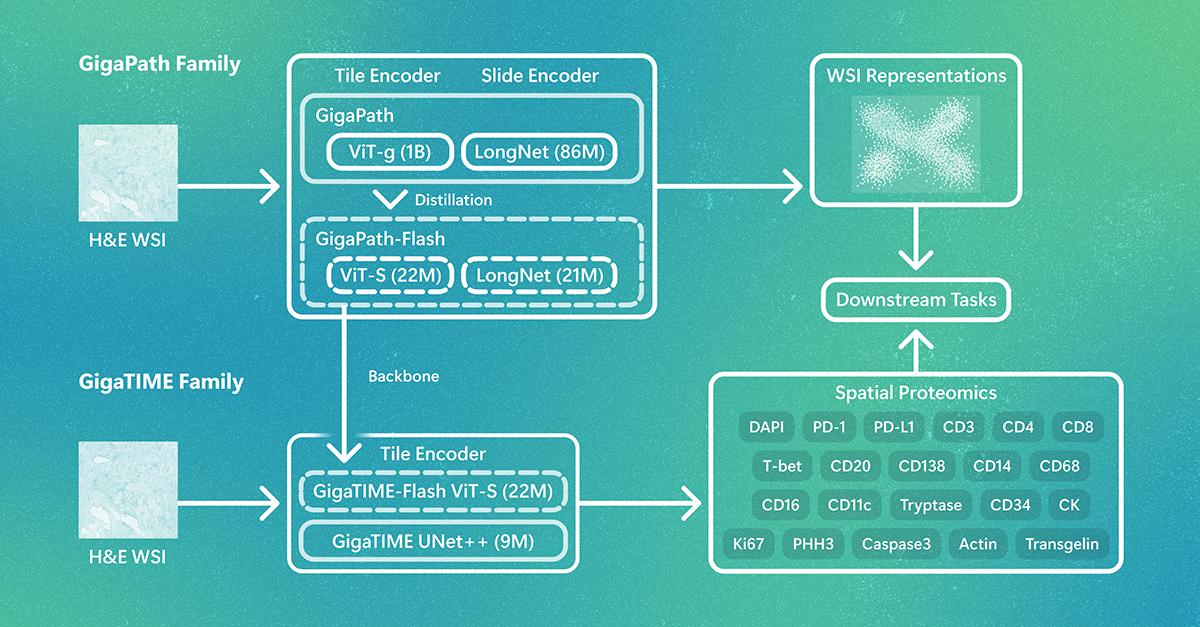
GigaPath-Flash and GigaTIME-Flash: Toward population-scale discovery with efficient pathology foundation models

What if pathology foundation models could do more with less? GigaPath-Flash and GigaTIME-Flash cut computational demands while maintaining strong performance, opening the door to larger studies and broader exploration. The post GigaPath-Flash and GigaTIME-Flash: Toward population-scale discovery with efficient pathology foundation models appeared first on Microsoft Research.

MIT News · Artificial Intelligence Jul 14, 2026

Helping AI models to meet the real world

Through research and entrepreneurship, Professor Devavrat Shah is helping to design methods that can handle constant decision-making using limited computational resources.

We use cookies to run the site and, with your consent, for analytics and to show ads. See our Cookie Policy.