Skip to content

Exact Spin Elimination for Quadratic and k-Local Ising Optimization

May 2025 · 2 citations · 45 references
Physics Computer Science

TL;DR

These results establish exact spin elimination as a controlled trade between active-spin capacity and interaction complexity and show that removing spins while allowing more complex interactions can fit larger problems within the same spin budget and improve optimization.

Abstract

Ising solvers have a finite spin budget. Quadratization uses auxiliary spins to replace higher-order interactions by pairwise ones. We show that removing spins while allowing more complex interactions can fit larger problems within the same spin budget and improve optimization. Walsh elimination minimizes over one spin at a time, writes the resulting interaction as a sum of spin products in the Walsh basis, and stores a rule for recovering the removed spin. Explicit resource limits control which eliminations are accepted. In a held-out test with the protocol frozen before instance generation and one annealing schedule shared by both formulations, mean observed success rises from 10.4% to 97.5% on sparse quadratic spin glasses and from 16.9% to 87.5% on three-body problems. Observed success increases on every instance with a verified reference minimum, and pooled time-to-solution estimates decrease by factors of about 34 and 11, respectively, with preprocessing included. For zero-field pairwise models on connected simple cubic graphs with more than four vertices, we prove that a fixed spin budget accommodates 50% larger inputs while retaining pairwise interactions, zero fields, residual degree at most six, and no increase in coupling count. These results establish exact spin elimination as a controlled trade between active-spin capacity and interaction complexity.

View source

Similar papers

#computer vision Review Sep 2017

Agile Software Development Methods: Review and Analysis

This publication proposes a definition and a classification of agile software development approaches and analyses ten software development methods that can be characterized as being "agile" against the defined criterion.

P. Abrahamsson, O. Salo, Jussi Ronkainen et al. · 727 citations · ⚡54
#computer vision Jun 2008

The impact of agile practices on communication in software development

The study shows that agile practices improve both informal and formal communication, but indicates that, in larger development situations involving multiple external stakeholders, a mismatch of adequate communication mechanisms can sometimes even hinder the communication.

M. Pikkarainen, Jukka Haikara, O. Salo et al. · 401 citations · ⚡48
#machine learning Review Open access Oct 2014

Software development in startup companies: A systematic mapping study

The results indicate that software engineering work practices are chosen opportunistically, adapted and configured to provide value under the constrains imposed by the startup context.

Nicolò Paternoster, Carmine Giardino, M. Unterkalmsteiner et al. · 394 citations · ⚡54

Diffusion models as plug-and-play priors

The possibility of inferring high-dimensional data inference in a model that consists of a prior and an auxiliary differentiable constraint given some additional information is considered, thereby allowing a range of potential applications in adapting models to new domains and tasks.

Alexandros Graikos, Esmeralda S. Whitammer, N. Jojic et al. · 316 citations · ⚡15

Trajectory Balance: Improved Credit Assignment in GFlowNets

It is proved that any global minimizer of the trajectory balance objective can define a policy that samples exactly from the target distribution, and empirically demonstrate the benefits of the trajectories balance objective for GFlowNet convergence, diversity of generated samples, and robustness to long action sequenc...

Esmeralda S. Whitammer, Moksh Jain, Emmanuel Bengio et al. · 302 citations · ⚡60

Related blog posts

MIT News · Artificial Intelligence Aug 27, 2026

Looking beyond natural sequences

A new machine-learning framework aims to improve the success rate of computational protein design while moving away from results that reproduce sequences found in nature.

Microsoft Research Blog Aug 20, 2026

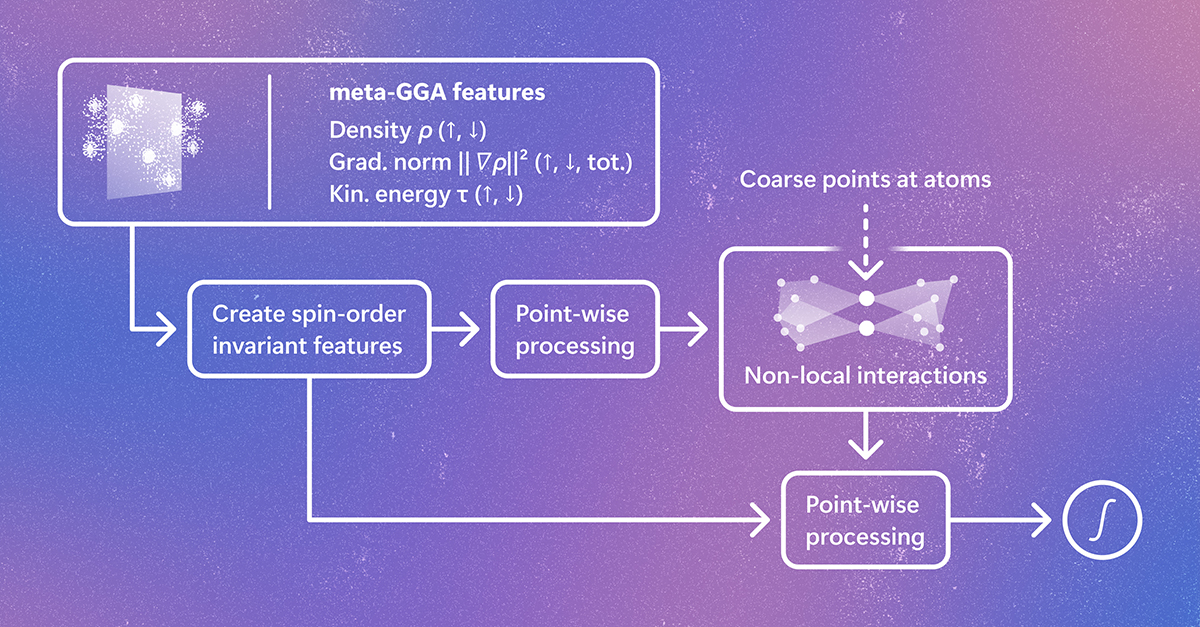
Broadening access to Skala creates a faster path to predictive DFT 

Skala 1.1, the updated deep-learning exchange-correlation functional from Microsoft Research, provides greater accuracy, expanded accessibility across the computational chemistry ecosystem, and a living benchmark to track computational performance. The post Broadening access to Skala creates a faster path to predictive DFT  appeared first on Microsoft Research.

We use cookies to run the site and, with your consent, for analytics and to show ads. See our Cookie Policy.