Quantum transfer learning (QTL) is often evaluated by replacing a classical classifier with a fixed variational quantum head, but this hides a key question: when is the quantum branch actually useful? We propose QSTAR: Quantum Selective Transfer with Adaptive Routing, a selective QTL framework that keeps high-confidenc...
Saim Rehman, Nouhaila Innan, Muhammad Shafique· 0 citations
GRPO-QPS is introduced, a target-preserving framework in which GRPO learns proposal behavior and an exact Metropolis correction preserves the posterior after training, which combines target-preserving Bayesian inference with broad gains over learned transport baselines and a sampling advantage when efficient exploratio...
Yu-Feng Wang, Parivesh Priye, Lu Wei et al.· 0 citations
Tensorizing a neural network involves reshaping some or all of its dense weight matrices into higher-order tensors and approximating them using low-rank tensor network decompositions. This technique has shown promise as a model compression strategy for large-scale neural networks. However, despite encouraging empirical...
Automated theorem proving seeks to use computational systems to prove or disprove mathematical and logical statements [1, 2]. It underpins a wide range of applications, and enhancing theorem-proving capabilities remains a central objective in artificial intelligence [3]. Although recent neuro-symbolic systems have achi...
Ning Wang, Zheng-Zhi Sun, Zhengyi Cui et al.· 0 citations
Reach audiences
Advertise in front of researchers, engineers, and readers.
A hypothetical test which can be effective even for small datasets, based on the theoretical foundation of kernel-based tests using maximum mean discrepancy, is constructed, called MMD-FUSE, and a novel hybrid testing strategy that fuses classical and quantum kernels is proposed.
Yu Terada, Yugo Ogio, Ken Arai et al.· 0 citations
Quantum neural networks (QNNs) have attracted growing interest for scientific machine learning, yet in regression settings they often suffer from limited trainability under noisy gradients and ill-conditioned optimization. We propose a hybrid quantum--classical regression framework designed to mitigate these bottleneck...
This paper uses reinforcement learning and importance sampling to outperform previous work at all scales and reduces the logical error rate by 25.9\% and 71.7\% on average, respectively.
This paper forms the compression of large language models (LLMs) by optimally deleting transformer blocks (``block removal'') as a constrained binary optimization (CBO) problem that can be mapped to a physical system (Ising glass), whose energies are a strong proxy for downstream model performance.
David Jansen, Roman Rausch, Ali Hashemi et al.· 2 citations· ⚡2
Agentic artificial intelligence (AI) is shifting from decision support to autonomous coordination, challenging established assumptions about managerial authority. This qualitative conceptual paper synthesises recent literature in algorithmic management, organisational theory, and human-computer interaction to examine h...
Kwan Hong TAN· Zenodo (CERN European Organi...· 0 citations
Agentic artificial intelligence (AI) is shifting from decision support to autonomous coordination, challenging established assumptions about managerial authority. This qualitative conceptual paper synthesises recent literature in algorithmic management, organisational theory, and human-computer interaction to examine h...
Kwan Hong TAN· Zenodo (CERN European Organi...· 0 citations
Quantum sensing technologies offer transformative potential for ultra-sensitive biomedical sensing, yet their clinical translation remains constrained by classical noise limits and a reliance on macroscopic ensembles. We propose a unifying generational framework to organize the evolving landscape of quantum biosensors...
Xin Jin, Priyam Srivastava, Ronghe Wang et al.· 0 citations
Quantum sensors offer significant advantages over classical devices in spatial resolution and sensitivity, enabling transformative applications across materials science, healthcare, and beyond. Their practical performance, however, is often constrained by unmodelled effects, including noise, imperfect state preparation...
Akram Youssry, Stefan Todd, Patrick Murton et al.· 0 citations
Jennifer Neville did not want to go into computer science—but that’s exactly where she landed. Neville discusses the starts and stops that led to her professional sweet spot and her work identifying “surprising failures” making it hard for AI to handle complexity. The post What AI gets wrong and what failure teaches us appeared first on Microsoft Research.
MIT News · Artificial Intelligence· news.mit.eduOct 2, 2026
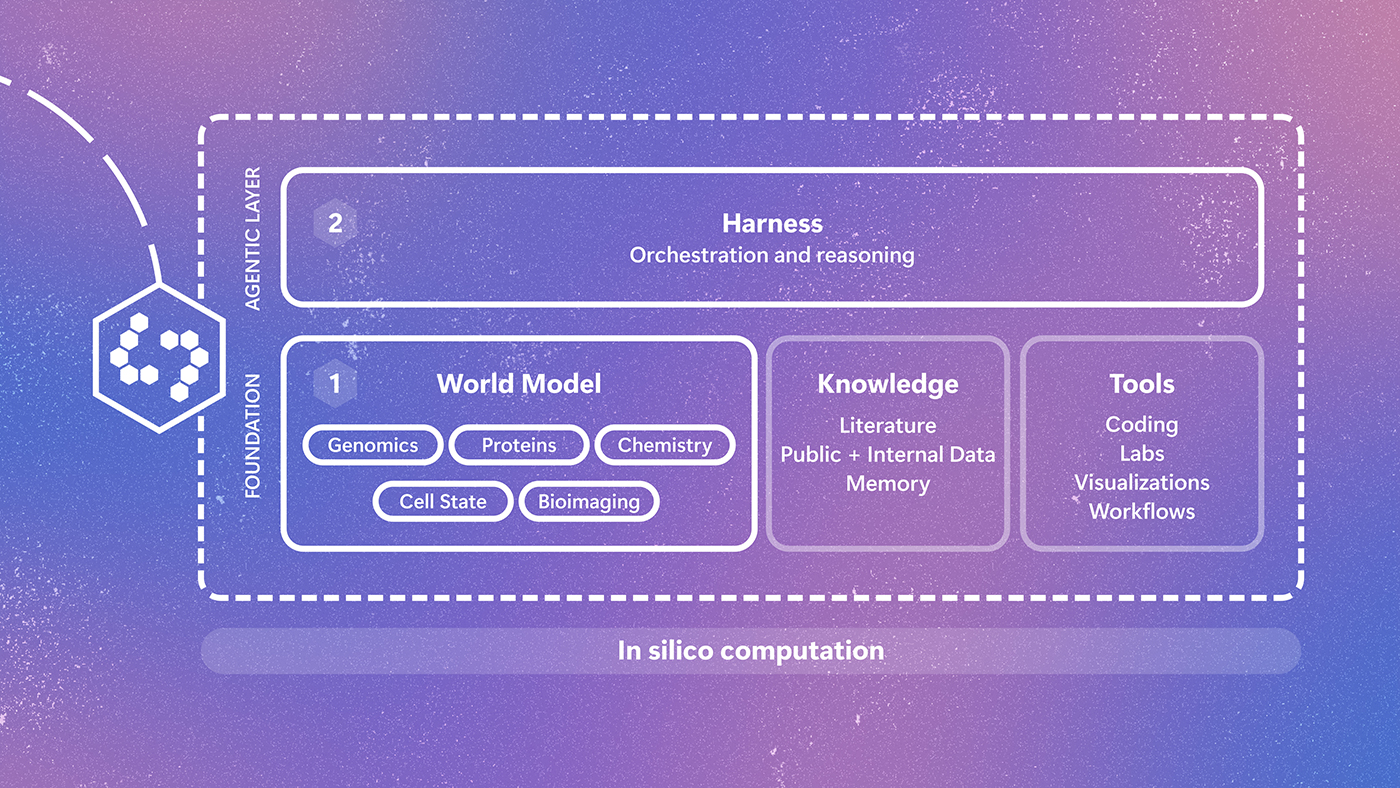
Biology doesn't operate in silos, and neither should the AI representation of it. Quine is an early-stage research effort to create a multimodal world model of biology. By connecting insights across biological scales and modalities, Quine helps scientists computationally search a space far larger than intuition allows and prioritize hypotheses before they reach the lab. Experimental results provide important feedback, helping researchers sharpen future research directions. The post Introducing Q…