What resources are needed for optimal learning of bosonic Gaussian states?
Senrui ChenFrancesco Anna MeleMarco FanizzaAlfred LiZachary MannHsin-Yuan HuangYanbei ChenJohn Preskill
Sep 2026
Machine LearningQuantum Computing
Abstract
Continuous-variable systems enable key quantum technologies in computation, communication, and sensing. Bosonic Gaussian states emerge naturally in various such applications, including gravitational-wave and dark-matter detection. A fundamental question is how to characterize an unknown bosonic Gaussian state from as few samples as possible. Despite decades-long exploration, the ultimate efficiency limit remains unclear. In this work, we study the necessary and sufficient number of copies to learn an $n$-mode Gaussian state, with energy less than $E$, to $\varepsilon$ trace distance with high probability. We prove a lower bound of $\Omega(n^3/\varepsilon^2)$ for Gaussian measurements, matching the best known upper bound up to doubly-log energy dependence, and ${\Omega}(n^2/\varepsilon^2)$ for arbitrary measurements. We further show an upper bound of $\widetilde{O}(n^2/\varepsilon^2)$ given that the Gaussian state is promised to be either pure or passive. Interestingly, while Gaussian measurements suffice for nearly optimal learning of pure Gaussian states, non-Gaussian measurements are provably required for optimal learning of passive Gaussian states. Finally, focusing on learning single-mode Gaussian states via non-entangling Gaussian measurements, we provide a nearly tight bound of $\widetilde\Theta(E/\varepsilon^2)$ for any non-adaptive schemes, showing adaptivity is indispensable for nearly energy-independent scaling. As a byproduct, we establish sharp bounds on the trace distance between Gaussian states in terms of the total variation distance between their Wigner distributions, and obtain a nearly tight sample complexity bound for learning the Wigner distribution of any Gaussian state to $\varepsilon$ total variation distance. Our results significantly advance quantum learning theory in the bosonic regimes and have practical impact in quantum sensing and benchmarking applications.

This publication proposes a definition and a classification of agile software development approaches and analyses ten software development methods that can be characterized as being "agile" against the defined criterion.
P. Abrahamsson, O. Salo, Jussi Ronkainen et al.· arXiv.org· 727 citations· ⚡54
The study shows that agile practices improve both informal and formal communication, but indicates that, in larger development situations involving multiple external stakeholders, a mismatch of adequate communication mechanisms can sometimes even hinder the communication.
M. Pikkarainen, Jukka Haikara, O. Salo et al.· Empirical Software Engineeri...· 401 citations· ⚡48
The results indicate that software engineering work practices are chosen opportunistically, adapted and configured to provide value under the constrains imposed by the startup context.
Nicolò Paternoster, Carmine Giardino, M. Unterkalmsteiner et al.· Information and Software Tec...· 394 citations· ⚡54
The possibility of inferring high-dimensional data inference in a model that consists of a prior and an auxiliary differentiable constraint given some additional information is considered, thereby allowing a range of potential applications in adapting models to new domains and tasks.
Alexandros Graikos, Esmeralda S. Whitammer, N. Jojic et al.· Neural Information Processin...· 316 citations· ⚡15
It is proved that any global minimizer of the trajectory balance objective can define a policy that samples exactly from the target distribution, and empirically demonstrate the benefits of the trajectories balance objective for GFlowNet convergence, diversity of generated samples, and robustness to long action sequenc...
Esmeralda S. Whitammer, Moksh Jain, Emmanuel Bengio et al.· Neural Information Processin...· 302 citations· ⚡60
Related blog posts
MIT News · Artificial Intelligence· news.mit.eduOct 2, 2026
A weeklong summer workshop brought higher education faculty to campus to explore how AI and machine learning materials can be adapted for their classrooms.
MIT News · Artificial Intelligence· news.mit.eduAug 27, 2026
A new machine-learning framework aims to improve the success rate of computational protein design while moving away from results that reproduce sequences found in nature.
Microsoft Research Blog· microsoft.comAug 20, 2026
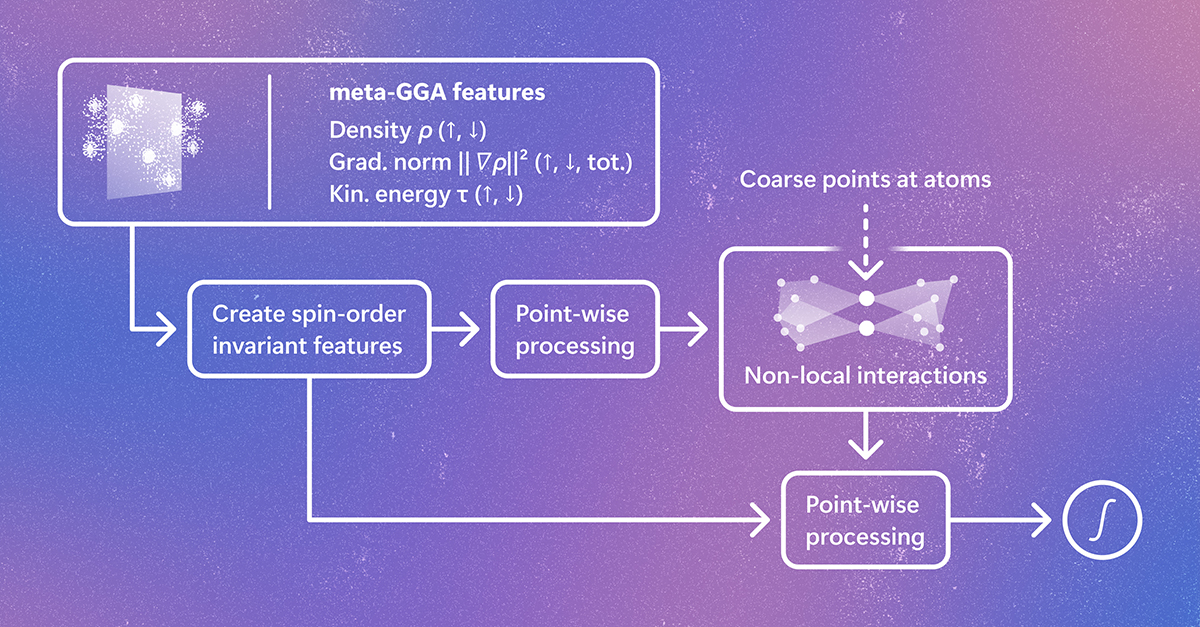
Skala 1.1, the updated deep-learning exchange-correlation functional from Microsoft Research, provides greater accuracy, expanded accessibility across the computational chemistry ecosystem, and a living benchmark to track computational performance. The post Broadening access to Skala creates a faster path to predictive DFT appeared first on Microsoft Research.
We use cookies to run the site and, with your consent, for analytics and to show ads.
See our Cookie Policy.