Civil infrastructure is ageing faster than available inspection programs can assess it. A large fraction of the bridge stock in North America has exceeded its design life. Fixed-sensor structural health monitoring (SHM) systems can track bridge condition, but their cost and labour requirements limit deployment across e...
Jiangyu Zeng· ERA: Education and Research...· 0 citations
Motor-imagery electroencephalography (EEG) decoding depends on rhythm-specific modulation, cue-locked temporal evolution, and structured electrode topology, yet many decoders treat EEG as a generic multichannel time series. (1) Background: A physiological prior that stays in preprocessing cannot constrain what the deco...
Gene regulation is a complex process involving multiple layers of molecular control, including three-dimensional (3D) genome organization and post-transcriptional RNA modifications. Advances in high-throughput sequencing and imaging technologies have enabled detailed characterization of these regulatory mechanisms. How...
The challenge of large-scale applications nowadays is that they must merge structured, semi-structured, and unstructured information of various sources. Machine learning auto-aligns schemas, matches entities, and fuses semantics, reducing manual effort and making it more scalable. We critically review the 2024–2026 imp...
Identifying essential genes in bacteria is crucial for drug discovery and synthetic biology. Genome-scale metabolic models (GEMs) evaluated via flux balance analysis remain standard, yet they rely on the often-invalid premise that mutant strains optimize for maximum growth. Recent machine learning approaches circumvent...
Panayiotis Ioannou, Iulia Duta, Suraj Verma et al.· bioRxiv (Cold Spring Harbor...· 0 citations
Cancer metabolism research has long been shaped by a pathway-centric paradigm, in which individual biochemical routes—most prominently aerobic glycolysis (the Warburg effect)—are studied and targeted in relative isolation. Accumulating evidence from systems biology, multi-omics profiling, and computational oncology sug...
Сергій Григорович Хаблак, Леся Бондарева, Яна Алимівна Абдуллаєва et al.· Innovative Medicines & Omics· 0 citations
With advances in spatially resolved transcriptomics across platforms and resolutions, it is now possible to measure gene-expression profiles while preserving the tissue microenvironment. Spatial clustering is central to these analyses, and recent graph neural network (GNN)-based approaches have greatly improved their a...
Lai Wei, Aoqi Xie, Yuehua Cui· PLoS Genetics· 0 citations
Abstract We study single production of a singlet vector-like top partner T at the 14 TeV HL-LHC in the channel pp → T j, with T → tZ, t → bjj and Z → ν ν̄, for mT = 1.8–3.1 TeV at the benchmark g ∗ = 0.4, RL = 0.5. After a hadronic preselection and a χ2 -based reconstruction of the hadronic top quark, signal and backgr...
Haroon Sagheer, M. Tayyab Javaid, Ijaz Ahmed et al.· Chinese Physics C· 1 citation
Abstract Background Autism spectrum disorder (ASD) involves diffuse, cell-type-specific transcriptomic dysregulation in the cerebral cortex. Single-nucleus RNA sequencing (snRNA-seq) has begun to resolve it, but analysis is dominated by per-gene differential expression, which tests one gene at a time and ignores the ma...
Norah Saeed Awn, Mengyuan Zhao, Mansoor S. M. Ba Mahel et al.· Research Square· 0 citations
The evolution of wireless communication systems towards 6G networks is driven by the exponential demand for ultrareliable, low-latency, high-capacity connectivity. Cognitive Spectrum Management (CSM) emerges as a critical enabler for optimizing spectrum utilization in the densely populated electromagnetic environment e...
Wai Yie Leong· International Conference on...· 0 citations
Machine-learning networks can learn without detailed instructions from a designer. Those that do may offer insight into how the brain reorganizes itself during learning.
MIT News · Artificial Intelligence· news.mit.eduJul 15, 2026
Assistant Professor Pat Pataranutaporn describes a new interface that lets everyday users glimpse inside an AI's neural network before their chatbot ever says a word.
Microsoft Research Blog· microsoft.comJul 13, 2026
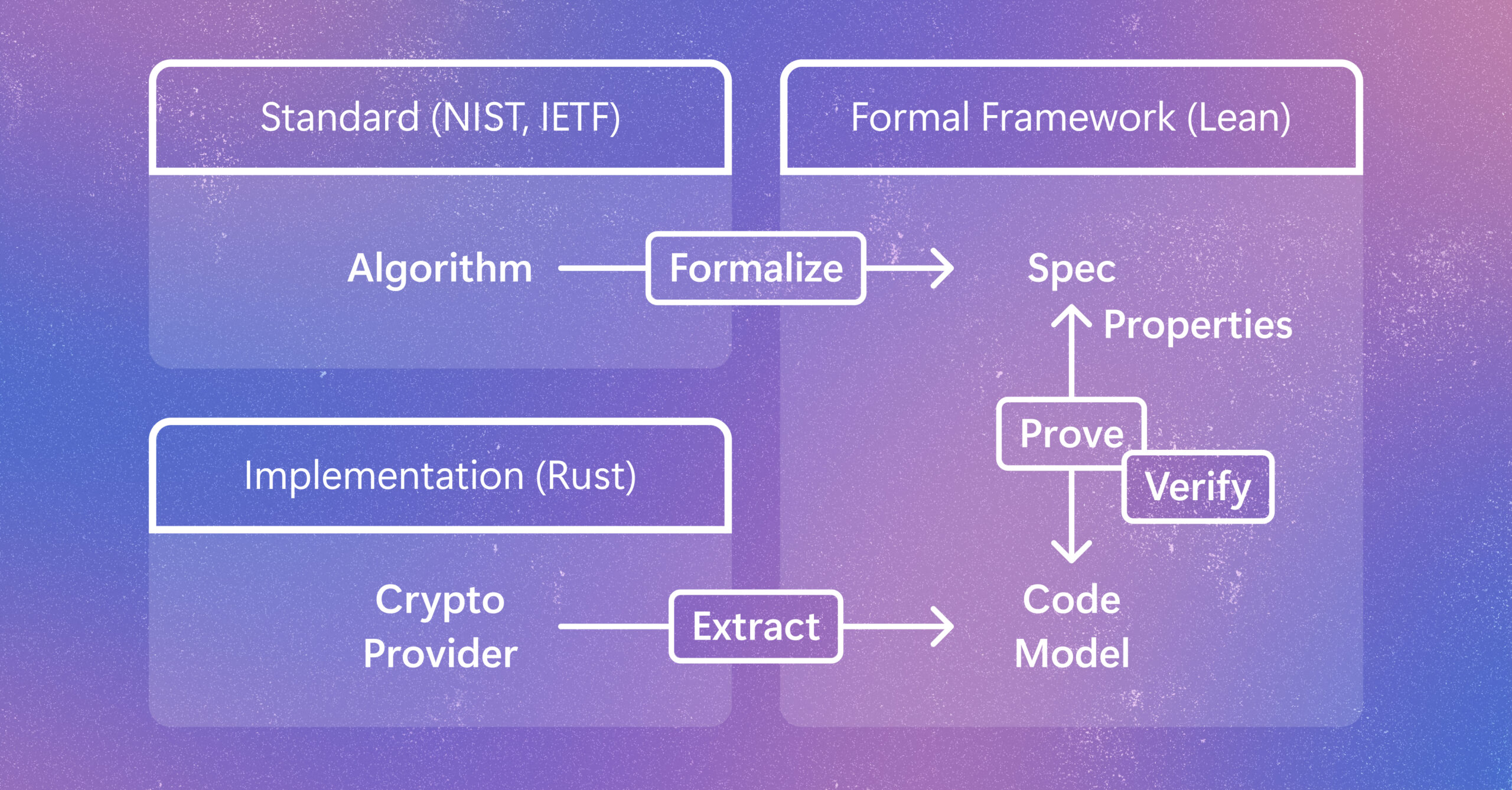
Cryptographic code supports vital protections in modern computing systems. Learn how a new method helps verify code as developers write it while preserving speed and adaptability as it gets implemented and evolves. The post Verifying Rust cryptography in SymCrypt, from standards to code appeared first on Microsoft Research.
MIT News · Artificial Intelligence· news.mit.eduJul 6, 2026
PhD student Rachel Sava, winner of the Envisioning the Future of Computing Prize, explores transformative improvements and dystopian risks of neural technology.
We use cookies to run the site and, with your consent, for analytics and to show ads.
See our Cookie Policy.