This paper presents a conceptual literature review and qualitative comparative synthesis of two major families of Electronic Design Automation (EDA) logic-optimization techniques: modern classical heuristic logic synthesis, grounded in scalable multi-level DAG-based optimization frameworks (Mishchenko et al., 2018; Ama...
Mary Hyacinth Sarmiento· Zenodo (CERN European Organi...· 0 citations
Accurate identification of microbial species is important for clinical diagnosis, environmental monitoring, and evaluations in agriculture and biotechnology. Conventional culture- and alignment-based metagenomic methods have several drawbacks, including inadequate reference databases, the cost of digital compilations,...
David Odiba, Faith Chidinma Terna, Osuyi Gerard Uyi et al.· Journal of Biomedical System...· 0 citations
Intelligent transportation systems (ITSs), Vehicle-to-Everything (V2X) communication and autonomous driving technologies have brought about significant changes in the modern vehicular network. At the same time, the cyber-attack surface has grown, leading to new and existing advanced security threats for Vehicular Ad ho...
S. Hassan, Sadia Din, M. I. Mohmand· Italian National Conference...· 0 citations
Abstract Solar filaments are prominent features in H α observations. During their evolution, they often exhibit complex morphological and topological changes, which, due to line-of-sight projection effects, appear as fragmentation and merging. These phenomena make it difficult to reliably track solar filaments using au...
GaoFei Zhu, Ganghua Lin, Xiao Ping Yang et al.· The Astrophysical Journal Su...· 0 citations
Reach audiences
Advertise in front of researchers, engineers, and readers.
Accurate drug response prediction is essential for optimizing cancer therapy, yet genomic heterogeneity drives variable responses even among tumors with identical driver mutations. We developed DrugSAGE, a Graph Neural Network framework that predicts drug response from transcriptomic data by aggregating features from e...
A novel Graph Neural Network (GNN)-based algorithm for design optimization of truss structures is proposed in this paper presents through a combination of Multi-head Attention (MHA) mechanism and a newly developed hybrid adaptive sampling strategy. The algorithm involves the generation of high-fidelity training dataset...
Structural magnetic resonance imaging (sMRI) depicts Alzheimer’s disease (AD)-related atrophy noninvasively and has become a common input for deep-learning studies of diagnosis and progression. For this structured narrative Mini Review, we searched PubMed/MEDLINE, the Web of Science Core Collection, and IEEE Xplore thr...
Yun-Chen Chen, Ting-Shan Liu, Guan-Xun Cheng· Frontiers in Human Neuroscie...· 0 citations
Resting-state functional magnetic resonance imaging (rs-fMRI) captures spontaneous neural activity and has become a valuable tool for investigating functional alterations in brain disorders. A widely used strategy is to estimate functional connectivity (FC) between brain regions based on blood-oxygen-level-dependent (B...
Pei-Ming Xu, Ya-Ru Li, Wei Si et al.· PeerJ· 0 citations
The increasing deployment of IoT sensors in smart homes and offices enables data-driven automation while exposing these systems to sensor faults, abnormal user activities, and unexpected event patterns. Graph Neural Networks (GNNs) offer a principled way to model spatial dependencies among sensors, yet existing GNN-bas...
M. Tanvir, Fahim Ahmed Irfan, Razib Iqbal· Proceedings of the 4th Inter...· 0 citations
Assistant Professor Pat Pataranutaporn describes a new interface that lets everyday users glimpse inside an AI's neural network before their chatbot ever says a word.
Microsoft Research Blog· microsoft.comJul 13, 2026
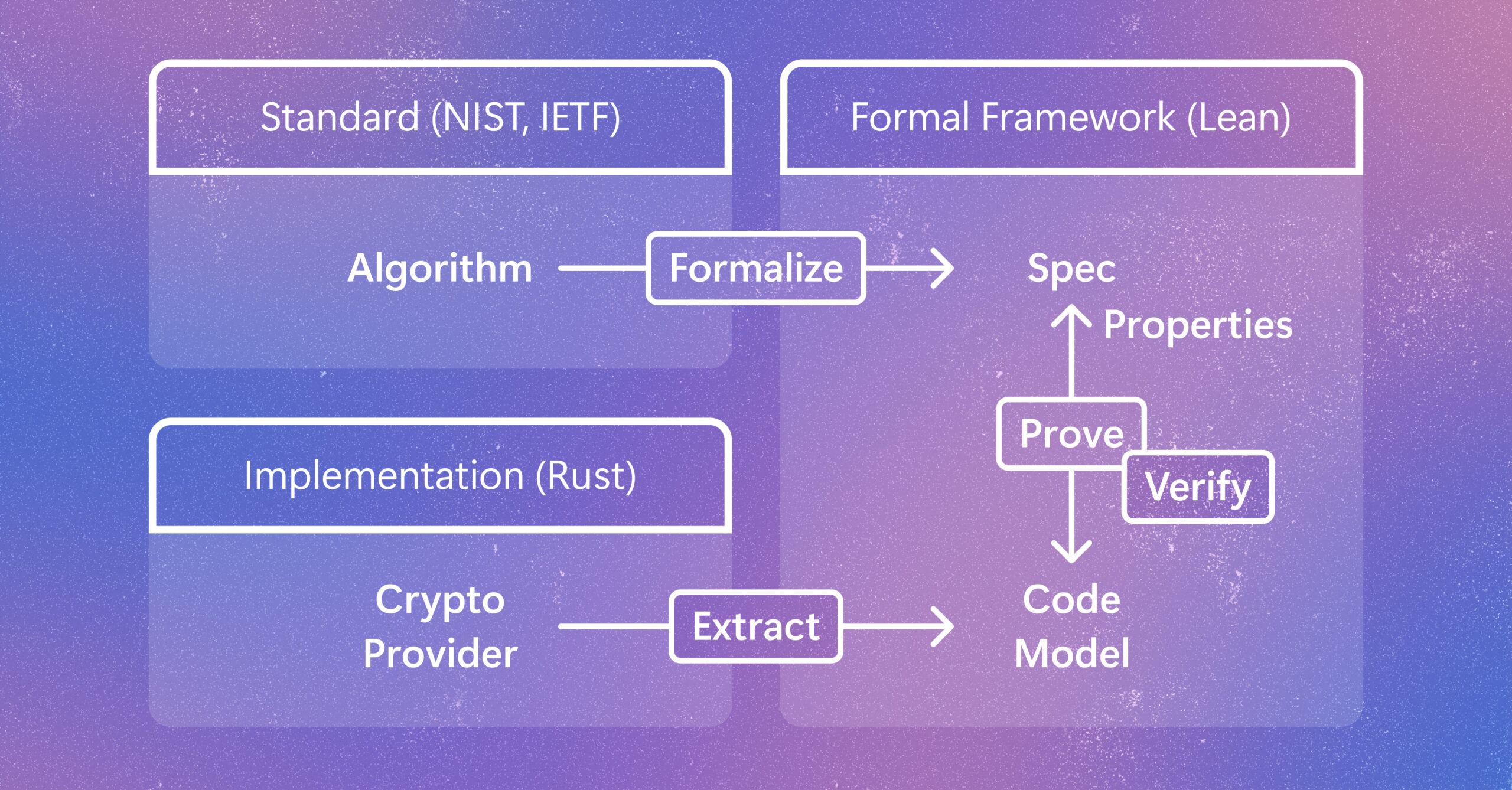
Cryptographic code supports vital protections in modern computing systems. Learn how a new method helps verify code as developers write it while preserving speed and adaptability as it gets implemented and evolves. The post Verifying Rust cryptography in SymCrypt, from standards to code appeared first on Microsoft Research.
MIT News · Artificial Intelligence· news.mit.eduJul 6, 2026
PhD student Rachel Sava, winner of the Envisioning the Future of Computing Prize, explores transformative improvements and dystopian risks of neural technology.