While Graph Neural Networks (GNNs) have established themselves as the state-of-the-art paradigm in recommender systems, their performance is often hampered by severe data sparsity. Cross-domain recommendation (CDR) offers a promising solution by leveraging multi-domain interactions. However, existing methods typically...
Jinghong Liu, Qi Zhang, Hui Xiong et al.· ACM International Conference...· 0 citations
Modern digital ecosystems comprise entities connected through multiple directed interactions, forming complex transaction graphs. These graphs pose significant challenges for node and edge classification due to domain-specific interaction patterns spanning multiple hops and related transactions, multigraph structures w...
Steve Gounoue, Marco Markwald, Ashutosh Sao et al.· Proceedings of the 35th ACM...· 0 citations
Next Point-of-Interest (POI) recommendation aims to predict a user's next destination based on historical check-in sequences. Existing works have achieved notable progress by capturing human mobility patterns through spatio-temporal context modeling and by injecting global collaborative signals via graph neural network...
Guang-Teng Liu, Wan-Li Li, Ke Sun et al.· Proceedings of the 35th ACM...· 0 citations
Heterogeneous graphs (HGs) are widely used to model complex relational data in domains such as traffic networks, biology, and recommendation systems. While heterogeneous graph neural networks (HGNNs) demonstrate strong performance on homophilous benchmarks, they struggle to generalize to heterophilous HGs where connect...
Si-Qing Li, Yong-Min Shin, Won-Yong Shin et al.· Proceedings of the 35th ACM...· 0 citations
Reach audiences
Advertise in front of researchers, engineers, and readers.
Graph Neural Networks (GNNs) are effective for modeling relational data, yet they remain vulnerable to adversarial structural perturbations. Existing defenses typically treat all edges equally, lacking targeted protection for the structural backbones, and struggle to balance robustness with clean accuracy. To address t...
Han-Wen Xu, Feng Hu, Yi-Cong Li et al.· Proceedings of the 35th ACM...· 0 citations
Graph neural networks (GNNs) have achieved remarkable success in node classification tasks, but their performance often varies significantly across classes. Some classes benefit from highly accurate predictions, while others perform relatively poorly. Recent advances in imbalanced node classification have provided part...
Graph Neural Networks (GNNs) have become a cornerstone for applications involving graph data. However, the performance of GNNs is critically dependent on the underlying graph structure. This presents a fundamental challenge, as a predefined topology may not be optimal for the specific learning task, limiting the model'...
Alessandro Sbandi, F. Siciliano, Fabrizio Silvestri· Proceedings of the 35th ACM...· 0 citations
Large language models (LLMs) have demonstrated remarkable capabilities in natural language processing and other adaptable domains, yet they often struggle with knowledge grounding and reasoning. Integrating graph structures, such as knowledge graphs and graph neural networks offer a promising avenue to enhance LLMs wit...
Ben-You Wang, Amit Kumar Jaiswal, Ruchir Gupta et al.· Proceedings of the 35th ACM...· 0 citations
Group fairness in Graph Neural Networks (GNNs) aims to mitigate performance disparities across demographic groups. While existing methods primarily focus on Demographic Parity and Equal Opportunity, Predictive Equality (ΔFPR) remains under-explored, potentially leading to disparate error risks. Furthermore, these metho...
Kai-Xing Liang, Xue-Min Wang, Guo-Feng Xia et al.· Proceedings of the 35th ACM...· 0 citations
Event knowledge graphs (EKGs) must evolve continuously as new events emerge, while preserving temporal integrity and structural consistency. However, existing triple-completion and embedding approaches assume closed-world settings and lack mechanisms for open-world alignment and interpretable updates. Furthermore, real...
Chun-Yan An, Zhi-Hong Hao, Hui-Cheng Yin et al.· Proceedings of the 35th ACM...· 0 citations
The traffic in today's networks is increasingly influenced by the interactions among network nodes as well as by the temporal fluctuations in the demands of the nodes. Traditional statistical methods to predict network traffic metrics have become obsolete due to their inability to address the non-linear and dynamic spa...
Jin-Ming Xing, Guoheng Sun, Hui Sun et al.· Proceedings of the 35th ACM...· 0 citations
Temporal link prediction aims to forecast future connections from historical interactions. As a fundamental problem in temporal graph learning, existing methods exhibit three major limitations. (1) They usually focus on node-level interaction histories and information aggregated from temporal neighbors, while overlooki...
Yuan Li, Jin-Zhao Han, Kai-Yuan Zhang et al.· ACM International Conference...· 0 citations
Machine-learning networks can learn without detailed instructions from a designer. Those that do may offer insight into how the brain reorganizes itself during learning.
MIT News · Artificial Intelligence· news.mit.eduJul 15, 2026
Assistant Professor Pat Pataranutaporn describes a new interface that lets everyday users glimpse inside an AI's neural network before their chatbot ever says a word.
Microsoft Research Blog· microsoft.comJul 13, 2026
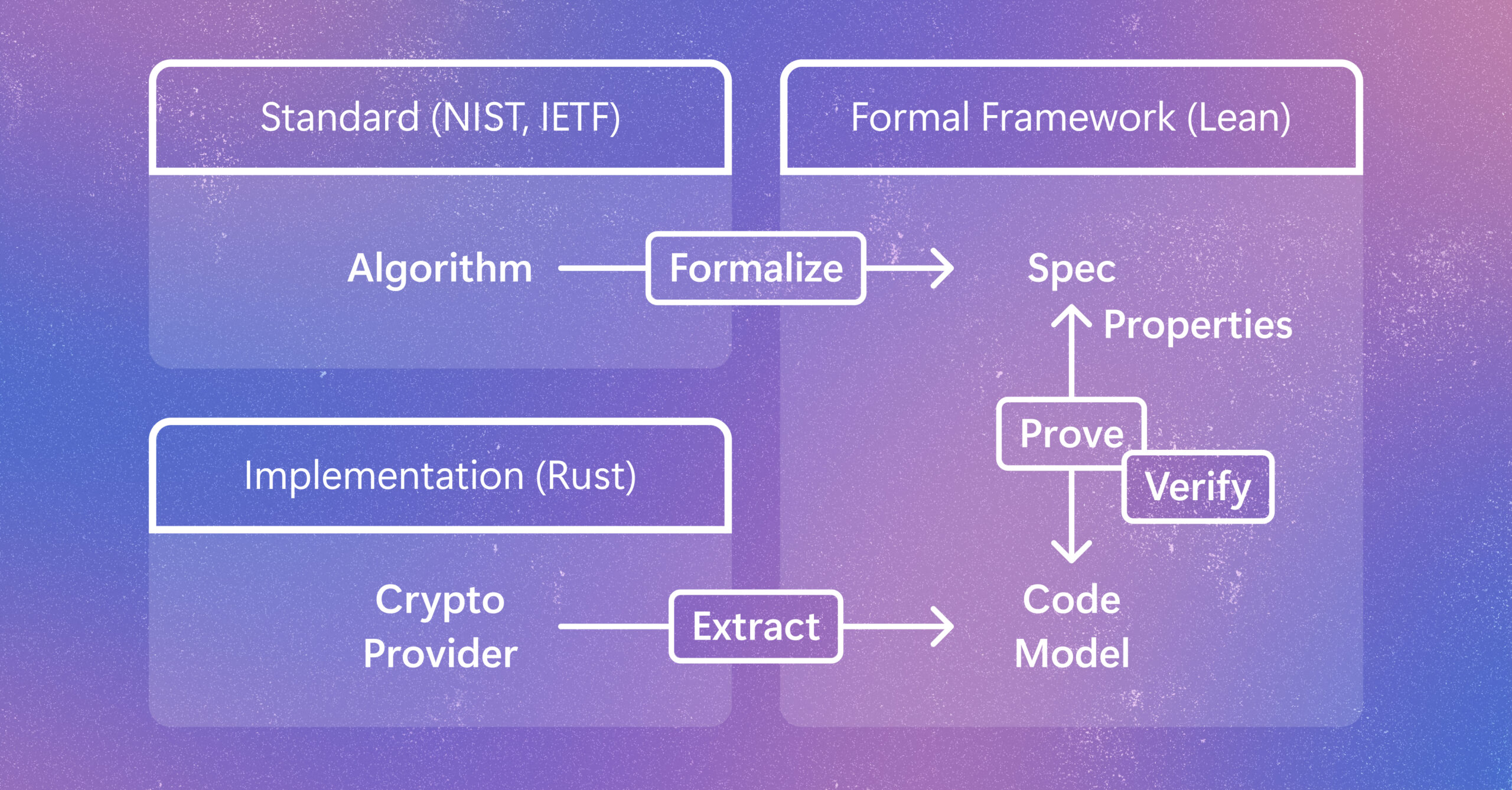
Cryptographic code supports vital protections in modern computing systems. Learn how a new method helps verify code as developers write it while preserving speed and adaptability as it gets implemented and evolves. The post Verifying Rust cryptography in SymCrypt, from standards to code appeared first on Microsoft Research.
MIT News · Artificial Intelligence· news.mit.eduJul 6, 2026
PhD student Rachel Sava, winner of the Envisioning the Future of Computing Prize, explores transformative improvements and dystopian risks of neural technology.
We use cookies to run the site and, with your consent, for analytics and to show ads.
See our Cookie Policy.