Neuroeconometrics and Neuroconnectometrics: Mathematical Foundations, Causal Identification, and Topological Manifolds presents an axiomatic, measure-theoretic, and differential-topological foundation unifying decision neurobiology, high-dimensional econometrics, and structural connectomics. The monograph resolves the...
Amir Hossein Noferesti· Zenodo (CERN European Organi...· 0 citations
Software vulnerabilities are a primary threat to modern infrastructure. While static analysis and Graph Neural Networks have long served as the foundation for vulnerability detection, the emergence of Large Language Models (LLMs) has introduced a transformative paradigm driven by superior semantic reasoning and cross-e...
Zhengyang Shan, Xu Qian, Jiayun Xin et al.· Proceedings of the ACM on so...· 0 citations
Extracellular recordings carry information about neuronal location, and pooling per-unit predictions across neighboring electrodes improves its readout, but whether this local pooling should be learned is untested. We present MYCEL (Message-passing Yields Cellular Embeddings of Location), a graph neural network whose n...
Jesus Gonzalez-Ferrer, Avelina Moreno-Ochando, John Minnick et al.· bioRxiv (Cold Spring Harbor...· 0 citations
Reach audiences
Advertise in front of researchers, engineers, and readers.
Automated protein function prediction remains challenging in plants because experimentally supported annotations are limited, particularly for crop and non-model plant species. Integrating deep learning techniques in plant molecular biology can offer a transformative opportunity to innovate research and support sustain...
G. Sridharan, S. A. Weththasinghe, A. Sridharan et al.· BMC Bioinformatics· 0 citations
Advanced Persistent Threats (APTs) are particularly challenging for enterprise intrusion detection because they are time-evolving, distributed, and difficult to detect under changing network conditions. Conventional machine-learning-based intrusion detection systems (IDSs) often rely on node-level features and may be v...
Bahar Memarpour, Kimia Memarpour, Kimia Shirini et al.· Technologies· 0 citations
MonChain3D, short for Monitoring Change in 3D, is a Python-based software suite for the processing, analysis, and comparison of 3D mesh data and mesh-derived graphs. It provides an integrated workflow encompassing mesh preprocessing, annotation and labeling, orientation and registration, graph construction and analysis...
Florian Linsel· Zenodo (CERN European Organi...· 0 citations
This paper proposes a finite-element-integrated deep energy method (DEM), hereafter referred to as FE-integrated DEM, for linear elasticity and path-dependent J 2 /von Mises plasticity. The method targets a central difficulty in neural elastoplastic solvers: path-dependent internal variables must be evolved consistentl...
Peng Zhang, Xianqiao Wang, Keke Tang· Finite Elements in Analysis...· 0 citations
Converged OpenFOAM reference flow fields of the two steady benchmarks of the manuscript "Label-Free Finite-Volume-Residual Training of Attention Graph Neural Networks for Coupled Thermo-Fluid Fields". LDC_3D_lid_driven_cavity_OpenFOAM_reference.h5 holds the 3D lid-driven cavity (48^3 uniform mesh) at Re = 100, 400, 100...
Tianyu Li· Zenodo (CERN European Organi...· 0 citations
To address the self-reinforcing diffusion of the digital divide in elderly medical treatment and the difficulty of precise intervention, this study proposes a Propagation–Adoption Coupled Graph Neural Network (PAC-GNN) and a path-level interpretable simulation framework. Using three types of public social network data,...
Linna Yang· Journal of Discovery Core· 0 citations
Assistant Professor Pat Pataranutaporn describes a new interface that lets everyday users glimpse inside an AI's neural network before their chatbot ever says a word.
Microsoft Research Blog· microsoft.comJul 13, 2026
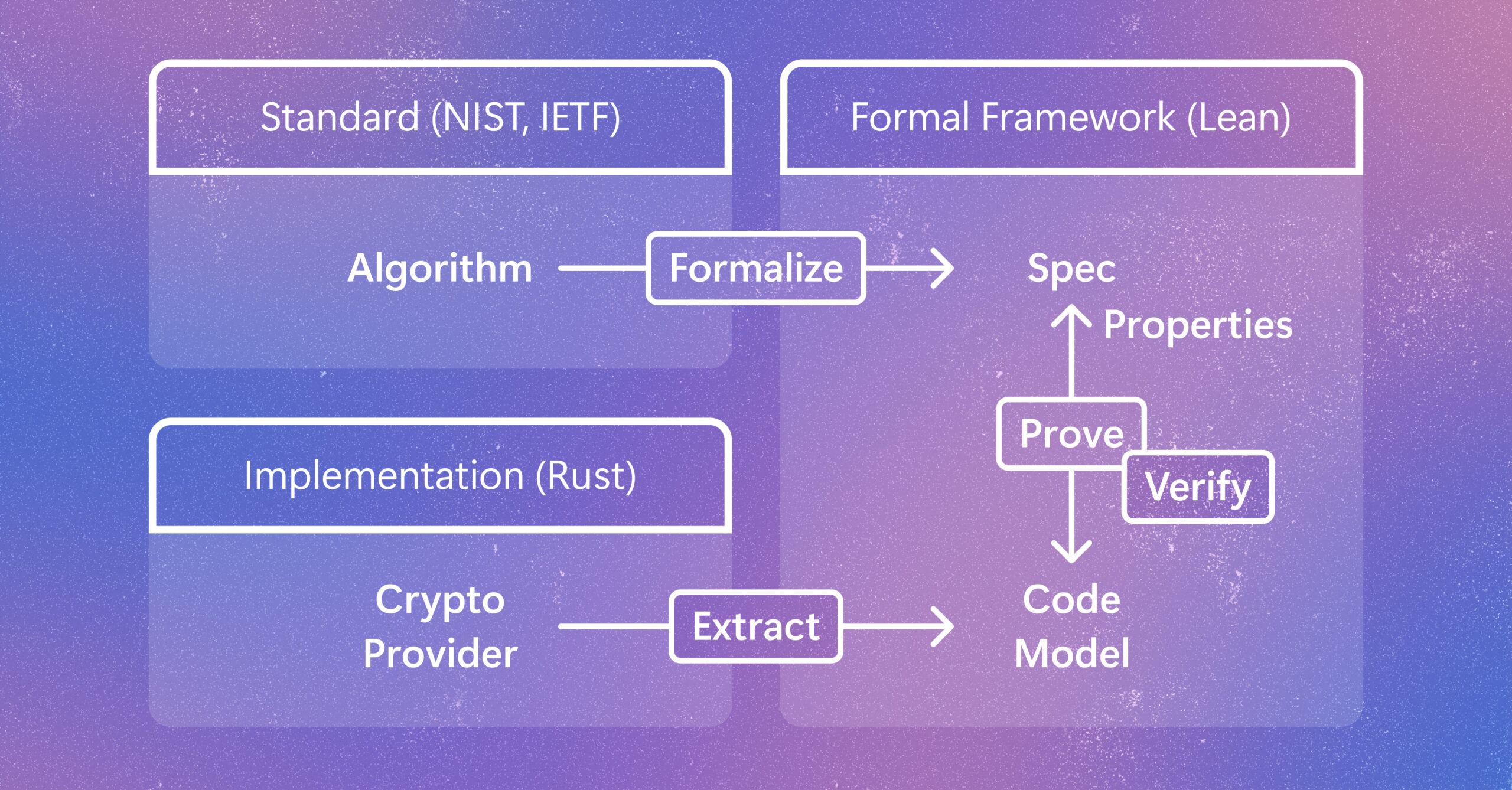
Cryptographic code supports vital protections in modern computing systems. Learn how a new method helps verify code as developers write it while preserving speed and adaptability as it gets implemented and evolves. The post Verifying Rust cryptography in SymCrypt, from standards to code appeared first on Microsoft Research.
MIT News · Artificial Intelligence· news.mit.eduJul 6, 2026
PhD student Rachel Sava, winner of the Envisioning the Future of Computing Prize, explores transformative improvements and dystopian risks of neural technology.