Federated learning enables collaborative model training without centralized collection of client data, but its reliability can deteriorate under statistical heterogeneity and Byzantine model-update manipulation. This paper proposes Adaptive Spectral Trust-Weighted Clipped Aggregation (ASTWCA), a topology-aware robust a...
Suresh Kumar Jha, Ketan Anand, Niroj Kumar Pani et al.· Discover Computing· 0 citations
Code and pre-trained models of An Architecture Built for Federated Learning: Addressing Data Heterogeneity through Adaptive Normalization-Free Feature Recalibration, TMLR 2025 (OpenReview, arXiv). The ImageNet-1k weights of the three ANFR backbones (normalization-free ResNet-50 with SE, ECA or CBAM attention) are on th...
Vasilis Siomos, Jonathan Passerat‐Palmbach, Giacomo Tarroni· Zenodo (CERN European Organi...· 0 citations
Abstract This rapid evolution of cyberattacks in distributed IoT environment becomes challenging for intrusion detection system which relies on historical attack knowledge, static model, and centralized collected security data. They offers little ability for privacy-preserving collaboration, long-term adaptation and an...
M. B. Bharath, B. A. Mala, N. Pavithra· Discover Applied Sciences· 0 citations
Android malware evolves continuously, causing machine-learning-based detectors trained on historical data to lose effectiveness against newer threats. At the same time, collaborative malware detection may be constrained by organisational and operational requirements that limit centralized pooling of raw application dat...
Amit Patel, Deepak Singh Tomar, R. K. Pateriya et al.· Discover Computing· 0 citations
Reach audiences
Advertise in front of researchers, engineers, and readers.
Abstract Background Wearable devices make continuous electrocardiogram (ECG) monitoring routine, but training diagnostic models on pooled patient data sits uneasily with how sensitive that data is. Federated learning avoids pooling, yet on battery-powered wearables it forces a compromise among diagnostic accuracy, form...
The sixth generation (6G) of wireless communication networks is poised to transcend the limitations of previous generations by embedding Artificial Intelligence (AI) as a native, foundational element across all layers of the network stack. This paradigm shift from AI-assisted to AI-native design envisions an end-to-end...
Wai Yie Leong· International Conference on...· 0 citations
The core challenge in cross-institution insurance fraud detection is that fraud-ring connectivity crosses institutional boundaries, while privacy regulations prohibit the centralized aggregation of raw claims data. This paper proposes CFGFraud, a federated graph detection framework for partially observable graphs. In t...
Chen Zhao· Journal of Digital Frontier· 0 citations
The evolution of wireless communication systems towards 6G networks is driven by the exponential demand for ultrareliable, low-latency, high-capacity connectivity. Cognitive Spectrum Management (CSM) emerges as a critical enabler for optimizing spectrum utilization in the densely populated electromagnetic environment e...
Wai Yie Leong· International Conference on...· 0 citations
Compared with an unprotected data lake and a centralized database, SecureMesh increased the integral confidentiality level, access control, and traceability to 96%, with only an 11% rise in access latency and 17% in computation cost, confirming the architecture's practical applicability at an acceptable overhead level.
P. Petriv, I. Opirskyy· Computer systems and network· 0 citations
By studying the computational foundations of language learning, Associate Professor Jacob Andreas builds intelligent systems that can communicate effectively with humans.
MIT News · Artificial Intelligence· news.mit.eduNov 17, 2026
AI coding agents are increasingly help developers fix bugs and build features largely on their own, but every interaction with their models consumes tokens. In each session, an agent sends instructions, tool descriptions, and session history to its model. Most efforts to reduce this cost focus on individual tasks. Yet developers return to the same […] The post TokenEconomizer: Learning from Experience to Make AI Coding Agents More Efficient appeared first on Microsoft Research.
MIT News · Artificial Intelligence· news.mit.eduNov 9, 2026
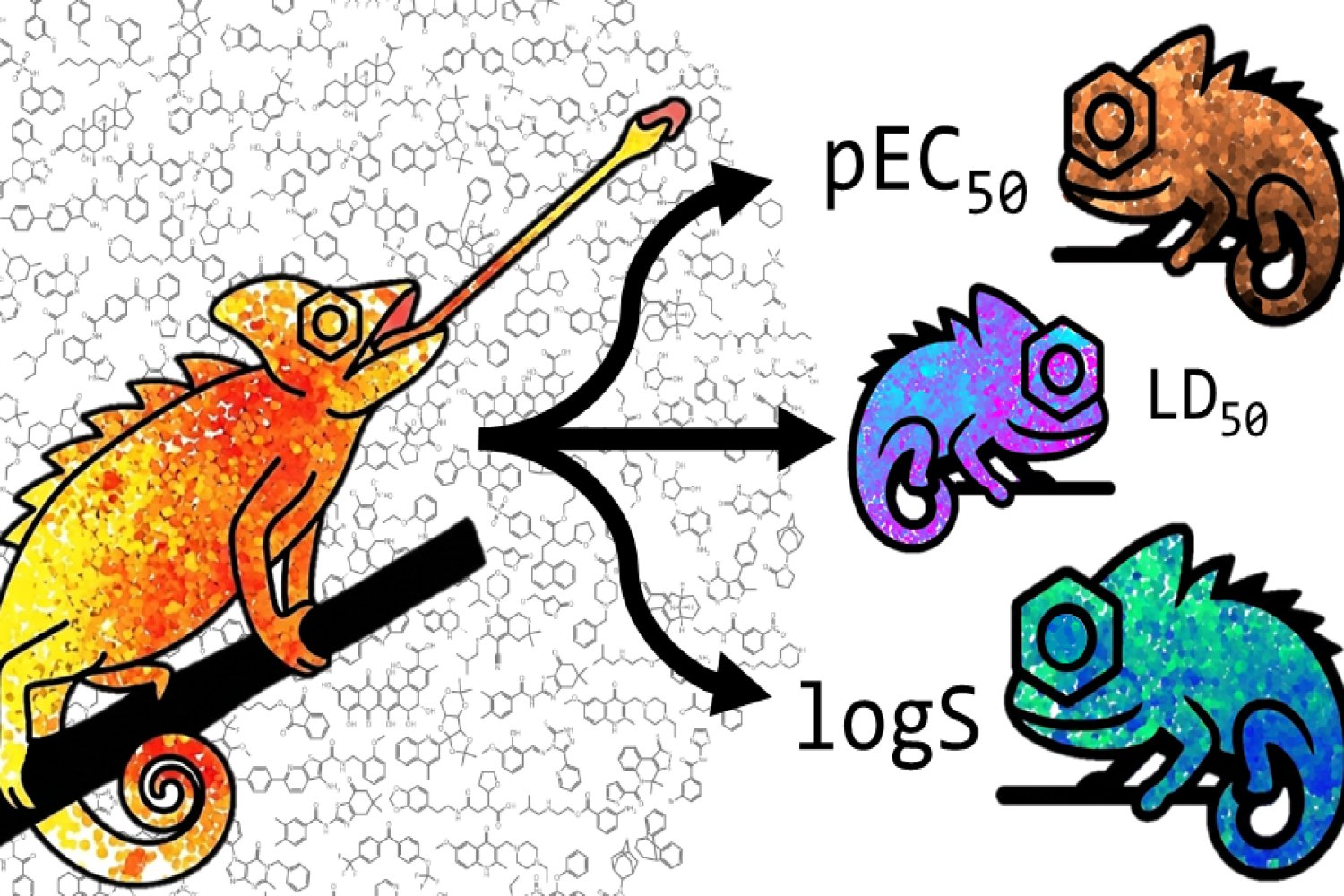
A machine-learning approach called CheMeleon provides a practical way to develop new drugs or other molecules with much less detailed, expensive experimentation.
We use cookies to run the site and, with your consent, for analytics and to show ads.
See our Cookie Policy.