Skip to content

AI-native 6G networks: architectures and protocols

Nov 2026 · International Conference on Advanced Optics and Photonics Research in Engineering (AOPR)
Advanced Wireless Communication Technologies Software-Defined Networks and 5G

Abstract

The sixth generation (6G) of wireless communication networks is poised to transcend the limitations of previous generations by embedding Artificial Intelligence (AI) as a native, foundational element across all layers of the network stack. This paradigm shift from AI-assisted to AI-native design envisions an end-to-end intelligent ecosystem capable of autonomously orchestrating resources, predicting network behaviors, and optimizing user experience at unprecedented scales. This paper proposes a comprehensive architecture for AI-native 6G networks that integrates distributed intelligence into the core network, radio access network (RAN), and edge computing infrastructure. The proposed framework leverages a hierarchical AI architecture comprising federated, swarm, and neuromorphic learning paradigms to support dynamic and context-aware decision-making in ultra-dense, heterogeneous environments. We introduce novel protocol stacks designed to enable AI-agent interoperability, knowledge distillation, and cross-layer adaptation, while addressing the critical challenges of explainability, latency-bounded inference, and data privacy. Furthermore, the paper presents an AI-native control plane powered by self-evolving knowledge graphs and graph neural networks (GNNs), enabling semantic-aware routing and predictive network state evolution. At the MAC and PHY layers, deep reinforcement learning (DRL)-based spectrum negotiation, THz-band beamforming, and non-orthogonal multiple access (NOMA) scheduling are incorporated to ensure ultra-reliable and low-latency communications (URLLC) and massive machine-type communication (mMTC). Simulation results demonstrate the performance of the AI-native 6G architecture in terms of energy efficiency, network throughput, and adaptability under dynamic conditions, outperforming traditional 5G-advanced systems. This work underscores the necessity of co-designing AI algorithms, communication protocols, and hardware accelerators to achieve the full potential of 6G. The findings advocate for a shift towards intelligence-centric standardization and open AI-network ecosystems to enable sustainable, secure, and self-organizing future networks.

View source

Similar papers

#computer vision Review Sep 2017

Agile Software Development Methods: Review and Analysis

This publication proposes a definition and a classification of agile software development approaches and analyses ten software development methods that can be characterized as being "agile" against the defined criterion.

P. Abrahamsson, O. Salo, Jussi Ronkainen et al. · 727 citations · ⚡54
#computer vision Jun 2008

The impact of agile practices on communication in software development

The study shows that agile practices improve both informal and formal communication, but indicates that, in larger development situations involving multiple external stakeholders, a mismatch of adequate communication mechanisms can sometimes even hinder the communication.

M. Pikkarainen, Jukka Haikara, O. Salo et al. · 401 citations · ⚡48
#machine learning Review Open access Oct 2014

Software development in startup companies: A systematic mapping study

The results indicate that software engineering work practices are chosen opportunistically, adapted and configured to provide value under the constrains imposed by the startup context.

Nicolò Paternoster, Carmine Giardino, M. Unterkalmsteiner et al. · 394 citations · ⚡54

Related blog posts

Microsoft Research Blog Jul 13, 2026

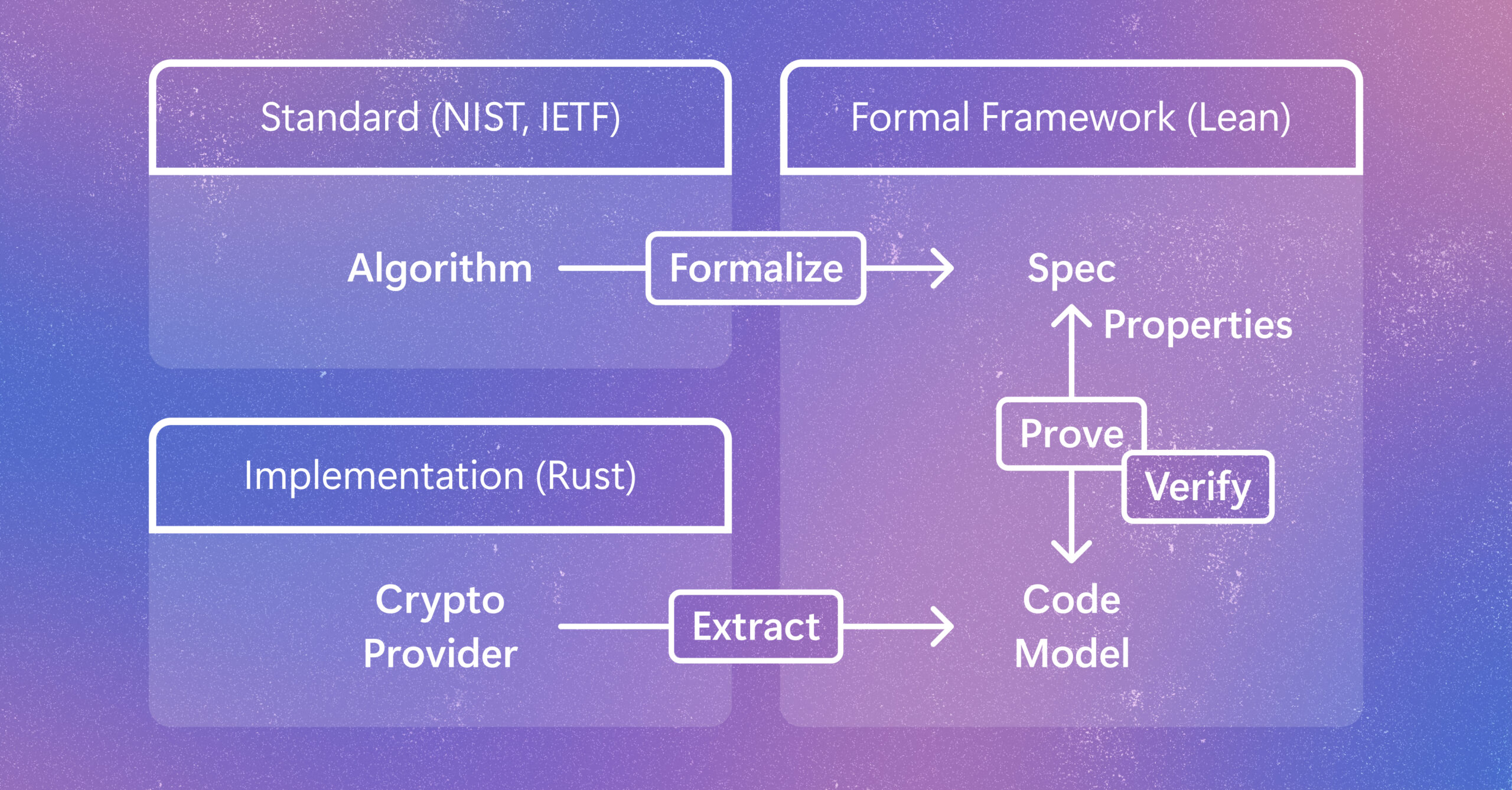
Verifying Rust cryptography in SymCrypt, from standards to code

Cryptographic code supports vital protections in modern computing systems. Learn how a new method helps verify code as developers write it while preserving speed and adaptability as it gets implemented and evolves. The post Verifying Rust cryptography in SymCrypt, from standards to code appeared first on Microsoft Research.

MIT News · Artificial Intelligence Nov 17, 2026

Learning the language of machine learning

By studying the computational foundations of language learning, Associate Professor Jacob Andreas builds intelligent systems that can communicate effectively with humans.

We use cookies to run the site and, with your consent, for analytics and to show ads. See our Cookie Policy.