Screening data, protocol, reliability records, and scripts of a PRISMA 2020-guided systematic mapping review (OpenAlex, arXiv, and Scopus searches; 1,808 included studies). Scopus abstracts are withheld for licensing reasons; Scopus records keep their EID, DOI, title, year, and all decisions.
This report describes how SemComIIoT can be be tested. It is written to be read on its own: the modelthat is tested is summarised in Chapter 3, and has been addressed in D4.1 [1]. D4.1 studied which decentralisedlearning approaches and which degrees of decentralisation can support Semantic communication (SemCom)in IIoT...
Rute C. Sofia· Zenodo (CERN European Organi...· 0 citations
Artificial intelligence (AI) is increasingly being explored as a tool to support food risk assessment and broader food safety activities in response to the growing complexity of global food supply chains, emerging foodborne hazards, and evolving food fraud practices. Unlike previous reviews that have largely focused on...
Nady Khairy Elbarbary, Marwa Abd-Elsayed Ali, Ahmed Fotouh et al.· Food Production Processing a...· 0 citations
Reach audiences
Advertise in front of researchers, engineers, and readers.
Abstract Federated learning enables edge devices to collaboratively train models in edge–cloud environments without sharing raw sensor data. In practical edge deployments, however, devices often have access to different subsets of modalities due to hardware heterogeneity, varying sensing conditions, or temporary sensor...
Qibin Zhou, Jianqi Shi, Boon Xian Chai et al.· Journal on Wireless Communic...· 0 citations
Early detection of leaks, bursts, process faults, and cyber-physical attacks is a direct lever for the sustainable management of water infrastructures: it reduces non-revenue water, the energy spent on treating and pumping lost water, and service interruptions (Sustainable Development Goal 6). Anomaly detectors for wat...
Bilal BOUKOFTANE, Antonio Pita, Juan M. Navarro· Sustainability· 0 citations
The move toward sixth-generation (6G) wireless networks introduces ultra-reliable low-latency communication and massive edge connectivity, but also enlarges the attack surface and demands security that is adaptive, lightweight, and decentralized. This paper presents a Federated Multi-Agent Deep Reinforcement Learning (...
Milad Rahmati, Nima Rahmati· Journal of Electrical System...· 0 citations
This deposit contains the simulation results for hierarchical federated deep reinforcement learning (HFDRL) applied to electric vehicle charging. It covers a 200-episode reward ablation study and a 1,000-episode policy comparison. The two archives include run-level results and analysis scripts. The accompanying reprodu...
Intelligent resource orchestration in large-scale distributed computing systems can be facilitated via Software-Defined Networking (SDN)-enabled cross-cloud infrastructures, which allow programmability, elasticity, and service-centric administration. OpenFlow prediction accuracy, resource utilization efficiency, and Qu...
S. Manikandan, R. Nadhiya Banu· Scientific Reports· 0 citations
Supplementary material for a systematic literature review of reinforcement learning and bandit-based defenses for robust federated learning: protocol and amendments, search records, screening decisions, extraction and quality forms, inter-rater reliability checks, and scripts that recompute the counts reported in the a...
Vanderson S. de O. L. Sampaio, Daniel Gouveia Costa, Douglas Dyllon Jerônimo de Macedo· Zenodo (CERN European Organi...· 0 citations
Abstract The rapid proliferation of serverless computing in heterogeneous edge environments has introduced critical challenges in task scheduling, load balancing, energy efficiency, and orchestration, particularly due to the absence of centralized control and the resource-constrained nature of edge nodes. Existing appr...
Federated Multi-Level Knowledge Distillation (FedMLKD), a novel framework that enables UAVs to exchange both logits and adaptively pooled intermediate features, is proposed, showing its ability to balance accuracy and efficiency, making it a practical candidate for real-time disaster mapping in bandwidth-constrained UA...
Ji-Jing Cai, Hui Zhang, W. Wang et al.· IEEE Transactions on Mobile...· 0 citations
By studying the computational foundations of language learning, Associate Professor Jacob Andreas builds intelligent systems that can communicate effectively with humans.
MIT News · Artificial Intelligence· news.mit.eduNov 17, 2026
AI coding agents are increasingly help developers fix bugs and build features largely on their own, but every interaction with their models consumes tokens. In each session, an agent sends instructions, tool descriptions, and session history to its model. Most efforts to reduce this cost focus on individual tasks. Yet developers return to the same […] The post TokenEconomizer: Learning from Experience to Make AI Coding Agents More Efficient appeared first on Microsoft Research.
MIT News · Artificial Intelligence· news.mit.eduNov 9, 2026
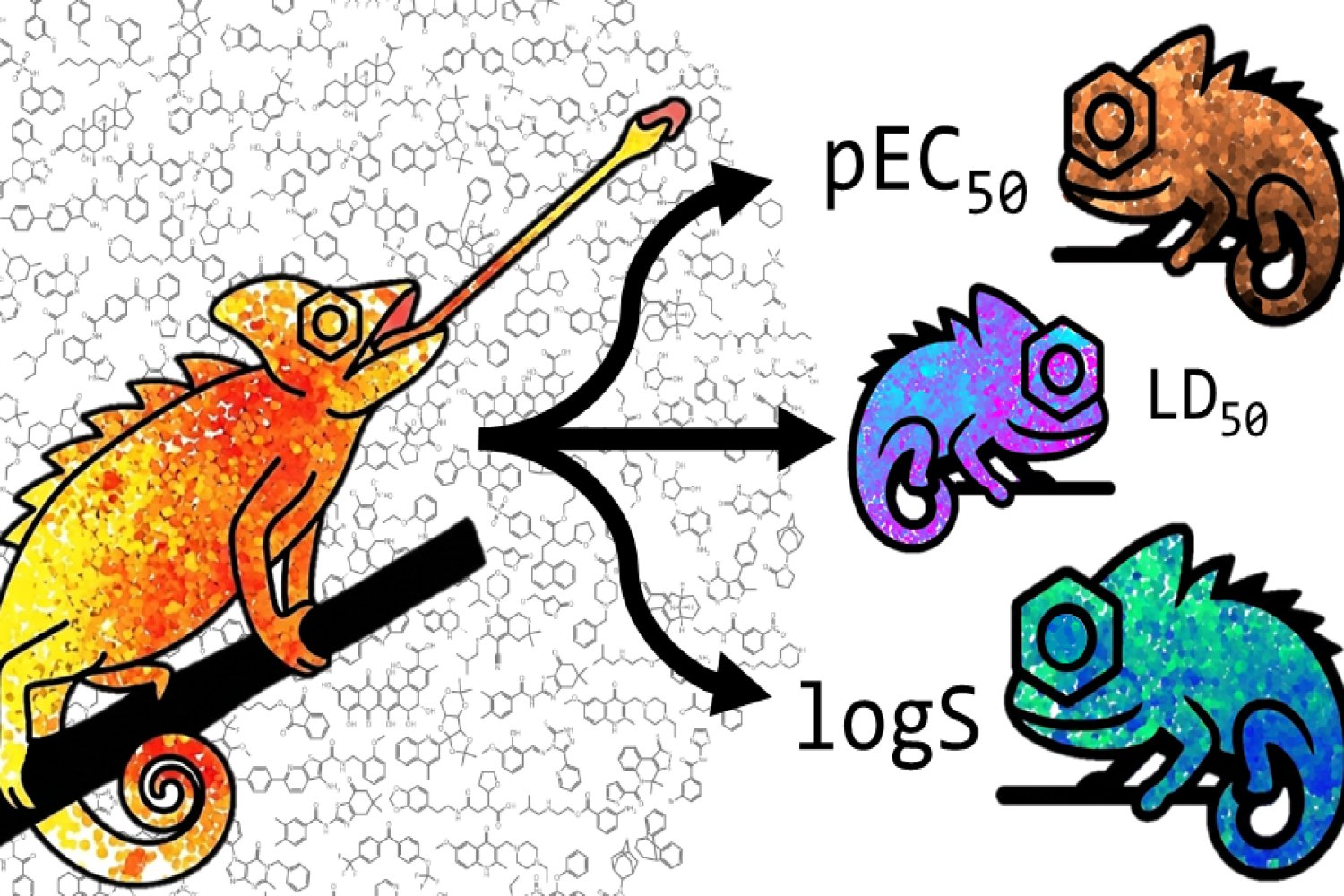
A machine-learning approach called CheMeleon provides a practical way to develop new drugs or other molecules with much less detailed, expensive experimentation.
We use cookies to run the site and, with your consent, for analytics and to show ads.
See our Cookie Policy.