A proximal policy optimization (PPO)-based reinforcement learning model under a centralized training and distributed execution (CTDE) framework is proposed, which outperforms benchmarks by optimizing the global model performance and the energy consumption, simultaneously.
Wonseok Lee, Young Jeon, Ba Cao Nguyen et al.· IEEE Transactions on Mobile...· 0 citations
This paper introduces Lyapunov-based Resource Allocation for FL (LyRA-FL), a unified cross-layer scheduling algorithm grounded in control theory and stochastic geometry that jointly optimizes communication reliability, a novel Value-of-Participation (VoP) metric, and long-term fairness during client selection.
Ruslan Zhagypar, Nour Kouzayha, Hesham Elsawy et al.· IEEE Transactions on Mobile...· 0 citations
The personalized Federated learning with Transparent Inter-client Contribution (pFedTIC) approach embraces a dual-level personalized model aggregation strategy to derive an individualized model for each client, and assesses inter-client contribution with the aggregation weights for enhancing transparency.
Yun-Feng Zhao, Guo-Xian Yu, Jun Wang et al.· IEEE Transactions on Mobile...· 0 citations
Assembled Projection Heads (APH) is proposed, a plug-and-play and communication-free head-ensemble framework that improves calibration by introducing controllable diversity while incurring negligible training and inference overhead, and Low-Rank Adaptation (LoRA)-based APH is developed, which replaces full projection h...
Jin-Qian Chen, Ji-Hua Zhu, Wen-Biao Yan et al.· IEEE Transactions on Mobile...· 1 citation
Reach audiences
Advertise in front of researchers, engineers, and readers.
A UDP-based SGFL framework is proposed that strategically discards lost parameters to improve network throughput and an Overlapped Block-wise Scheduling framework is designed that allows on-satellite training to run in parallel with model downloading, greatly reducing the total completion time of each FL round.
Fei Teng, Si-Jing Mou, Chen Yang et al.· IEEE Transactions on Mobile...· 5 citations
AFLoRA, an adaptive LoRA-based resource-efficient federated fine-tuning framework, introduces diagonal-based dynamic rank assignment, which dynamically adjusts local LoRA ranks based on client resources and local adaptation state guided by a learnable diagonal matrix and develops a zero-padding-based rank-aware aggrega...
Ya-Jie Zhou, Xia-Yi Pang, Zhi-Bo Wang et al.· IEEE Transactions on Mobile...· 0 citations
Federated unlearning (FU) has become a critical capability of privacy-sensitive edge intelligence, which enables mobile and Internet of Things (IoT) devices to revoke previously contributing data from collaboratively trained models. While previous studies have explored unlearning via retraining or approximate mechanism...
Xiao-Hong Jiang, Hong Zhong, De-Peng Chen et al.· IEEE Transactions on Mobile...· 0 citations
This work is the first to explore federated NLP in the few-shot scenario (FedFSL), and introduces a system, FeS, which addresses high execution costs through three key innovations: Curriculum pacing, which injects pseudo labels into the training process in alignment with the learning progress, and Representational dive...
Dong-Qi Cai, Chen Yang, Na Zou et al.· IEEE Transactions on Mobile...· 0 citations
Comprehensive experiments show that CEBTFL sustains high model accuracy and communication efficiency, even with up to 60% Byzantine EDs and 40% Byzantine ESs, and theoretical analysis demonstrates that CEBTFL maintains stable convergence, while dummy data can enhance Byzantine robustness.
Yuan-Jun Xia, Zhi-Yuan Tan, Peng-Fei Zhang et al.· IEEE Transactions on Mobile...· 1 citation
This work proposes Communication-efficient Inference Token Exchange (CITE), a decentralized inference-time framework that reduces communication overhead while outperforming state-of-the-art federated baselines in inference accuracy and privacy resilience.
Wei Sun, Zhi-Cheng Liang, Xian-Da Wang et al.· IEEE Transactions on Mobile...· 0 citations
A secure collaborative communication task offloading framework, which is federated multi-agent deep deterministic policy gradient with the score-trust based aggregation refinement (FedMADDPG-STAR) strategy, which can achieve secure and efficient communication task offloading under the non-stationary open nature wireles...
Li-Pen Li, Ning Gao, Zhi-Cheng Dong et al.· IEEE Transactions on Mobile...· 0 citations
By studying the computational foundations of language learning, Associate Professor Jacob Andreas builds intelligent systems that can communicate effectively with humans.
MIT News · Artificial Intelligence· news.mit.eduNov 17, 2026
AI coding agents are increasingly help developers fix bugs and build features largely on their own, but every interaction with their models consumes tokens. In each session, an agent sends instructions, tool descriptions, and session history to its model. Most efforts to reduce this cost focus on individual tasks. Yet developers return to the same […] The post TokenEconomizer: Learning from Experience to Make AI Coding Agents More Efficient appeared first on Microsoft Research.
MIT News · Artificial Intelligence· news.mit.eduNov 9, 2026
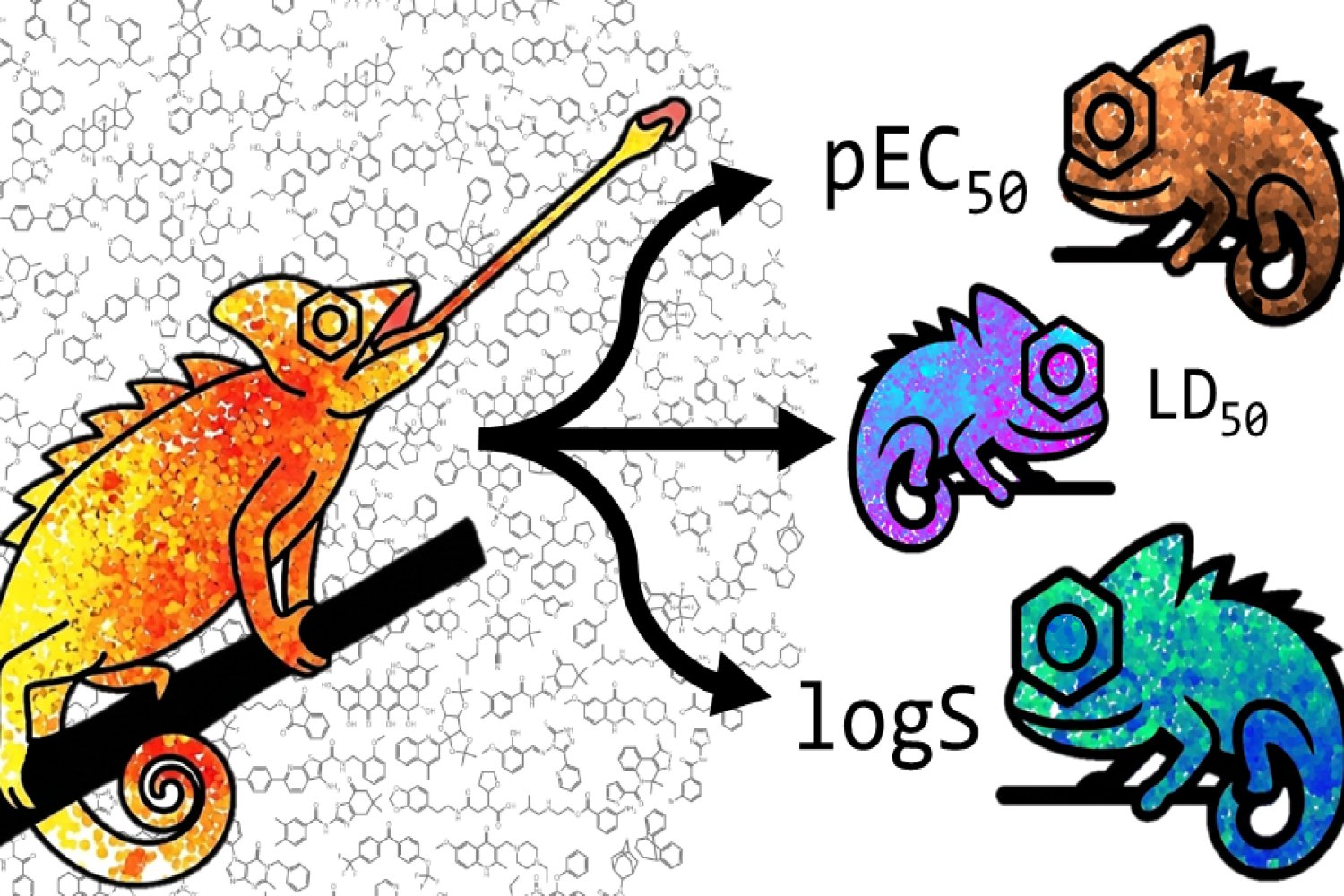
A machine-learning approach called CheMeleon provides a practical way to develop new drugs or other molecules with much less detailed, expensive experimentation.
We use cookies to run the site and, with your consent, for analytics and to show ads.
See our Cookie Policy.