CLIP-like vision-language models remain a cornerstone of multimodal systems, yet their scores stay near chance on directed spatial relations, such as whether one object is left of another. We call this failure readout blindness and analyze, theoretically and empirically, why deployed scores miss the direction: when sco...
Guang-Yuan Li, Tian-Ming Du, Yan Jiang et al.· 0 citations
We consider the fusion of lung ultrasound images with routinely-collected clinical and demographic data for the purpose of automated tuberculosis (TB) screening using deep-learning. Such deep-learning based screening tools for TB could meaningfully support the health care system in Africa, where the burden of disease i...
Joshua M. Jansen van V\"uren, Christiaan M. Geldenhuys, Devendra S. Parihar et al.· 0 citations
Training a small projector between a frozen vision encoder and language model is an established approach to multimodal learning. As the parameter count of language models scales dramatically, we revisit which vision capabilities this approach can add while keeping their pretrained weights fixed. Here we train a 50M par...
Jaehoon Lee, Harry B. Partridge, M. Jayasekara et al.· 0 citations
Multimodal models are increasingly shifting toward unified architectures that understand and generate text, images, and other modalities within a shared conversational context. This design enables fluid interaction across modalities, but it also changes the privacy threat model: Information revealed in one part of a co...
Tobias Braun, Jonas Henry Grebe, Emil Sivic et al.· 0 citations
Reach audiences
Advertise in front of researchers, engineers, and readers.
Automated checks of radiology reports may rely on AI-generated checklists that leave findings unmentioned. We used reinforcement learning to train a vision-language model to fill in a 12-finding checklist from a chest radiograph without seeing the sentence under test; a separate checking model judged the sentence from...
Ali Vosoughi, Akhil Kasturi, Chenliang Xu et al.· 0 citations
Infrared image super-resolution is currently led by Mamba-based networks with 26 to 37 million parameters, which are difficult to deploy on the airborne and handheld platforms where thermal imaging is most needed. This paper presents TIRMamba, a network with 896K to 910K parameters for single-channel thermal imagery. A...
In weakly supervised Whole Slide Image (WSI) classification, feature extractors typically compress each image tile into a single global embedding. Consequently, slide-level aggregators are restricted to this coarse tile scale, concealing fine-grained sub-tile evidence from the attention mechanism. We introduce DI-MIL,...
Runsheng Liu, Cheng Jin, Hao Jiang et al.· 0 citations
Segment-based explanation methods such as LIME return a single explanation for each prediction, computed from one fixed image segmentation. This hides two important facts: a prediction can be supported by many different sets of image segments, and the segmentation itself shapes which explanations can be found. We intro...
Magnetic Resonance Imaging (MRI) is widely regarded as the optimal sensor for fetal brain analysis due to its superior soft-tissue contrast and anatomical detail. However, its high cost and operational burden make it invasive and difficult to obtain at scale. Ultrasound (US), in contrast, is cheap, safe, and routinely...
Francesco Correnti, Gabriele Magrini, Marco Mistretta et al.· 0 citations
Radiology report generation (RRG) aims to convert medical images into diagnostic texts to assist in clinical decision-making and alleviate the workload of physicians. Although existing methods have made extensive progress in cross-modal interaction and the incorporation of external priors, the distribution shift of und...
Er-Jian Zhang, Jia-Yuan Ma, Lie-Jun Wang et al.· 0 citations
Semantic Knowledge-driven Contrastive Learning (SKCL) uses a language model to decide which classes are related, and pulls each image towards the prototypes of its semantic neighbours. On CIFAR-100-LT (beta = 100) it reports 54.02% top-1 accuracy, 2.01 points above Balanced Contrastive Learning (BCL), the method it bui...
Visual grounding models can enhance radiology workflows by linking report findings to image regions. This is particularly valuable for 3D CT, where findings often occupy a tiny fraction of the volume. Training 3D grounding models requires large sets of paired phrases and regions, and building such datasets is expensive...
Sam Church, Danyal Maqbool, Joshua D. Warner et al.· 0 citations
Exploring how generative AI could make machine vision more accessible to businesses. The post GenEye in a Box: Making Machine Vision Something You Can Just Ask For appeared first on GPT-Lab.
Jennifer Neville did not want to go into computer science—but that’s exactly where she landed. Neville discusses the starts and stops that led to her professional sweet spot and her work identifying “surprising failures” making it hard for AI to handle complexity. The post What AI gets wrong and what failure teaches us appeared first on Microsoft Research.
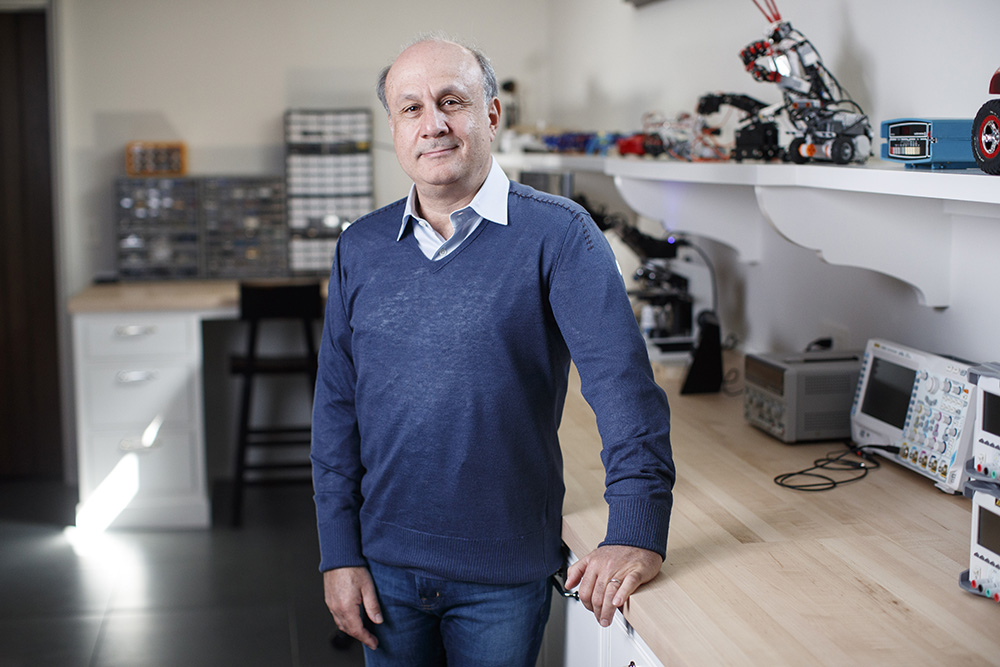
Computer scientist, entrepreneur, and philanthropist will collaborate with the MIT Schwarzman College of Computing to advance AI and scientific discovery.