Skip to content
#machine learning #computer vision Preprint Open access

How well do routinely collected demographic and clinical variables aid point-of-care lung ultrasound TB classification

Joshua M. Jansen van V\"uren Christiaan M. Geldenhuys Devendra S. Parihar V\'eronique Suttels Trevor Brokowski Ablo P. Wachinou Mary-Anne Hartley Rensu P. Theart Grant Theron Thomas R. Niesler
Oct 2026
Machine Learning Computer Vision

Abstract

We consider the fusion of lung ultrasound images with routinely-collected clinical and demographic data for the purpose of automated tuberculosis (TB) screening using deep-learning. Such deep-learning based screening tools for TB could meaningfully support the health care system in Africa, where the burden of disease is severe and resources are constrained. Beginning with an established ResNet baseline for classification of lung ultrasound images, which achieves an area under the receiver operating characteristic (AUROC) curve of 0.91 [0.86,0.96] (95% CI), we consider the incorporation of the clinical and demographic data using three fusion approaches. We find that a simple average-based fusion of the output scores of separately-trained image and clinical data classifiers consistently matches or outperforms a more complex approach where the data is fused earlier and a combined classifier is trained. Fusing the image and the clinical classifiers in this way leads to a classifier with an overall AUROC of 0.95 [0.91,0.99] (specificity of 0.76 at sensitivity 0.93) which is an improvement of 4% absolute over the image-only baseline. We also find that greedy feature selection can be used to reduce the number of clinical and demographic inputs without sacrificing classification performance. Finally, when we differentiate between clinical and demographic data that are self-reported, that require some basic measurement or calculation, and that require a point-of-care (POC) test, we find the inclusion of the POC tests included in this study to be of minimal benefit to classification performance. We conclude that the incorporation of routinely-collected clinical and demographic data is a promising way to improve the performance of lung ultrasound based automatic classification.

View source

Similar papers

#computer vision Review Sep 2017

Agile Software Development Methods: Review and Analysis

This publication proposes a definition and a classification of agile software development approaches and analyses ten software development methods that can be characterized as being "agile" against the defined criterion.

P. Abrahamsson, O. Salo, Jussi Ronkainen et al. · 727 citations · ⚡54
#computer vision Jun 2008

The impact of agile practices on communication in software development

The study shows that agile practices improve both informal and formal communication, but indicates that, in larger development situations involving multiple external stakeholders, a mismatch of adequate communication mechanisms can sometimes even hinder the communication.

M. Pikkarainen, Jukka Haikara, O. Salo et al. · 401 citations · ⚡48
#machine learning Review Open access Oct 2014

Software development in startup companies: A systematic mapping study

The results indicate that software engineering work practices are chosen opportunistically, adapted and configured to provide value under the constrains imposed by the startup context.

Nicolò Paternoster, Carmine Giardino, M. Unterkalmsteiner et al. · 394 citations · ⚡54

Diffusion models as plug-and-play priors

The possibility of inferring high-dimensional data inference in a model that consists of a prior and an auxiliary differentiable constraint given some additional information is considered, thereby allowing a range of potential applications in adapting models to new domains and tasks.

Alexandros Graikos, Esmeralda S. Whitammer, N. Jojic et al. · 316 citations · ⚡15

Related blog posts

Microsoft Research Blog Aug 11, 2026

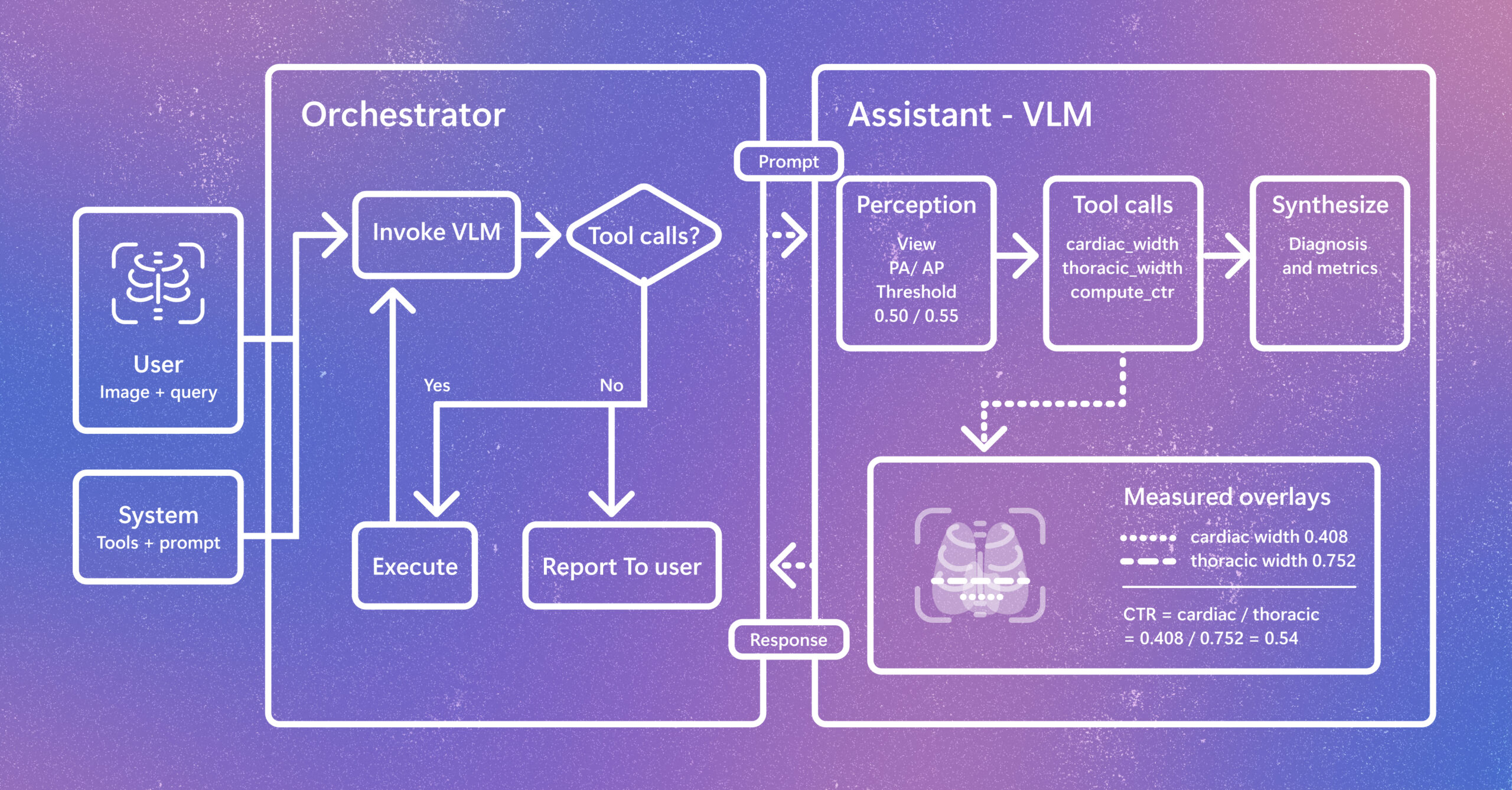
Introducing CARE-X: Towards Clinically Useful Radiology VLMs with Auxiliary Supervision, Reward-Aligned Learning, and Tool-Augmented Measurement

Radiology AI is evolving beyond report generation. CARE-X explores a unified approach that combines flexible reasoning, calibrated predictions, and measurement-based tools for chest X-ray interpretation. The post Introducing CARE-X: Towards Clinically Useful Radiology VLMs with Auxiliary Supervision, Reward-Aligned Learning, and Tool-Augmented Measurement appeared first on Microsoft Research.

MIT News · Artificial Intelligence Oct 7, 2026

Discovering the value of humanistic inquiry

Students in MIT’s Concourse program delve deeply into the human condition, debate challenging questions, and learn to develop judgment about issues that can’t be quantified.

We use cookies to run the site and, with your consent, for analytics and to show ads. See our Cookie Policy.
