WASP: Weakly Aligned Spatiotemporal Pairs for Fetal Brain MRI-Ultrasound Learning
Francesco CorrentiGabriele MagriniMarco MistrettaNiccol\`o BiondiPietro PalaAlessandro RamalliSimona FioriAndrew D. BagdanovMatteo Lenge
Oct 2026
Machine LearningComputer Vision
Abstract
Magnetic Resonance Imaging (MRI) is widely regarded as the optimal sensor for fetal brain analysis due to its superior soft-tissue contrast and anatomical detail. However, its high cost and operational burden make it invasive and difficult to obtain at scale. Ultrasound (US), in contrast, is cheap, safe, and routinely acquired, and as a result it has produced substantially larger datasets and a growing ecosystem of pretrained models. This asymmetry raises a natural question: Can we teach a US-only model to understand fetal MRI from only a limited set of examples? The standard recipe, training a foundation model on subject-to-subject paired MRI-US scans, is not viable since no such paired fetal dataset is publicly available. In this paper we address this gap with Weakly Aligned Spatiotemporal Pairs (WASP), a framework that formulates cross-modal correspondence as an entropic Optimal Transport problem driven by clinical metadata, in particular Gestational Age (GA) and diagnostic planes, enabling the fitting of a lightweight alignment module that lifts MRI representations into the US latent space, without fine-tuning the backbone. Empirically, WASP yields its largest gains when MRI is unseen by the model during pretraining (on USFM, GA estimation error drops from 21.9 to 17.4 days and standard plane classification accuracy climbs from 61.9% to 69.0%), while providing smaller, backbone-dependent refinements for backbones pretrained on both modalities (e.g., BioMedParse GA estimation error from 6.5 to 6.0 days and SAM-Med2d plane accuracy from 83.3% to 88.1%). Code is available at https://github.com/miccunifi/WASP.
This publication proposes a definition and a classification of agile software development approaches and analyses ten software development methods that can be characterized as being "agile" against the defined criterion.
P. Abrahamsson, O. Salo, Jussi Ronkainen et al.· arXiv.org· 727 citations· ⚡54
The study shows that agile practices improve both informal and formal communication, but indicates that, in larger development situations involving multiple external stakeholders, a mismatch of adequate communication mechanisms can sometimes even hinder the communication.
M. Pikkarainen, Jukka Haikara, O. Salo et al.· Empirical Software Engineeri...· 401 citations· ⚡48
The results indicate that software engineering work practices are chosen opportunistically, adapted and configured to provide value under the constrains imposed by the startup context.
Nicolò Paternoster, Carmine Giardino, M. Unterkalmsteiner et al.· Information and Software Tec...· 394 citations· ⚡54
The possibility of inferring high-dimensional data inference in a model that consists of a prior and an auxiliary differentiable constraint given some additional information is considered, thereby allowing a range of potential applications in adapting models to new domains and tasks.
Alexandros Graikos, Esmeralda S. Whitammer, N. Jojic et al.· Neural Information Processin...· 316 citations· ⚡15
Exploring how generative AI could make machine vision more accessible to businesses. The post GenEye in a Box: Making Machine Vision Something You Can Just Ask For appeared first on GPT-Lab.
Microsoft Research Blog· microsoft.comAug 11, 2026
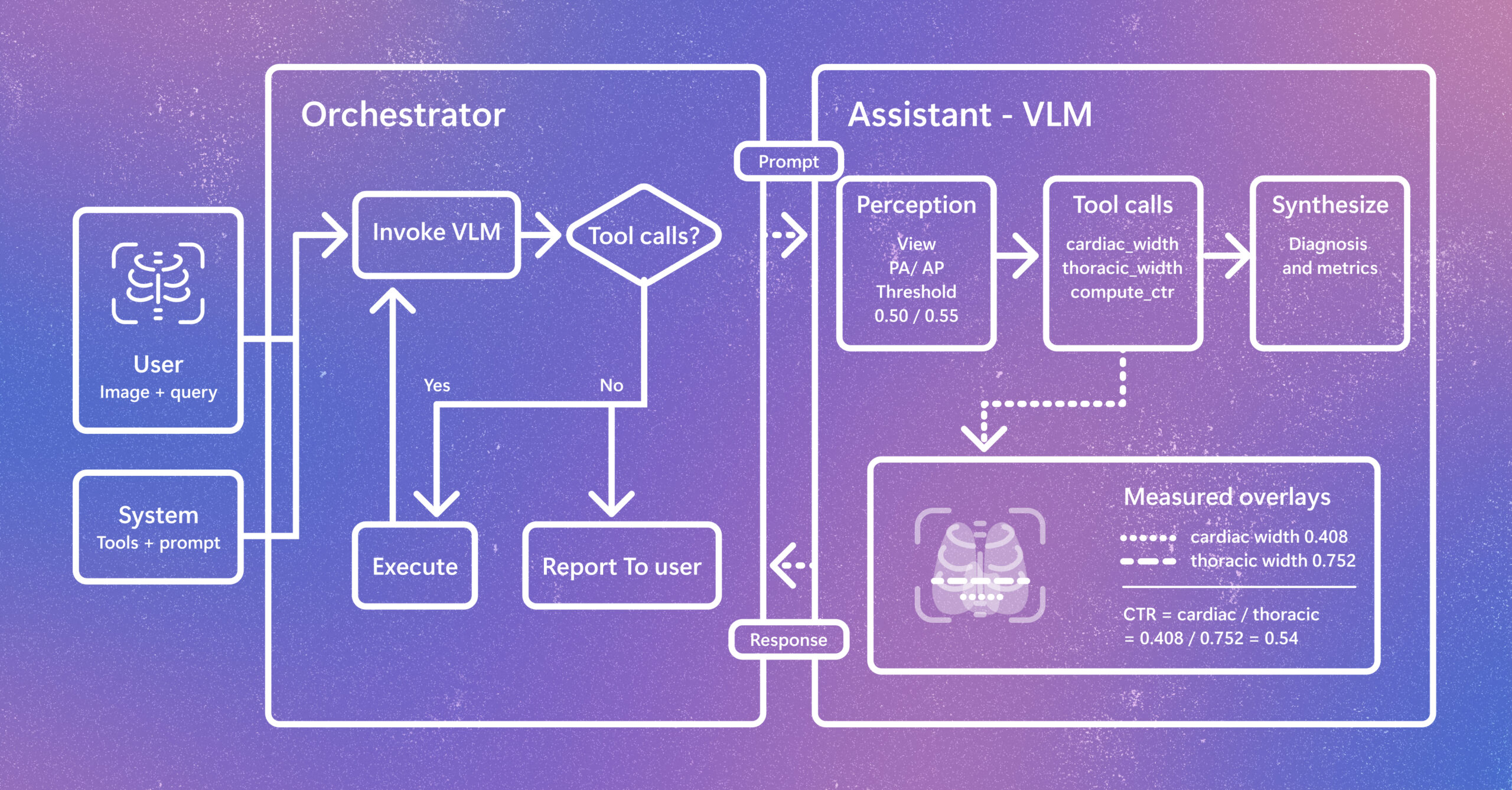
Radiology AI is evolving beyond report generation. CARE-X explores a unified approach that combines flexible reasoning, calibrated predictions, and measurement-based tools for chest X-ray interpretation. The post Introducing CARE-X: Towards Clinically Useful Radiology VLMs with Auxiliary Supervision, Reward-Aligned Learning, and Tool-Augmented Measurement appeared first on Microsoft Research.
Students in MIT’s Concourse program delve deeply into the human condition, debate challenging questions, and learn to develop judgment about issues that can’t be quantified.
We use cookies to run the site and, with your consent, for analytics and to show ads.
See our Cookie Policy.