Skip to content

Homogeneous Semantic Alignment and Hierarchical Expert Routing for Radiology Report Generation

Oct 2026 · 0 citations · 38 references
Computer Science

Abstract

Radiology report generation (RRG) aims to convert medical images into diagnostic texts to assist in clinical decision-making and alleviate the workload of physicians. Although existing methods have made extensive progress in cross-modal interaction and the incorporation of external priors, the distribution shift of underlying representations and the undifferentiated rigid coupling of heterogeneous information cause weak visual abnormality cues to be easily diluted by massive text priors and generation inertia during decoding. To overcome this bottleneck, inspired by cognitive science, we propose a novel two-stage Homogeneous Semantic Alignment and Hierarchical Expert Routing (HSA-HER) framework. First, the model introduces an explicit homogeneous distribution constraint in the underlying latent space to effectively eliminate the cross-modal distribution shift between visual and textual features, thereby extracting purified visual features as semantic anchors that accurately align with diseases. Second, for heterogeneous clinical evidence composed of visual features, local entities, and global retrievals, we design a hierarchical expert routing mechanism guided by these disease semantic anchors. This mechanism abandons the undifferentiated rigid coupling paradigm. Specifically, it dynamically activates expert networks to perform targeted mining and semantic reconstruction on multi-source evidence, and adaptively allocates fusion weights. Extensive experiments on three mainstream benchmark datasets demonstrate that HSA-HER achieves state-of-the-art performance, accurately depicting complex imaging details and key diagnostic information.


View source

Similar papers

#computer vision Review Sep 2017

Agile Software Development Methods: Review and Analysis

This publication proposes a definition and a classification of agile software development approaches and analyses ten software development methods that can be characterized as being "agile" against the defined criterion.

P. Abrahamsson, O. Salo, Jussi Ronkainen et al. · 727 citations · ⚡54
#computer vision Jun 2008

The impact of agile practices on communication in software development

The study shows that agile practices improve both informal and formal communication, but indicates that, in larger development situations involving multiple external stakeholders, a mismatch of adequate communication mechanisms can sometimes even hinder the communication.

M. Pikkarainen, Jukka Haikara, O. Salo et al. · 401 citations · ⚡48
#machine learning Review Open access Oct 2014

Software development in startup companies: A systematic mapping study

The results indicate that software engineering work practices are chosen opportunistically, adapted and configured to provide value under the constrains imposed by the startup context.

Nicolò Paternoster, Carmine Giardino, M. Unterkalmsteiner et al. · 394 citations · ⚡54

Diffusion models as plug-and-play priors

The possibility of inferring high-dimensional data inference in a model that consists of a prior and an auxiliary differentiable constraint given some additional information is considered, thereby allowing a range of potential applications in adapting models to new domains and tasks.

Alexandros Graikos, Esmeralda S. Whitammer, N. Jojic et al. · 316 citations · ⚡15

Related blog posts

MIT News · Artificial Intelligence Aug 27, 2026

Looking beyond natural sequences

A new machine-learning framework aims to improve the success rate of computational protein design while moving away from results that reproduce sequences found in nature.

Microsoft Research Blog Aug 11, 2026

Introducing CARE-X: Towards Clinically Useful Radiology VLMs with Auxiliary Supervision, Reward-Aligned Learning, and Tool-Augmented Measurement

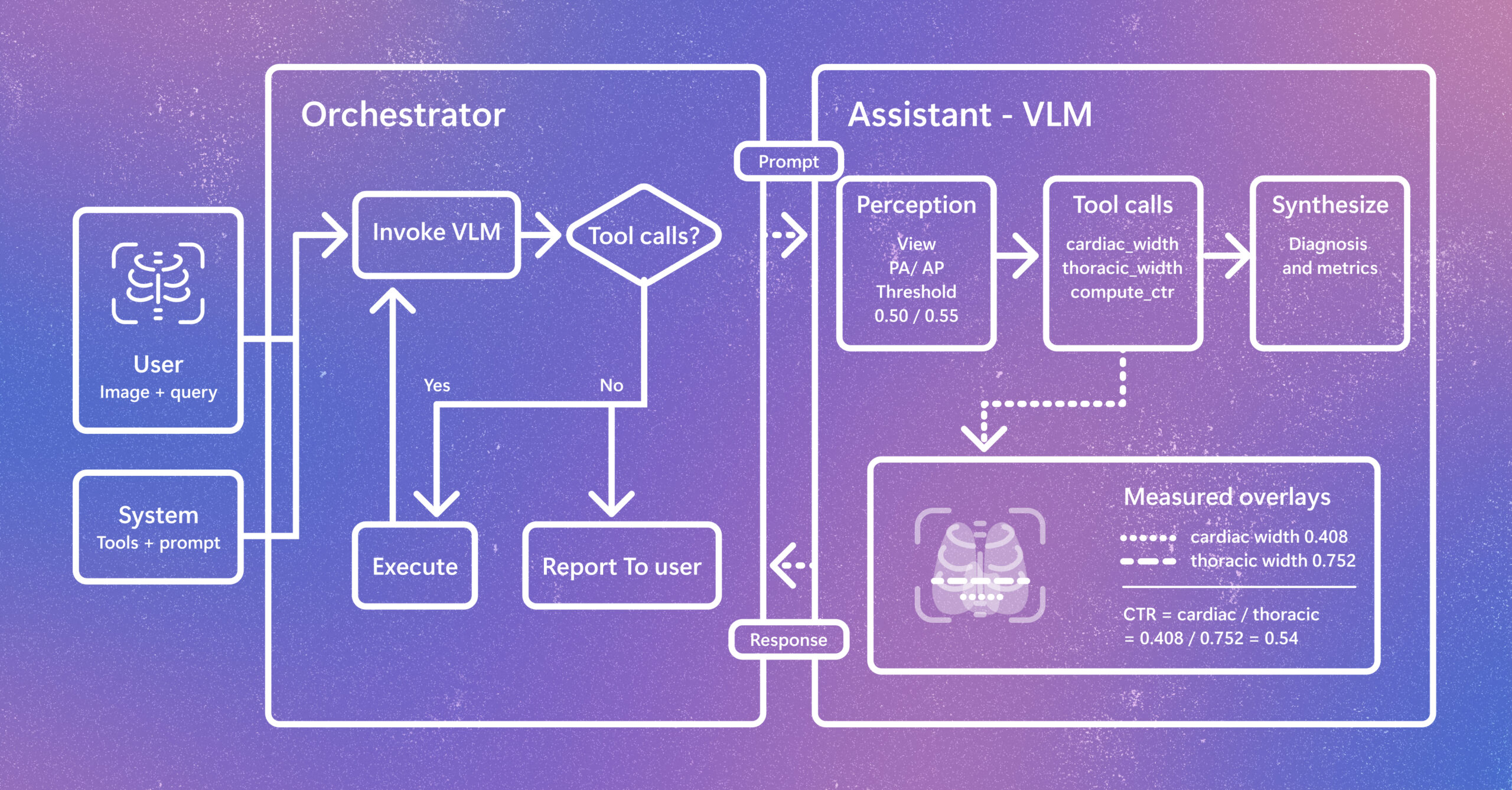
Radiology AI is evolving beyond report generation. CARE-X explores a unified approach that combines flexible reasoning, calibrated predictions, and measurement-based tools for chest X-ray interpretation. The post Introducing CARE-X: Towards Clinically Useful Radiology VLMs with Auxiliary Supervision, Reward-Aligned Learning, and Tool-Augmented Measurement appeared first on Microsoft Research.

We use cookies to run the site and, with your consent, for analytics and to show ads. See our Cookie Policy.