The proposed model combining a long short-term memory backbone, GNSS conditioning, and a graph neural network (GNN), denoted LSTM+GNN+GNSS, for 4 h wind-power forecasting demonstrates the incremental predictive value of the complete GNSS-conditioning pathway under the chronological holdout protocol.

Abstract
Ground-based Global Navigation Satellite System (GNSS) stations provide continuous atmospheric remote sensing through electromagnetic propagation delays. Precise point positioning (PPP) yields zenith tropospheric delay (ZTD), and ZTD gradients provide a proxy for off-farm tropospheric structure that is unavailable to supervisory control and data acquisition (SCADA)-only forecasts. We propose a model combining a long short-term memory (LSTM) backbone, GNSS conditioning, and a graph neural network (GNN), denoted LSTM+GNN+GNSS, for 4 h wind-power forecasting. Historical PPP-derived ZTD and quality indicators condition a shared temporal representation; a ZTD-gradient direction proxy, turbine geometry, and observation confidence guide a gated graph-residual correction at 15–90 min. On 666 common Yandun test origins, we compare LSTM, LSTM+GNN, and LSTM+GNN+GNSS. The complete system achieves a normalized mean absolute error (nMAE) of 4.53% (4.527 ± 0.132% across three power-model seeds), reducing nMAE by 7.57% relative to LSTM+GNN and 8.23% relative to LSTM. Paired moving-block 95% confidence intervals support both comparisons, while Bonferroni-adjusted lead-wise tests agree from 30 to 225 min. These results demonstrate the incremental predictive value of the complete GNSS-conditioning pathway under the chronological holdout protocol.

Short-term extreme precipitation nowcasting remains challenging because convective rainfall evolves through coupled moisture, dynamical, and microphysical processes that are only partially observed by any single sensor. Radar composite reflectivity (CR) directly describes hydrometeor structures, whereas global navigati...
Jia-Le Wang, Ying-Chao You, Ming Xia et al.· IEEE Transactions on Geoscie...· 0 citations
Near-real-time profiling of the vertical distribution of tropospheric water vapor is important for a wide range of weather monitoring and forecasting applications. In this study, a GNSS-based Profiling Tropospheric Humidity Network (GPTHNet) was developed to retrieve tropospheric absolute humidity using observations...
Shou-Dong Zhou, De-Gao Wang, Qing-Qing Zheng et al.· Frontiers in Astronomy and S...· 0 citations
Abstract Short-term vertical coordinates from daily static Precise Point Positioning (PPP) may contain environmental signals, but they are also sensitive to processing choices, station effects, and network-wide errors. This study re-evaluates whether local antecedent rainfall provides out-of-sample predictive informati...
Madlazim, Muhammad Nurul Fahmi, A. Realita et al.· Journal of Applied Geodesy· 0 citations
The rapid expansion of low-altitude uncrewed aerial system (UAS) operations in complex mountainous urban environments have created urgent demand for high spatiotemporal resolution water vapor observations to support safe flight, precise navigation, and growth of the low-altitude economy. To address this unmet need, thi...
Huan Zhang, Gui-Hua Zhang, Bao Zhang et al.· IEEE Journal of Selected Top...· 0 citations
Spaceborne Global Navigation Satellite System Reflectometry (GNSS-R) archives usually provide only one delay–Doppler map (DDM) for each recorded observation condition, limiting the representation of residual DDM variability. This study proposes a Position-Guided Conditional Normalizing Flow (PGCFlow) for observation-gr...
Wei-Min Chen, Dong-Mei Song, Bin Wang· Journal of Marine Science an...· 0 citations
Related blog posts
MIT News · Artificial Intelligence· news.mit.eduOct 26, 2026
Machine-learning networks can learn without detailed instructions from a designer. Those that do may offer insight into how the brain reorganizes itself during learning.
MIT News · Artificial Intelligence· news.mit.eduJul 15, 2026
Assistant Professor Pat Pataranutaporn describes a new interface that lets everyday users glimpse inside an AI's neural network before their chatbot ever says a word.
Microsoft Research Blog· microsoft.comJul 13, 2026
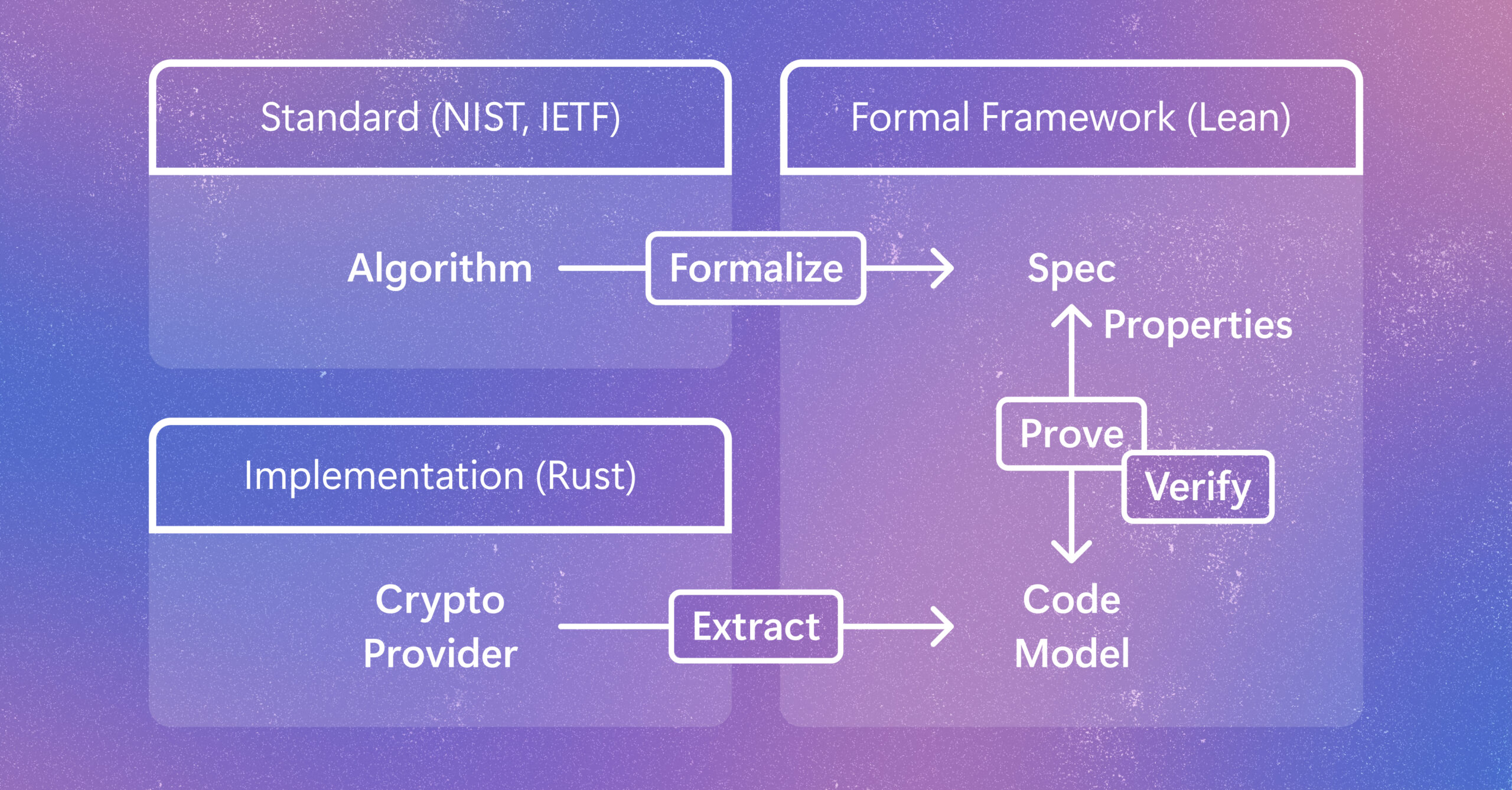
Cryptographic code supports vital protections in modern computing systems. Learn how a new method helps verify code as developers write it while preserving speed and adaptability as it gets implemented and evolves. The post Verifying Rust cryptography in SymCrypt, from standards to code appeared first on Microsoft Research.
We use cookies to run the site and, with your consent, for analytics and to show ads.
See our Cookie Policy.