Broadly, CIFM shows how generative artificial intelligence methods can be applied to model emergent behavior in highly interacting biological systems, yielding new approaches to fundamental understanding of tissue behavior as well as large-scale therapeutic design.

Abstract
Computational design has transformed many fields of engineering, where simulators can explore millions of candidate design configurations before experimental development and testing. Therapeutic design in biomedicine has resisted computational design approaches because disease progression and therapeutic response emerge from interactions among many cell types within human tissue, governed by biochemical parameters that are largely unknown and potentially unknowable. Here, we introduce the Cell Interaction Foundation Model (CIFM), a virtual tissue model that forward-simulates the transcriptional dynamics of cells in human tissue under arbitrary therapeutic conditions based upon a spatial transcriptomic seed. CIFM is a geometric graph neural network trained by self-supervised masked-transcriptome prediction on millions of cellular microenvironments spanning human tissue types and disease states; generative, auto-regressive, monte-carlo play-out, then, simulates transcriptional dynamics under combinatorial perturbations from a spatial transcriptomic seed. We validate CIFM by showing accuracy gains in gene expression prediction and imputation, disease classification, recapitulation of perturbation responses in prostate cancer models, and recovery of T cell-tumor signaling measured in cell–cell sequencing experiments. Beyond such conventional tasks, CIFM enables target identification and therapeutic design through generative tissue simulation play-outs. Analyzing over 106 single and combinatorial perturbations, CIFM designs immunotherapy strategies for cancer and autoimmune disease that exploit combinatorial manipulation of signaling pathways to induce or suppress immune activation. Broadly, CIFM shows how generative artificial intelligence methods can be applied to model emergent behavior in highly interacting biological systems, yielding new approaches to fundamental understanding of tissue behavior as well as large-scale therapeutic design.

: Due to the fast development of single-cell transcriptomics technologies, society is provided unprecedented resolution for analyzing cellular heterogeneity and researching gene regulatory networks, and individuals believe that effective solutions to adequately reproduce the cellular perturbations should be urgently id...
Han-Ze Bao· Advances in Computer Signals...· 0 citations
``Single-cell and spatial atlases describe the healthy and diseased liver at high resolution, including lobular hepatocyte zonation, fibrotic macrophage-stellate niches, cholangiocyte reactions, immune remodeling, and hepatocellular carcinoma ecosystems. These maps show where cell states occur but do not, by themselves...
Youngseok Choi, I. Koh, Murim Choi et al.· Clinical and Molecular Hepat...· 0 citations
Virtual cell models aim to predict how cells respond to perturbations, yet accurate prediction of post-perturbation gene expression can conceal failures to recover context-specific responses. Here we identify context geometry compression (CGC), in which models preserve cellular identity and shared perturbation effects...
Yong-Qi Huang, Han-Zhi Wang, Chen-Yu Li et al.· bioRxiv· 0 citations
Tumor progression is shaped by a continuous competition between malignant expansion and immune access within the surrounding microenvironment. Although spatial assays can reveal where T cells accumulate, most current approaches remain descriptive, treating immune organization as a static pattern and failing to infer th...
Comprehensive experiments demonstrate CellRFT's applicability across different pretrained models and effectiveness in improving perturbation prediction, reveal that optimizing one biological criterion can help or hinder others, and show that complementary rewards can improve criteria beyond those directly optimized.
A bidirectional sequence-image generative framework, CELL-FM, that maps protein sequence and cellular context to fluorescence microscopy images and back, enabling in silico localization prediction, image-conditioned functional motif analysis and generation, and large-scale virtual mutagenesis revealing the amino acid f...
Di-Han Zheng, Kibeom Hong, Bo Huang· bioRxiv· 0 citations
Related blog posts
MIT News · Artificial Intelligence· news.mit.eduOct 26, 2026
Machine-learning networks can learn without detailed instructions from a designer. Those that do may offer insight into how the brain reorganizes itself during learning.
MIT News · Artificial Intelligence· news.mit.eduJul 15, 2026
Assistant Professor Pat Pataranutaporn describes a new interface that lets everyday users glimpse inside an AI's neural network before their chatbot ever says a word.
Microsoft Research Blog· microsoft.comJul 13, 2026
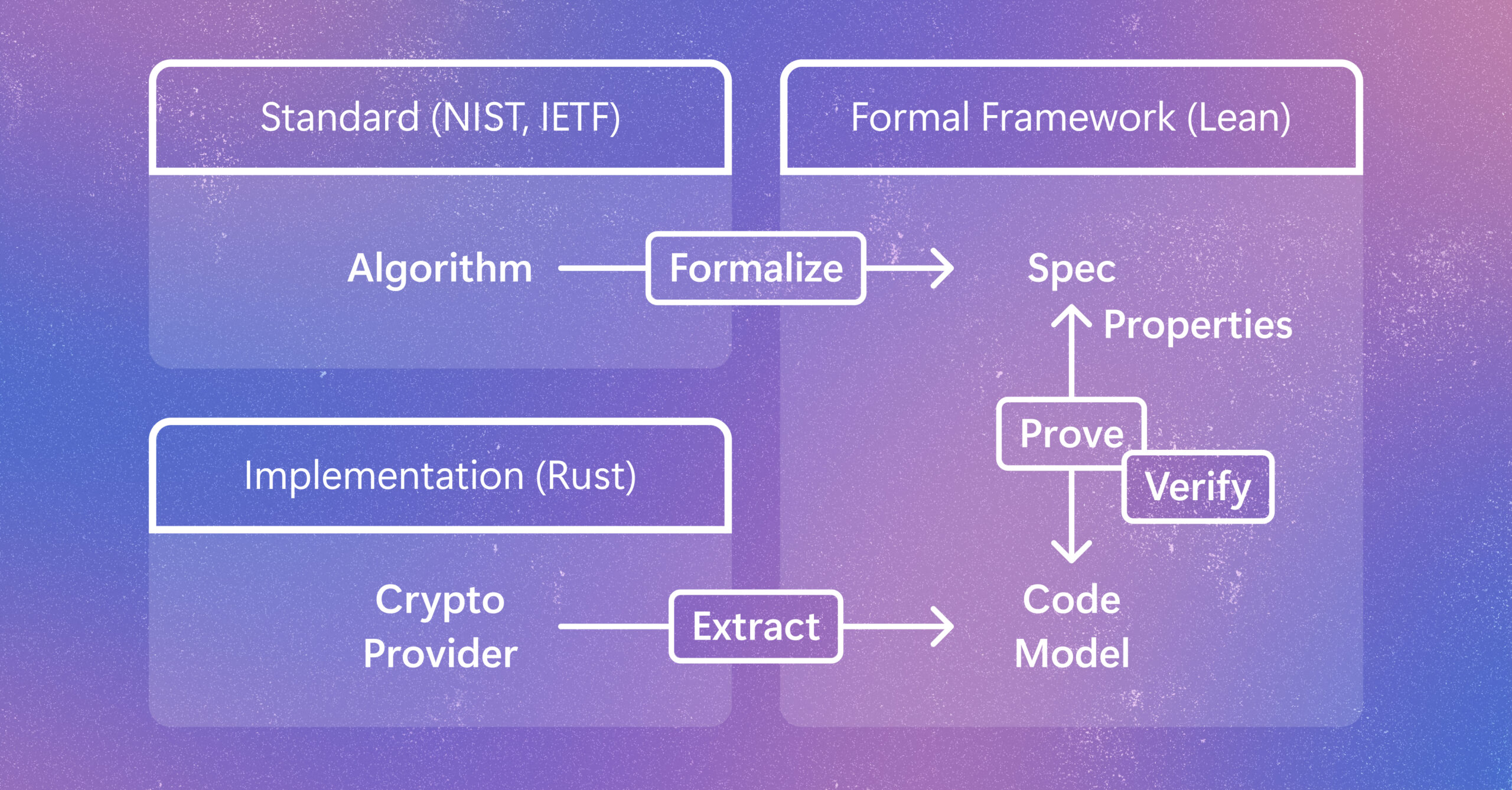
Cryptographic code supports vital protections in modern computing systems. Learn how a new method helps verify code as developers write it while preserving speed and adaptability as it gets implemented and evolves. The post Verifying Rust cryptography in SymCrypt, from standards to code appeared first on Microsoft Research.
We use cookies to run the site and, with your consent, for analytics and to show ads.
See our Cookie Policy.