Skip to content

Navigating committor landscape of biomolecules with a general pairwise interaction model

Jun 2026 · 0 citations · 4 references
Physics

TL;DR

A novel committor learning framework grounded in the AlphaFold 3 paradigm is proposed that elucidates how ligand substituents regulate the ratio between distinct binding pathways, offering new perspectives for structure-based drug design.

Abstract

Sampling rare conformation transitions between metastable states is a central challenge in atomistic simulations. While the committor function serve as an ideal reaction coordinate for driving enhanced sampling, their high-dimensional inputs and complex functional forms limit the efficacy of standard feedforward neural networks in modeling them. Inspired by recent breakthroughs in biomolecular structure prediction, we propose a novel committor learning framework grounded in the AlphaFold 3 paradigm. By integrating a lightweight, differentiable atom-level embedding with a simplified Pairformer architecture, our method inherently captures intricate dynamical features of diverse biosystems without requiring specialized prior knowledge. We demonstrate the superior expressiveness and accuracy of the proposed framework across multiple atomistic processes. For the folding of the chignolin mini-protein, our model reveals the finer-grained structure of its transition state ensemble (TSE) and a detailed bifurcated reaction mechanism. Furthermore, for calixarene host-guest systems, we develop a unified committor model that elucidates how ligand substituents regulate the ratio between distinct binding pathways, offering new perspectives for structure-based drug design.

View source

Similar papers

Open access Aug 2026

Pi-Ensemble: Sequence-guided generation of interpolated protein conformational ensembles

Pi-Ensemble (Predicting Interpolated Ensemble), a sequence-guided framework for generating protein conformational ensembles interpolating between two structural anchor states, provides an extensible framework for studying protein flexibility, guiding adaptive sampling, and accelerating mechanistic investigations of pro...

Hassan Nadeem, D. Kleiman, Yu-Ming Zhou et al. · 0 citations
Open access Aug 2026

Transferable Collective Variable to accelerate Protein-Ligand (Un)Binding Transitions via Explainable Machine Learning and Intriguing Role of Ligand Solvation

This study presents a method to derive optimized CV from transition state region (TS) via an interpretable machine learning (ML) model, Elastic Net, which greatly accelerate ligand binding-unbinding transitions and achieves rapid free energy surface (FES) convergence across diverse systems.

Saikat Dhibar, Biman Jana · 1 citation
Open access

Experimental data-guided parameterization and validation of an AMBER protein force field

An improved force field is developed, derived from its parent, Amber ff24EXP-GA, and its evaluation against Amber ff14SB and other contemporary force fields, such as CHARMM36m, in capturing the empirically determined conformational properties of unfolded systems: short peptides that serve as model systems for IDPs, and...

Athul Suresh, B. Urbanc · 0 citations
Jul 2026

Deep-learning predictions of biomolecular structures : persistent limitations and new horizons extended by explicit ion addition

Modelling sequences both “dry” and in the presence of explicit potassium cations are suggested as a simple, practical way to sample alternative conformations and to expose disordered regions that current predictors tend to over-fold.

Jules Marien, Sujith Sritharan, Beatrice Caviglia et al. · 0 citations
Aug 2026

Integrating Parallel-Bias Metadynamics-Metainference and Relaxation Dispersion NMR to Resolve Hidden Conformational States Driving Toxin-Channel Recognition.

Conformational dynamics in toxin inhibitors are an important contributor to ion channel affinity, yet toxin multidimensional energy landscapes remain largely unexplored. In the current work, we combine parallel-bias metadynamics-metainference (PBMetaD) simulations with relaxation dispersion NMR to define, at atomistic...

Chen Timsit Shmueli, Miriam Gulman, D. T. Major et al. · 0 citations

Related blog posts

Microsoft Research Blog Jul 30, 2026

EvoLib: Turning experience into evolving knowledge

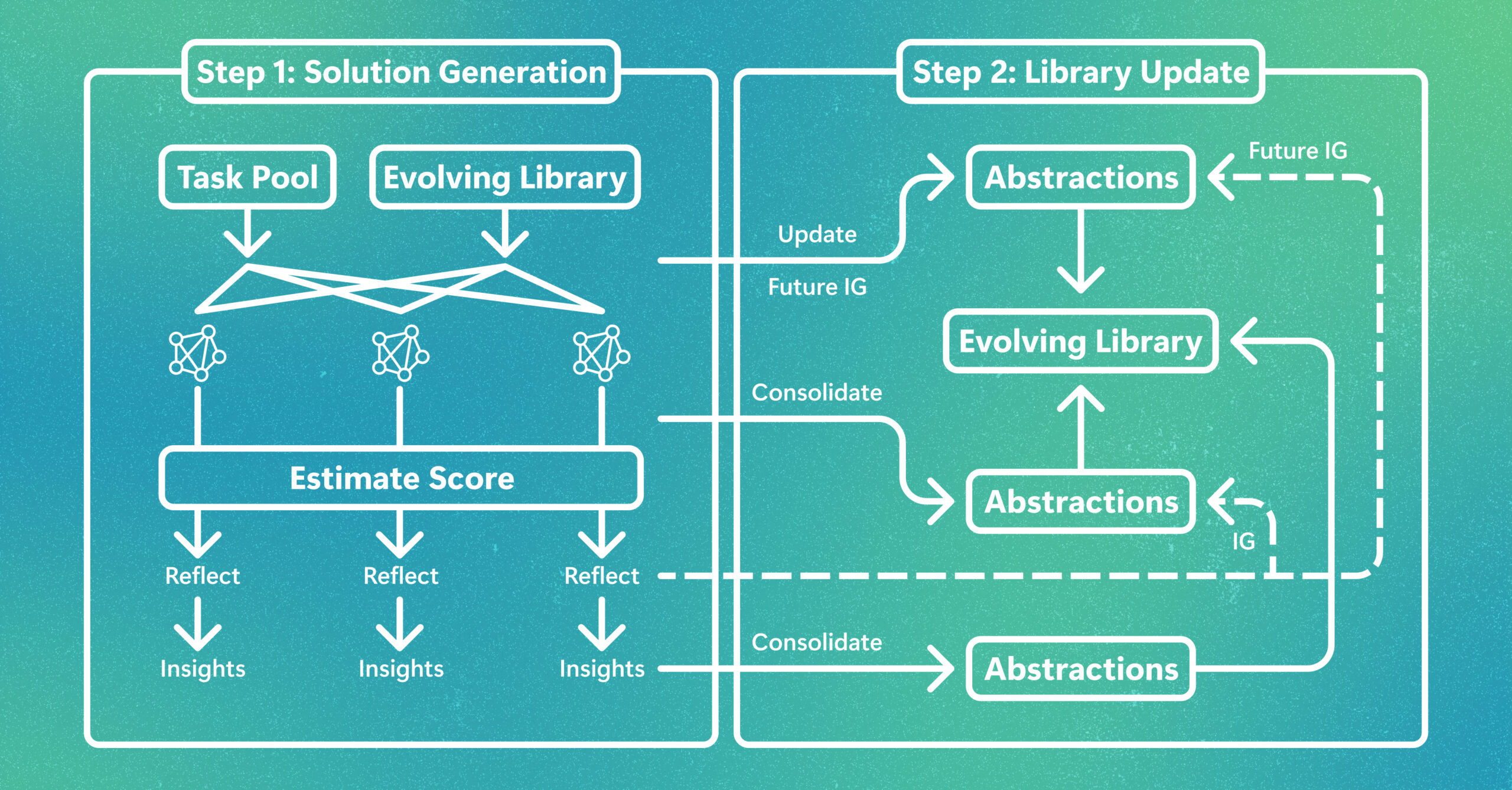
LLMs do not get smarter just by remembering more. EvoLib turns experience into evolving knowledge, taking reusable skills and insights that help models learn and adapt across tasks long after deployment. The post EvoLib: Turning experience into evolving knowledge appeared first on Microsoft Research.

We use cookies to run the site and, with your consent, for analytics and to show ads. See our Cookie Policy.