Skip to content

A Survey on Resource Scheduling and Optimization for Space‑Air‑Ground Integrated Communication‑Sensing‑Computation Networks

Sep 2026 · Applied and Computational Engineering · 0 citations

Abstract

The development of sixth generation (6G) communications is aimed at achieving global connectivity, covering oceans and remote areas with limited ground infrastructure. With the integration of sensing, communication and computing (ISCC) technology, the space-air-ground integrated network (SAGIN) is evolving from a simple data transmission channel to an intelligent task processing platform. This paper uses a narrative review method to analyze the evolution path of resource orchestration technology in heterogeneous environments, and focuses on mathematical programming and data-driven intelligent methods to optimize resources. The existing research is classified according to the method system. This paper also examines the architecture paradigm, multi-dimensional resource modeling and algorithm system. Studies have shown that static methods such as Lagrangian dual decomposition and block coordinate descent provide the necessary performance benchmarks, and deep reinforcement learning can achieve fast response in high mobility links. In addition, this paper discusses the potential of large language model (LLM) as a semantic interpreter, which can accelerate the process of parsing task requirements into technical constraints in specific applications. This study provides a methodological reference for achieving task-centered connectivity, and believes that a hybrid framework that combines the accuracy of deterministic methods and the adaptability of learning methods is a feasible development direction for future space infrastructure.

Read PDF

Similar papers

#machine learning Review Open access Oct 2014

Software development in startup companies: A systematic mapping study

The results indicate that software engineering work practices are chosen opportunistically, adapted and configured to provide value under the constrains imposed by the startup context.

Nicolò Paternoster, Carmine Giardino, M. Unterkalmsteiner et al. · 394 citations · ⚡54
#computer vision Open access Jun 2016

Software Development in Startup Companies: The Greenfield Startup Model

The results are packaged in the Greenfield Startup Model (GSM), which explains the priority of startups to release the product as quickly as possible, and the need to shorten time-to-market, by speeding up the development through low-precision engineering activities.

Carmine Giardino, Nicolò Paternoster, M. Unterkalmsteiner et al. · 178 citations · ⚡14
#machine learning Review Open access Jun 2014

Why Early-Stage Software Startups Fail: A Behavioral Framework

This state-of-practice investigation was performed using a literature review followed by a multiple-case study approach and presents how inconsistency between managerial strategies and execution can lead to failure by means of a behavioral framework.

Carmine Giardino, Xiaofeng Wang, P. Abrahamsson · 175 citations · ⚡19
#computer vision Open access Oct 2016

Software Startups - A Research Agenda

Software startup companies develop innovative, software-intensive products within limited timeframes and with few resources, searching for sustainable and scalable business models.

M. Unterkalmsteiner, P. Abrahamsson, Xiaofeng Wang et al. · 157 citations · ⚡17
#machine learning Review Open access Oct 2016

“Failures” to be celebrated: an analysis of major pivots of software startups

This study conducts a case survey study based on the secondary data of the major pivots happened in 49 software startups, and demonstrates that customer need pivot is the most common among all pivot types.

Sohaib Shahid Bajwa, Xiaofeng Wang, Anh Nguyen-Duc et al. · 127 citations · ⚡15
#computer vision Review Open access May 2015

A survey study on major technical barriers affecting the decision to adopt cloud services

The comparison of adopter and non-adopter sample reveals three potential adoption inhibitor, security, data privacy, and portability, which underlines the importance of the technical and security perspectives for research investigating the adoption of technology.

Nattakarn Phaphoom, Xiaofeng Wang, S. Samuel et al. · 111 citations · ⚡8

Related blog posts

GPT-Lab Aug 28, 2026

We built an AI factory for HVAC control

What does it take to trust AI-driven HVAC optimization? Our AI Model Factory combines agents, machine learning, reinforcement learning and deterministic checks in a governed workflow designed for messy, real-world building data. The post We built an AI factory for HVAC control appeared first on GPT-Lab.

Microsoft Research Blog Jul 30, 2026

EvoLib: Turning experience into evolving knowledge

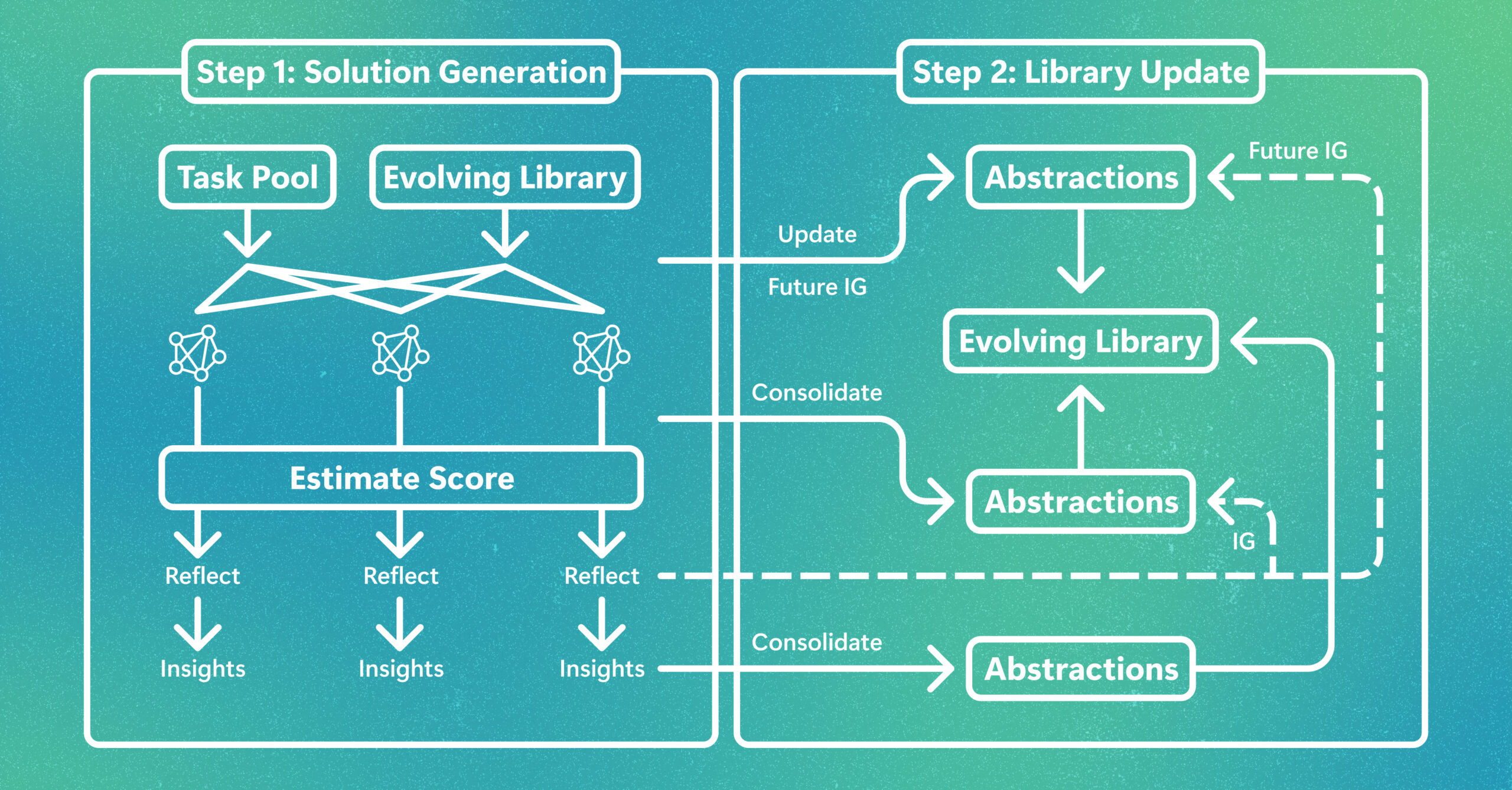
LLMs do not get smarter just by remembering more. EvoLib turns experience into evolving knowledge, taking reusable skills and insights that help models learn and adapt across tasks long after deployment. The post EvoLib: Turning experience into evolving knowledge appeared first on Microsoft Research.

We use cookies to run the site and, with your consent, for analytics and to show ads. See our Cookie Policy.