Skip to content

LEME: open large language models for ophthalmology with advanced reasoning and clinical validation

Sep 2026 · npj Digital Medicine · 1 citation
Artificial Intelligence in Healthcare and Education Ophthalmology and Visual Health Research Cerebral Venous Sinus Thrombosis

Abstract

The rising prevalence of eye diseases poses a growing public health burden. Large language models (LLMs) offer a promising path to reduce documentation workload and support clinical decision-making. However, few have been tailored for ophthalmology, and most evaluations focus mainly on knowledge-based QA without clinically relevant benchmarks or real-world validation. Here, we present LEME, a suite of open-weight LLMs developed through a two-stage process: (1) instruction tuning on 200,000 samples from clinical guidelines, textbooks, and case reports to enhance reasoning and task-following, and (2) reinforcement learning with ~30,000 preference labels to enhance accuracy and informativeness. LEME was evaluated on five curated zero-shot benchmarks spanning tasks such as patient QA, consultation, and treatment planning. It outperformed all seven baselines (all p < 0.004), exceeding GPT-4o by 3.32% (absolute ROUGE-L gain). It was further evaluated on three downstream tasks using deidentified patient data, reviewed by clinicians. In patient QA, LEME received the highest ratings from attending clinicians in 3 out of 4 criteria, with scores of 4.67 for factuality, 4.77 for specificity, 4.79 for completeness, and 4.88 for safety (1-5 scale). Its completeness score surpassed that of expert-written answers (4.79 vs. 4.56; p = 0.015). In visual acuity extraction, LEME achieved the highest F1, outperforming LLaMA-3 by 14.1% and Eye-LLaMA by 59.0%. In a pilot evaluation on assessment and treatment planning for diabetic retinopathy, AMD, and glaucoma, LEME received scores of 4.36 for factuality, 4.55 for specificity, 4.42 for completeness, and 4.36 for safety, approaching attending-level performance. All models, data, and code will be released to support further development and clinical translation, laying the groundwork for improved efficiency and patient care

View source

Similar papers

#machine learning Review Open access Oct 2014

Software development in startup companies: A systematic mapping study

The results indicate that software engineering work practices are chosen opportunistically, adapted and configured to provide value under the constrains imposed by the startup context.

Nicolò Paternoster, Carmine Giardino, M. Unterkalmsteiner et al. · 394 citations · ⚡54
#computer vision Open access Jun 2016

Software Development in Startup Companies: The Greenfield Startup Model

The results are packaged in the Greenfield Startup Model (GSM), which explains the priority of startups to release the product as quickly as possible, and the need to shorten time-to-market, by speeding up the development through low-precision engineering activities.

Carmine Giardino, Nicolò Paternoster, M. Unterkalmsteiner et al. · 178 citations · ⚡14
#machine learning Review Open access Jun 2014

Why Early-Stage Software Startups Fail: A Behavioral Framework

This state-of-practice investigation was performed using a literature review followed by a multiple-case study approach and presents how inconsistency between managerial strategies and execution can lead to failure by means of a behavioral framework.

Carmine Giardino, Xiaofeng Wang, P. Abrahamsson · 175 citations · ⚡19
#computer vision Open access Oct 2016

Software Startups - A Research Agenda

Software startup companies develop innovative, software-intensive products within limited timeframes and with few resources, searching for sustainable and scalable business models.

M. Unterkalmsteiner, P. Abrahamsson, Xiaofeng Wang et al. · 157 citations · ⚡17
#machine learning Review Open access Oct 2016

“Failures” to be celebrated: an analysis of major pivots of software startups

This study conducts a case survey study based on the secondary data of the major pivots happened in 49 software startups, and demonstrates that customer need pivot is the most common among all pivot types.

Sohaib Shahid Bajwa, Xiaofeng Wang, Anh Nguyen-Duc et al. · 127 citations · ⚡15
#computer vision Review Open access May 2015

A survey study on major technical barriers affecting the decision to adopt cloud services

The comparison of adopter and non-adopter sample reveals three potential adoption inhibitor, security, data privacy, and portability, which underlines the importance of the technical and security perspectives for research investigating the adoption of technology.

Nattakarn Phaphoom, Xiaofeng Wang, S. Samuel et al. · 111 citations · ⚡8

Related blog posts

GPT-Lab Aug 28, 2026

We built an AI factory for HVAC control

What does it take to trust AI-driven HVAC optimization? Our AI Model Factory combines agents, machine learning, reinforcement learning and deterministic checks in a governed workflow designed for messy, real-world building data. The post We built an AI factory for HVAC control appeared first on GPT-Lab.

Microsoft Research Blog Jul 30, 2026

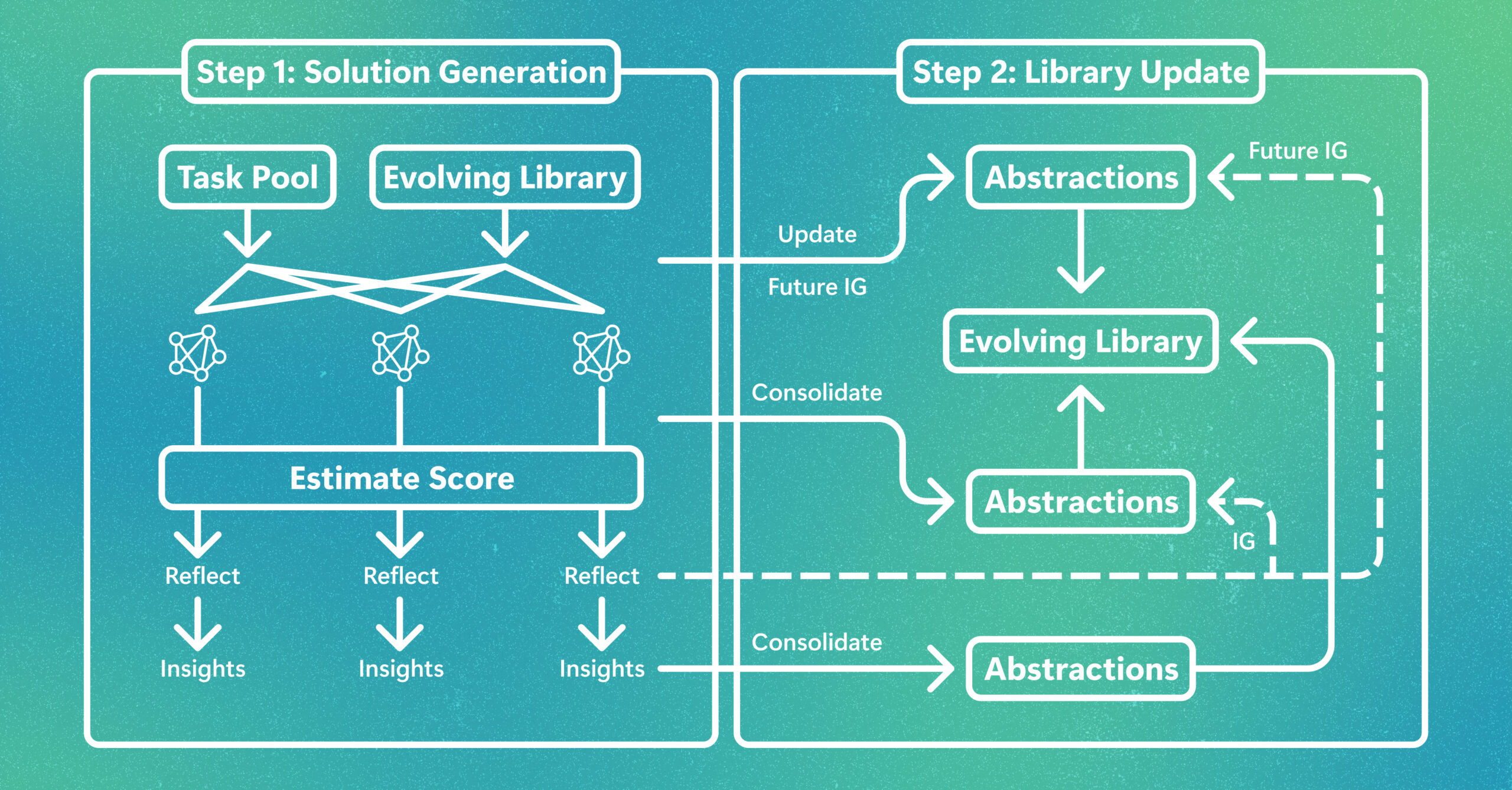
EvoLib: Turning experience into evolving knowledge

LLMs do not get smarter just by remembering more. EvoLib turns experience into evolving knowledge, taking reusable skills and insights that help models learn and adapt across tasks long after deployment. The post EvoLib: Turning experience into evolving knowledge appeared first on Microsoft Research.

We use cookies to run the site and, with your consent, for analytics and to show ads. See our Cookie Policy.