Skip to content

Learning to Route On-Chip: A Survey of Machine Learning-Based Routing in Networks-on-Chip and Its Hardware Overheads

Sep 2026 · Machine Learning and Knowledge Extraction · Vol 8, pp. 296 · 0 citations · 74 references
Interconnection Networks and Systems

TL;DR

This survey reviews machine-learning-based NoC routing across a 48-study evidence base, and identifies three recurring gaps: limited scalability beyond small meshes, missing deadlock-freedom guarantees for learned policies, and over-reliance on synthetic traffic.

Abstract

Network-on-Chip (NoC) fabrics are the dominant interconnect for many-core processors, yet widely used routing methods—dimension-order routing and turn-model-based adaptive variants—assume mostly local, low-variance congestion. Modern workloads generate dense and bursty traffic that breaks these assumptions, motivating data-driven routing. Following a PRISMA-ScR protocol across five databases (2015–2026), this survey reviews machine-learning-based NoC routing across a 48-study evidence base, where path selection is posed as a Markov Decision Process and addressed with reinforcement learning and supervised/unsupervised regression rather than fixed analytic rules. We contribute a tripartite taxonomy organizing prior work by learning paradigm—mapped onto four empirical classes: tabular Q-learning, deep reinforcement learning, hybrid approaches, and supervised CNN-based prediction—transmission medium (planar/3D electrical and photonic NoCs), and multi-objective evaluation criteria (latency, throughput, energy, thermal budget, aging, fault tolerance). We ground comparisons in cycle-accurate simulation, FPGA/ASIC synthesis and its hardware overheads, feature-engineering and data-collection pipelines, and the accuracy metrics (RMSE, R2, error %) reported for learned predictors. We identify three recurring gaps: limited scalability beyond small meshes, missing deadlock-freedom guarantees for learned policies, and over-reliance on synthetic traffic, and outline future directions including graph neural networks, federated learning, spiking models, and runtime Pareto-front optimization for deployable, verifiable routing.
Read PDF

Similar papers

Conference Open access 2026

Network-on-Chip Technologies for High-Throughput and Low-Latency Communication

With the growing demands of the performance of multi-core systems, conventional bus architectures have posed a challenge to in-chip communication due to its low-scaling nature and challenges of globally synchronizing clocks. The Network-on-Chip (NoC) is based on the principles of the modern communication network and it...

Song-Zhuo Yao · 0 citations
Open access Aug 2026

A novel simulated annealing based mapping for hybrid NoC-enabled DNN accelerators

A reconfigurable hybrid ring-shaped architecture (Rhr-NoC) to adapt to the large-scale data transmission patterns within accelerators and design a simulated annealing algorithm tailored to the hybrid ring-shaped architecture, providing a more rational scheme for mapping neural networks onto NoC platforms.

Cheng-Long Sun, Yi-He Zhang, Yajun Liu et al. · 0 citations
Sep 2026

Communication-Cost-Aware Task-to-Core Mapping for 2D Concentrated-Mesh NoC-Based Neural Network Accelerators

Task placement strongly affects the on-chip communication overhead of Network-on-Chip (NoC)-based deep-neural network (DNN) accelerators. This work addresses task-to-core mapping on two-dimensional (2D) Concentrated Mesh (CMesh) NoCs with the explicit objective of minimizing communication cost, defined as the traffic-w...

Alperen Cakin, Selma Dilek, S. Tosun et al. · 0 citations
Aug 2026

Hardware-Aware Neural Network Deployment on Multi-Core in-Memory Computing Systems: A Compiler Perspective

Conventional compute-in-memory (CIM) deployment flows usually assume a fixed crossbar geometry, although DNN layers often have different channel counts and matrix shapes. The resulting shape mismatch leaves part of the array capacity unused and can increase the number of split-and-transfer operations during inference....

Kaiwen Deng, Sifan Sun, Hanjie Liu et al. · 0 citations
#machine learning Preprint Oct 2026

Reinforcement Learning-Based Optimization of Workload-Aware Power Delivery Networks

Power Delivery Networks (PDNs) are critical components of modern VLSI chips, providing stable voltage levels while satisfying electromigration (EM) and IR-drop constraints. Conventional PDN design methodologies typically rely on worst-case assumptions, often resulting in over-provisioned networks and inefficient use of...

Oran Hayes, Maria Pantazi-Kypraiou, Athanasios Tziouvaras et al. · 0 citations

Related blog posts

Microsoft Research Blog Jul 13, 2026

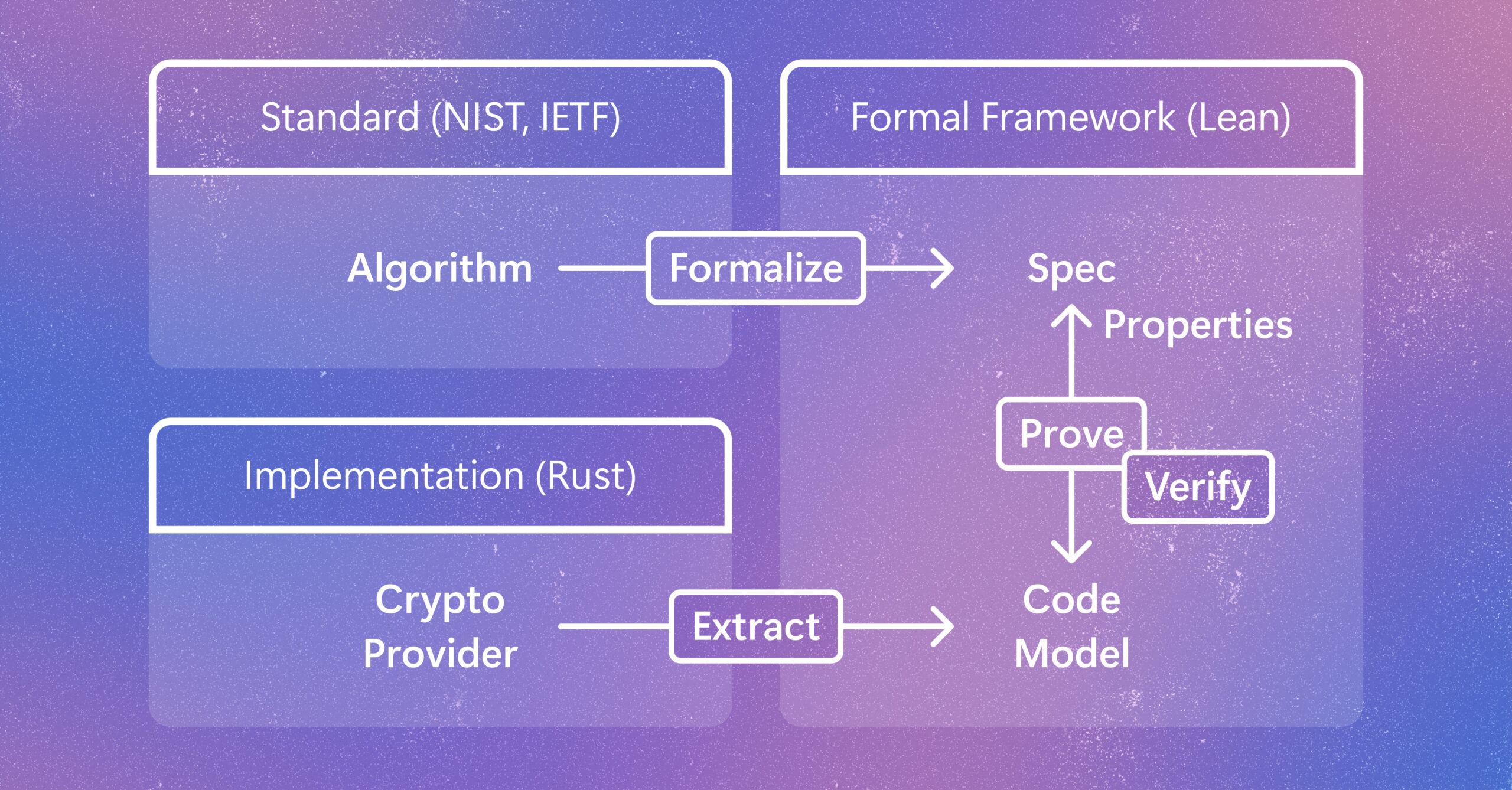
Verifying Rust cryptography in SymCrypt, from standards to code

Cryptographic code supports vital protections in modern computing systems. Learn how a new method helps verify code as developers write it while preserving speed and adaptability as it gets implemented and evolves. The post Verifying Rust cryptography in SymCrypt, from standards to code appeared first on Microsoft Research.

MIT News · Artificial Intelligence Oct 7, 2026

Discovering the value of humanistic inquiry

Students in MIT’s Concourse program delve deeply into the human condition, debate challenging questions, and learn to develop judgment about issues that can’t be quantified.

Microsoft Research Blog Oct 7, 2026

Agent Lightning v1.0: A 3,500-Line Lightweight Agentic RL Framework for Training Agents with Real Harnesses

Training AI agents with reinforcement learning can be challenging because their tools, context, and decision-making are managed by complex frameworks. Agent Lightning connects existing agents to RL training, making it easier to improve them without rebuilding them. The post Agent Lightning v1.0: A 3,500-Line Lightweight Agentic RL Framework for Training Agents with Real Harnesses appeared first on Microsoft Research.

We use cookies to run the site and, with your consent, for analytics and to show ads. See our Cookie Policy.