Skip to content

Graph Neural Network Prediction of Antioxidant Activity of Polyphenols from Grape Pomace

Sep 2026 · Iconic Research and Engineering Journals · Vol 10, pp. 2145-2168
Phytochemicals and Antioxidant Activities

Abstract

Grape pomace is the main solid by-product of winemaking and a cheap source of polyphenols. However, the antioxidant strength of most compounds in grape pomace has never been measured on its own. Mixtures do not behave additively, so extract results cannot be separated into compound-level values. This paper reviews the chemistry and the modelling problem, sets out a full pipeline from data curation to molecular graphs to a trained network, and then runs it on measured data. Three results concern the data. Unit conversion matters, since epicatechin measured in two laboratories in two-unit systems agrees to 0.021 pIC50 log units once converted. Donor count does not order activity, since gallic acid and trans-resveratrol carry the same three phenolic hydroxyls yet differ by 0.436 log units, which is the argument for a representation that encodes adjacency. And protocols cannot be pooled, since three compounds measured in a second laboratory differ systematically by 1.152 log units, more than the 1.477 log unit range of the training corpus. For training, 25 phenolics measured in one laboratory under one protocol reduced to 16 usable records once non-numeric entries were removed and dose-response fit quality was filtered on, a filter that published curation protocols do not apply and that removed a compound whose tabulated IC50 came from a regression explaining 19 percent of its variance. On those 16 compounds a message-passing network reached a leave-one-out R2 of 0.744 against 0.138 for a mean predictor, with a training fit of 0.696, and a label-scrambling control confirmed that no structure-activity signal was recovered at this sample size. Predictions for the five targets span 0.322 log units and all ten pairwise comparisons overlap at 95 percent. The pipeline runs correctly, and closing the gap between 16 compounds and the 1911 used by published benchmarks is the work that remains.
View source

Similar papers

#computer vision Conference Aug 2008

Scrum in a Multiproject Environment: An Ethnographically-Inspired Case Study on the Adoption Challenges

Agile methods continue to gain popularity. In particular, the Scrum method appears to be on the verge of becoming a de-facto standard in the industry, leading the so called Agile movement. While there are success stories and recommendations, there is little scientifically valid evidence of the challenges in the adoptio...

A. Marchenko, P. Abrahamsson · 59 citations · ⚡11
#computer vision Open access Sep 2012

Making the leap to a software platform strategy: Issues and challenges

A comprehensive taxonomy of the challenges faced when a medium-scale organization decided to adopt software platforms is provided, namely: business challenges, organizational challenges, technical challenges, and people challenges.

Yaser Ghanam, F. Maurer, P. Abrahamsson · 41 citations · ⚡3
#machine learning Open access Mar 2024

Integration of molecular coarse-grained model into geometric representation learning framework for protein-protein complex property prediction

MCGLPPI, a novel geometric representation learning framework that combines graph neural networks (GNNs) with the MARTINI molecular coarse-grained (CG) model to predict overall PPI properties accurately and efficiently, offers an effective and efficient solution for PPI overall property predictions.

Yang Yue, Shu Li, Yihua Cheng et al. · 15 citations

PepPCBench is a Comprehensive Benchmarking Framework for Protein-Peptide Complex Structure Prediction

PepPCBench enables a robust evaluation of PFNN-based methods and supports their continued development for peptide-protein structure prediction, and highlights the influence of peptide length, conformational flexibility, and training set similarity on prediction accuracy.

Si-Long Zhai, Huifeng Zhao, Ji-Ke Wang et al. · 13 citations · ⚡1
#machine learning Open access Sep 2025

Unified and explainable molecular representation learning for imperfectly annotated data from the hypergraph view

OmniMol is presented, a framework using hypergraphs to improve predictions of molecular properties, addressing challenges of imperfect data annotation and enhancing model explainability, and achieves state-of-the-art performance in properties prediction.

Bowen Wang, Junyou Li, Donghao Zhou et al. · 11 citations

Related blog posts

Microsoft Research Blog Jul 13, 2026

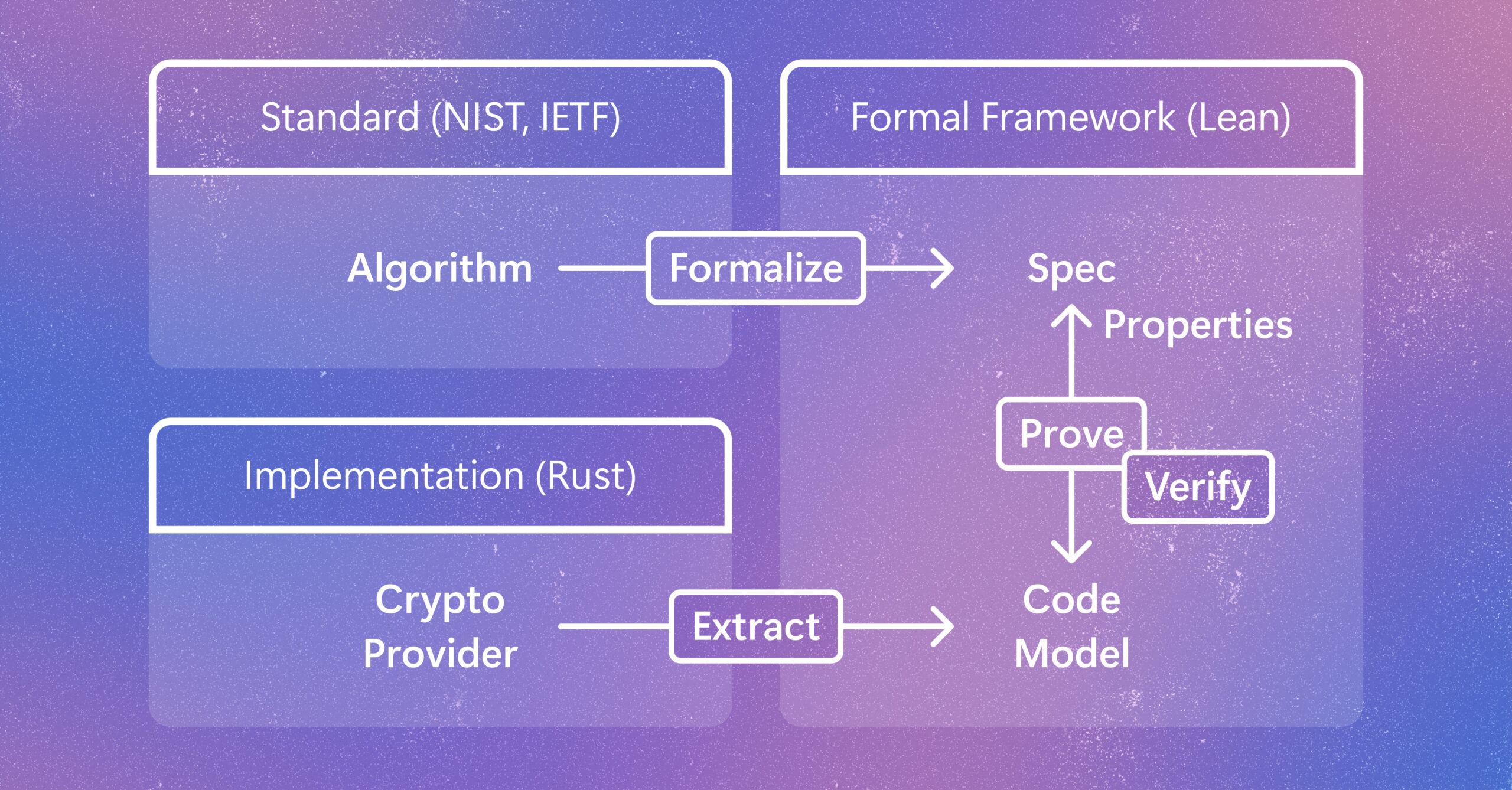
Verifying Rust cryptography in SymCrypt, from standards to code

Cryptographic code supports vital protections in modern computing systems. Learn how a new method helps verify code as developers write it while preserving speed and adaptability as it gets implemented and evolves. The post Verifying Rust cryptography in SymCrypt, from standards to code appeared first on Microsoft Research.

We use cookies to run the site and, with your consent, for analytics and to show ads. See our Cookie Policy.