Skip to content

Graph neural network-based service migration decision in vehicular networks

Sep 2026 · Scientific Reports
IoT and Edge/Fog Computing

Abstract

Abstract The rapid development of the Internet of Vehicles (IoV) has led to an exponential increase in the number of latency sensitive and computationally intensive tasks. Due to the limitations of onboard computing resources in vehicles, offloading these tasks generated during vehicle operation to a remote cloud for processing inevitably leads to significant transmission delays. By combining the IoV with Mobile Edge Computing (MEC), these latency sensitive and computationally intensive tasks can be processed in MEC server to reduce energy consumption of vehicles and the transmission delay of tasks. However, due to the small coverage area of MEC servers and the mobility of vehicles, it may cause vehicles using MEC services to leave the coverage area of current MEC servers, resulting in service interruptions. How to dynamically migrate tasks for ensuring service continuity is a great challenge. In this paper, we study service migration strategies in dynamic and complex IoV MEC environments. We first model the service migration strategies as a multi-objective optimization problem that minimizes the weighted sum of latency and energy consumption. We then transform the problem into a Markov Decision Process (MDP). To capture time-varying server loads and link-state features over the physical RSU graph, a Graph Convolutional Network (GCN) is employed to extract features from the network topology and node information in the vehicular edge network, and a graph convolutional neural network-based deep reinforcement learning task migration decision algorithm (Gr-MiD) is proposed to make service migration decisions based on task details. Simulation results in a small synthetic intra-zone IoV-MEC setting demonstrate that the Gr-MiD algorithm outperforms existing comparative algorithms, achieving an 8.04% reduction in average task delay and a 15.82% reduction in average task energy consumption compared to the DQN baseline under peak-load conditions.

Read PDF

Similar papers

#computer vision Review Sep 2017

Agile Software Development Methods: Review and Analysis

This publication proposes a definition and a classification of agile software development approaches and analyses ten software development methods that can be characterized as being "agile" against the defined criterion.

P. Abrahamsson, O. Salo, Jussi Ronkainen et al. · 727 citations · ⚡54
#computer vision Jun 2008

The impact of agile practices on communication in software development

The study shows that agile practices improve both informal and formal communication, but indicates that, in larger development situations involving multiple external stakeholders, a mismatch of adequate communication mechanisms can sometimes even hinder the communication.

M. Pikkarainen, Jukka Haikara, O. Salo et al. · 401 citations · ⚡48
#machine learning Review Open access Oct 2014

Software development in startup companies: A systematic mapping study

The results indicate that software engineering work practices are chosen opportunistically, adapted and configured to provide value under the constrains imposed by the startup context.

Nicolò Paternoster, Carmine Giardino, M. Unterkalmsteiner et al. · 394 citations · ⚡54

Related blog posts

Microsoft Research Blog Jul 13, 2026

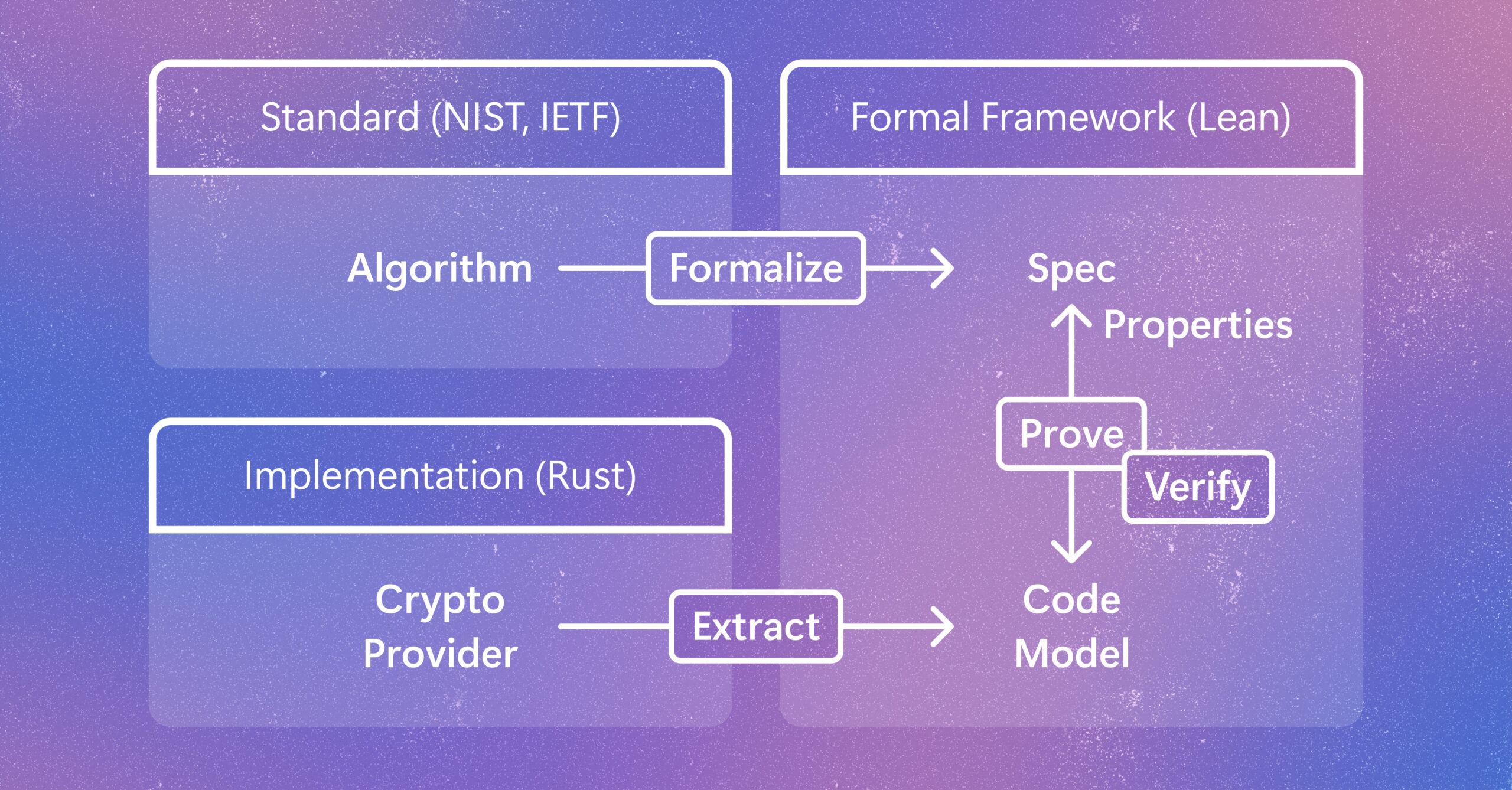
Verifying Rust cryptography in SymCrypt, from standards to code

Cryptographic code supports vital protections in modern computing systems. Learn how a new method helps verify code as developers write it while preserving speed and adaptability as it gets implemented and evolves. The post Verifying Rust cryptography in SymCrypt, from standards to code appeared first on Microsoft Research.

MIT News · Artificial Intelligence Aug 27, 2026

Looking beyond natural sequences

A new machine-learning framework aims to improve the success rate of computational protein design while moving away from results that reproduce sequences found in nature.

We use cookies to run the site and, with your consent, for analytics and to show ads. See our Cookie Policy.