This paper introduces an innovative adaptive quantum algorithm designed to address the limitations of traditional optimization techniques, particularly when dealing with non-linear problems. The algorithm leverages reinforcement learning to dynamically adjust its parameters based on the input data, offering a significa...
Jincheng Zhang· Zenodo (CERN European Organi...· 0 citations
High-dimensional sparse data poses significant challenges for traditional tensor decomposition techniques. These methods often suffer from instability, poor generalization, and difficulty in capturing the underlying structure of the data due to the curse of dimensionality and the irregular sparsity patterns. This work...
Jincheng Zhang· Zenodo (CERN European Organi...· 0 citations
This paper explores the design and implementation of an Algorithmic Self-Organizing Constraint Network (ASOCN) architecture, a novel approach to constraint management within complex systems. The core claim centers on the development of a dynamic constraint adjustment system leveraging iterative reinforcement learning t...
Jincheng Zhang· Zenodo (CERN European Organi...· 0 citations
Large-scale graph analysis, prevalent in domains like social network analysis, bioinformatics, and knowledge graph management, faces significant challenges due to the memory limitations of traditional graph processing techniques. This paper introduces a dynamic graph partitioning algorithm designed to mitigate these is...
Jincheng Zhang· Zenodo (CERN European Organi...· 0 citations
Reach audiences
Advertise in front of researchers, engineers, and readers.
This paper explores the application of algorithmic chaos theory to generate optimal and aesthetically pleasing patterns within complex networks. Traditional approaches often struggle with creating truly novel and captivating designs, while chaos theory offers a potential pathway to unpredictable beauty. We propose a no...
Jincheng Zhang· Zenodo (CERN European Organi...· 0 citations
Abstract To meet the Kunming-Montreal Global Biodiversity Framework, spatial planning must upscale area-based conservation, while ensuring equitable governance and local community integration. Historically, a deep divide has persisted between data-driven, top-down systematic conservation planning, often performed at la...
Daniele Silvestro, Stefano Goria, E‐Ping Rau et al.· Environmental Research Lette...· 0 citations
This paper introduces a novel dynamic mapping theory for non-linear matrices, aiming to facilitate machine learning algorithms through automated matrix adaptation and optimization. We propose a framework where the matrix's dynamic evolution is modeled as a physical process, allowing for learning and control of this evo...
Jincheng Zhang· Zenodo (CERN European Organi...· 0 citations
This paper presents a novel approach to distributed system resource scheduling based on adaptive learning. Traditional resource scheduling methods often rely on static rules and predefined policies, which struggle to adapt to the dynamic and unpredictable nature of distributed environments. Our proposed system leverage...
Jincheng Zhang· Zenodo (CERN European Organi...· 0 citations
Spatial layout optimization of urban service facilities aims to maximize system-wide locational benefits through rational facility placement. However, due to pronounced spatial heterogeneity and nonlinear interactions among urban environmental features, locational benefits vary significantly across regions and are subj...
Yijie Lyu, Baoju Liu, Yalun Li et al.· Figshare· 0 citations
Adaptive Constraint Network Learning (ACNL) presents a novel approach to constraint programming, addressing the limitations of static constraint definition. Traditional constraint programming methods often require manual configuration of constraints, which can be time-consuming and limit the flexibility of the problem....
Jincheng Zhang· Zenodo (CERN European Organi...· 0 citations
This paper presents a novel approach to distributed algorithm design leveraging the power of multi-agent collaboration. The core idea is to automate the design and optimization process by training a population of intelligent agents through techniques such as evolutionary algorithms or reinforcement learning. These agen...
Jincheng Zhang· Zenodo (CERN European Organi...· 0 citations
This paper introduces Dynamic Topology for Parallel Computation (DTPC), a novel framework for dynamically adjusting the topology of parallel computation graphs. Traditional parallel programming often relies on manual tuning, which can be time-consuming and suboptimal. DTPC leverages reinforcement learning to automatica...
Jincheng Zhang· Zenodo (CERN European Organi...· 0 citations
Learn how Google DeepMind and GovTech Singapore uses lightweight on-device Gemma models to intercept conversational scams in private chats with zero cloud data egress.
MIT News · Artificial Intelligence· news.mit.eduOct 13, 2026
Machine-learning networks can learn without detailed instructions from a designer. Those that do may offer insight into how the brain reorganizes itself during learning.
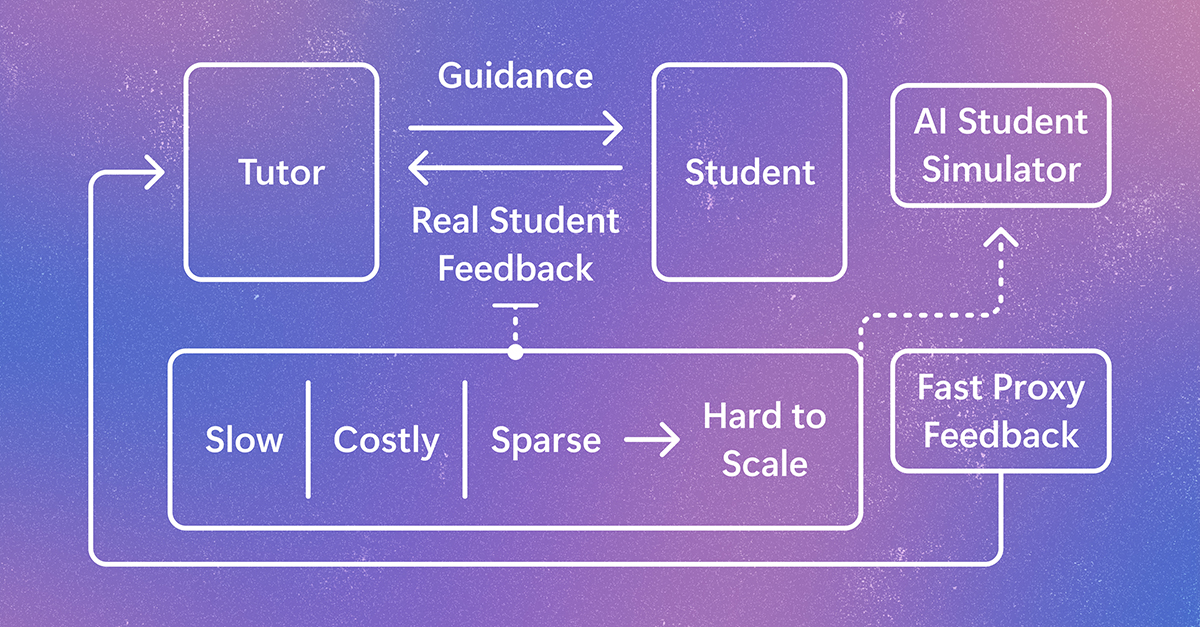
StudentSim is a research system for evaluating and improving AI tutoring tools before they are tested with learners. It models how individuals may engage with tutors, giving feedback to improve tutor performance across subjects like chess, writing, and mathematics. The post Simulating student learning for better AI tutoring appeared first on Microsoft Research.
MIT News · Artificial Intelligence· news.mit.eduOct 7, 2026
Students in MIT’s Concourse program delve deeply into the human condition, debate challenging questions, and learn to develop judgment about issues that can’t be quantified.
We use cookies to run the site and, with your consent, for analytics and to show ads.
See our Cookie Policy.