This paper introduces a novel probabilistic space learning framework for adaptive time scale optimization, designed to improve model generalization and efficiency. Traditional reinforcement learning and deep learning often employ fixed time scales, while our approach dynamically adjusts these scales based on data distr...
Jincheng Zhang· Zenodo (CERN European Organi...· 0 citations
This paper explores the application of mathematical modeling and reinforcement learning to the study of neural network collective behavior. Traditional neural network optimization often relies on manual parameter tuning, limiting the model's adaptability. We propose a novel framework that integrates these approaches, s...
Jincheng Zhang· Zenodo (CERN European Organi...· 0 citations
This paper introduces a novel reinforcement learning algorithm, termed "Dynamic Information Entropy Optimization" (DIEO), that leverages dynamic information entropy to guide the learning process. Traditional reinforcement learning often relies on static reward functions, limiting the agent's ability to adapt to complex...
Jincheng Zhang· Zenodo (CERN European Organi...· 0 citations
This paper explores the concept of dynamically reconfigurable chaos theory, a novel approach to modeling and controlling chaotic systems by employing reinforcement learning to actively adjust parameter values in real-time. Traditional chaos theory often relies on static parameter settings, limiting its adaptability to...
Jincheng Zhang· Zenodo (CERN European Organi...· 0 citations
Reach audiences
Advertise in front of researchers, engineers, and readers.
This paper presents a novel approach to traffic control utilizing Multi-Agent Reinforcement Learning (MARL) for dynamic route optimization within a traffic network. Traditional traffic management systems often struggle to adapt effectively to fluctuating traffic conditions and emergent congestion. This research propose...
Jincheng Zhang· Zenodo (CERN European Organi...· 0 citations
We conduct a systematic two-year experimental study across 22 contact-rich insertion tasks to determine whether the failure of learning-based robot control on tight-tolerance assembly reflects a fundamental structural limitation. Evaluating five levels of model knowledge across 693,000 real-hardware trials, we show tha...
Florian Voigt, Sami Haddadin· Figshare· 0 citations
Abstract Efficient lossless compression is essential for reducing storage and transmission requirements while preserving data exactly. Traditional dictionary-based and statistical compressors can be limited in their ability to exploit complex, long-range dependencies. In this paper, we propose a lossless compression fr...
Mahdi Khodabandeh, Ghazal Shabani, Arash Yousefi Jordehi et al.· Engineering Research Express· 0 citations
Arabic language learning as a foreign language is frequently hindered by foreign language anxiety, thereby affecting students' mastery of maharah kalam (speaking skills). However, if students continuously experience such anxiety, the objective of speaking instruction to enhance oral competence in Arabic will be difficu...
Fadhilatul U'lya, M. Saputra· EDUCATIONAL : Jurnal Inovasi...· 0 citations
Reliable prediction of cracking behavior is essential for the serviceability assessment of reinforced and prestressed concrete members, where crack development depends on interacting material, geometric, reinforcement, prestressing, and loading parameters. This study presents an explainable and uncertainty-aware artifi...
Ahmed N. Elbelacy· Journal of engineering and a...· 0 citations
Learn how Google DeepMind and GovTech Singapore uses lightweight on-device Gemma models to intercept conversational scams in private chats with zero cloud data egress.
MIT News · Artificial Intelligence· news.mit.eduOct 13, 2026
Machine-learning networks can learn without detailed instructions from a designer. Those that do may offer insight into how the brain reorganizes itself during learning.
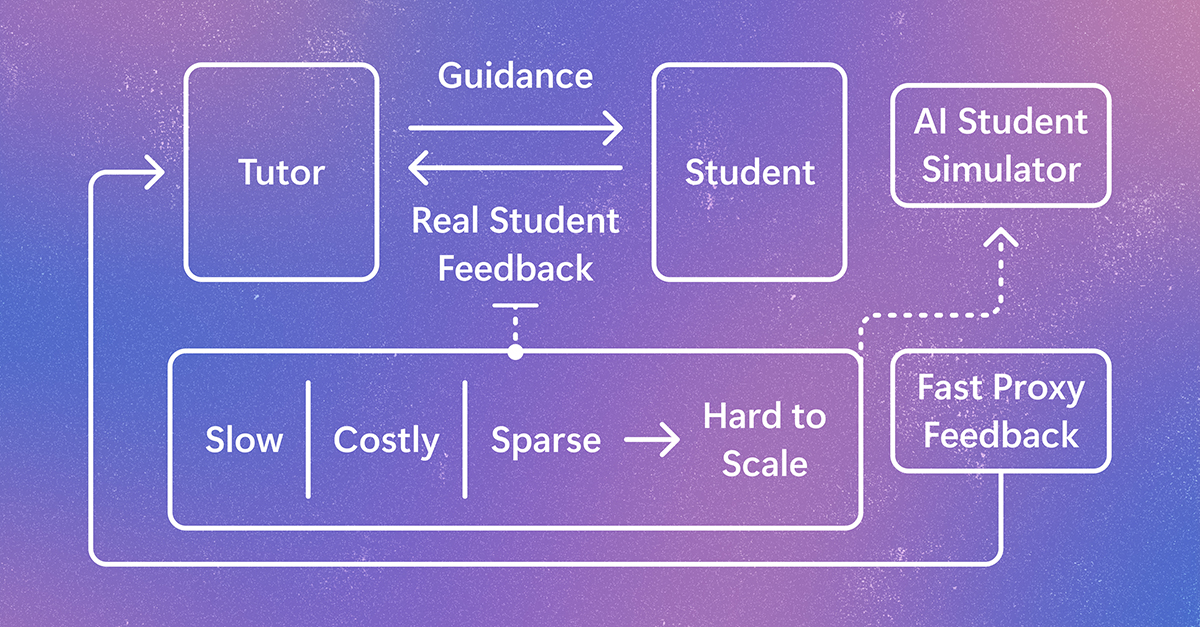
StudentSim is a research system for evaluating and improving AI tutoring tools before they are tested with learners. It models how individuals may engage with tutors, giving feedback to improve tutor performance across subjects like chess, writing, and mathematics. The post Simulating student learning for better AI tutoring appeared first on Microsoft Research.
MIT News · Artificial Intelligence· news.mit.eduOct 7, 2026
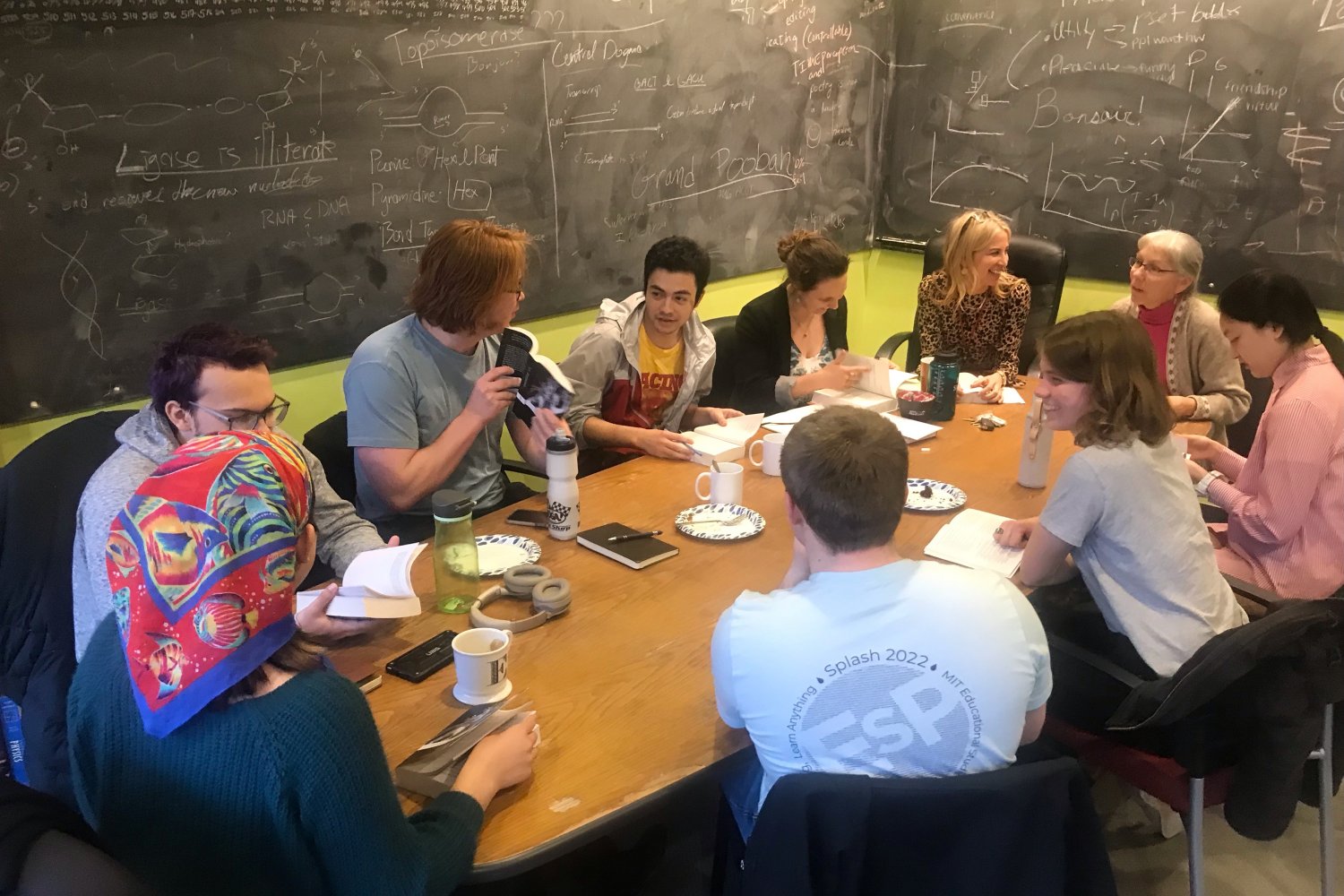
Students in MIT’s Concourse program delve deeply into the human condition, debate challenging questions, and learn to develop judgment about issues that can’t be quantified.
We use cookies to run the site and, with your consent, for analytics and to show ads.
See our Cookie Policy.