This paper presents a resilient learning‐based adaptive sliding‐mode consensus control framework for nonlinear multi‐agent systems subject to switching communication topologies and actuator‐side cyberattacks. A distributed sliding‐mode leader‐follower tracking consensus protocol is first developed to ensure robust co...
Amit Anand, Dipayan Guha, S. Purwar· International Journal of Rob...· 0 citations
Quantum field theory, a cornerstone of modern physics, traditionally employs static, predefined geometries to represent and model quantum phenomena. However, limitations in this approach hinder the exploration of novel quantum states and emergent properties. This paper proposes a novel dynamic fractal geometry algorith...
Jincheng Zhang· Zenodo (CERN European Organi...· 0 citations
This paper explores the fusion of nonlinear time series systems (NTS) modeling with reinforcement learning (RL) for addressing complex control problems characterized by high nonlinearity and time-varying dynamics. The core idea is to leverage the representation power of NTS models to capture system behavior and then ut...
Jincheng Zhang· Zenodo (CERN European Organi...· 0 citations
The Single-Machine Scheduling Problem with Sequence-Dependent Setup Times (SMSP-SDST) is a classical NP-hard combinatorial optimization problem encountered in intelligent manufacturing, production planning, semiconductor processing, logistics, and adaptive production systems. Conventional exact optimization techniques...
Sunday Obokenuenu Emmanuel Inonoje, Jonathan Tsetimi, Henrietta Ify Ojarikre· Zenodo (CERN European Organi...· 0 citations
Reach audiences
Advertise in front of researchers, engineers, and readers.
This paper explores the design and implementation of a novel self-organizing constraint network architecture, tentatively named "Self-Organizing Constraint Networks with Adaptive Noise," leveraging reinforcement learning and quantum-enhanced constraint adaptation. The core claim centers around dynamically adjusting pri...
Jincheng Zhang· Zenodo (CERN European Organi...· 0 citations
Abstract Deep learning models have achieved near-perfect accuracy in plant disease classification within controlled laboratory settings; however, their deployment in real-world agricultural environments is severely hindered by the “deployment gap”—a critical vulnerability to environmental corruptions such as sensor noi...
Nima Saeedi, Sana Gholinavaz, Sina Samadi Gharehveran et al.· Scientific Reports· 0 citations
This paper investigates the application of reinforcement learning (RL) for adaptive quantum control. Traditional quantum control methods often rely on pre-designed pulse shapes optimized for specific scenarios, lacking adaptability to variations in system parameters or environmental noise. This work proposes a novel fr...
Jincheng Zhang· Zenodo (CERN European Organi...· 0 citations
This paper introduces a novel matrix operation algorithm based on adaptive learning. Traditional matrix operations often rely on fixed parameters, limiting their efficiency when dealing with dynamic input matrices. The proposed algorithm dynamically adjusts the operation parameters based on the input matrix's character...
Jincheng Zhang· Zenodo (CERN European Organi...· 0 citations
This document contains a comprehensive evaluation of the preprint "General Error Accumulation Relation" by Stamelos Loutsos (September 2026). The original work addresses a fundamental problem in computational neuroscience and reinforcement learning: how the microscopic Bellman/Temporal‑Difference update rules relate to...
This study aims to analyze the effect of the Collaborative Constructive approach on the quality of students’ mental models in the topic of the male reproductive system. The study employed a mixed-methods approach with an embedded experimental design and a quasi-experimental pretest-posttest control group design. The re...
Anindya Utami Putri, Adi Rahmat, Yanti Hamdiyati· Journal La Edusci· 0 citations
This paper introduces the Dynamic Topology Algorithm Reinforcement Learning (DTARL), a novel reinforcement learning framework designed to optimize complex systems by dynamically adjusting topology. Traditional topology optimization methods often rely on manual parameter tuning, while DTARL leverages reinforcement learn...
Jincheng Zhang· Zenodo (CERN European Organi...· 0 citations
Large-scale graph analysis, prevalent in domains like social network analysis, bioinformatics, and knowledge graph management, faces significant challenges due to the memory limitations of traditional graph processing techniques. This paper introduces a dynamic graph partitioning algorithm designed to mitigate these is...
Jincheng Zhang· Zenodo (CERN European Organi...· 0 citations
Learn how Google DeepMind and GovTech Singapore uses lightweight on-device Gemma models to intercept conversational scams in private chats with zero cloud data egress.
MIT News · Artificial Intelligence· news.mit.eduOct 13, 2026
Machine-learning networks can learn without detailed instructions from a designer. Those that do may offer insight into how the brain reorganizes itself during learning.
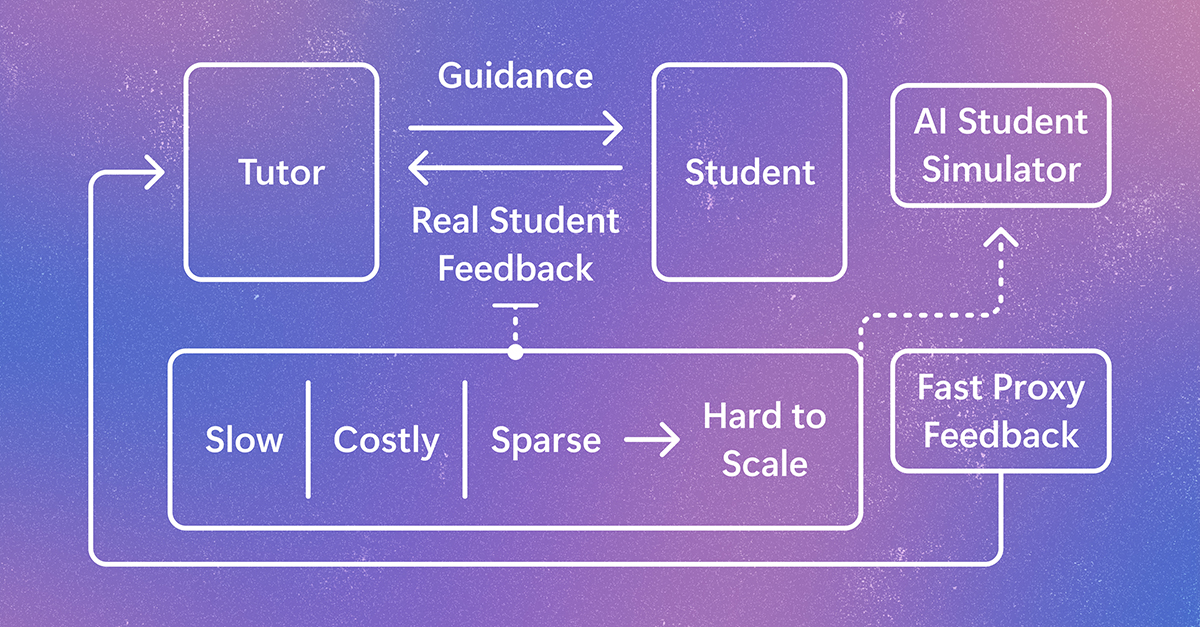
StudentSim is a research system for evaluating and improving AI tutoring tools before they are tested with learners. It models how individuals may engage with tutors, giving feedback to improve tutor performance across subjects like chess, writing, and mathematics. The post Simulating student learning for better AI tutoring appeared first on Microsoft Research.
MIT News · Artificial Intelligence· news.mit.eduOct 7, 2026
Students in MIT’s Concourse program delve deeply into the human condition, debate challenging questions, and learn to develop judgment about issues that can’t be quantified.
We use cookies to run the site and, with your consent, for analytics and to show ads.
See our Cookie Policy.