Explainable reinforcement learning for smart production scheduling in automotive manufacturing
Kazi Md. Tanvir Anzum, Md. Mahfuzur Rahman
· Scientific Reports · 0 citations
 AI Networking Cookbook: Practical recipes for AI-assisted network automation and development
Category
2,335 papers
8 pages and 7 sections
A graph-based reinforcement-learning framework is proposed in which a graph neural network is first pretrained to predict the ancilla-qubit cost of circuit-allocation pairs from allocation-aware circuit graphs, and the resulting encoder is transferred to a reinforcement learning agent that assigns tiles one at a time.
Reach audiences
Advertise in front of researchers, engineers, and readers.
Ensuring the dependable operation of modern software systems under dynamic and non-stationary operating conditions remains a major challenge in software reliability engineering. Although recent deep reinforcement learning (DRL)-based approaches have demonstrated promising capabilities for closed-loop adaptation of soft...
A physics-prior-driven decentralized deep reinforcement learning (DRL) framework Functioning as a scalable distributed computing paradigm via decentralized training with decentralized execution (DTDE), the framework mitigates the curse of dimensionality.
The review finds that multimodal fusion and semantic SLAM are overcoming perception bottlenecks, that deep learning and force/position hybrid control are balancing flexible adaptability with high-precision operation, and that deep reinforcement learning and large models are advancing intelligent process planning.
Experiments show that CoSIPR improves service-category matching, request satisfaction, and the average number of accepted requests per instance, and reduces aggregate state-transfer cost and limits hotspot exposure while maintaining a controlled trade-off between end-to-end delay and state-transfer cost.
Traditional games remain underutilized in educational settings despite their potential to foster character development through experiential learning and social interaction. This study examines the implementation of the traditional selodor game in character education, identifies the character values manifested during pl...
8 pages and 7 sections
A new machine-learning approach broke records for weather forecasting for an important time frame in emergency planning.
Learn how Google DeepMind and GovTech Singapore uses lightweight on-device Gemma models to intercept conversational scams in private chats with zero cloud data egress.
Machine-learning networks can learn without detailed instructions from a designer. Those that do may offer insight into how the brain reorganizes itself during learning.
Learn more about our approach to safety and security for Gemini 4 Argon.
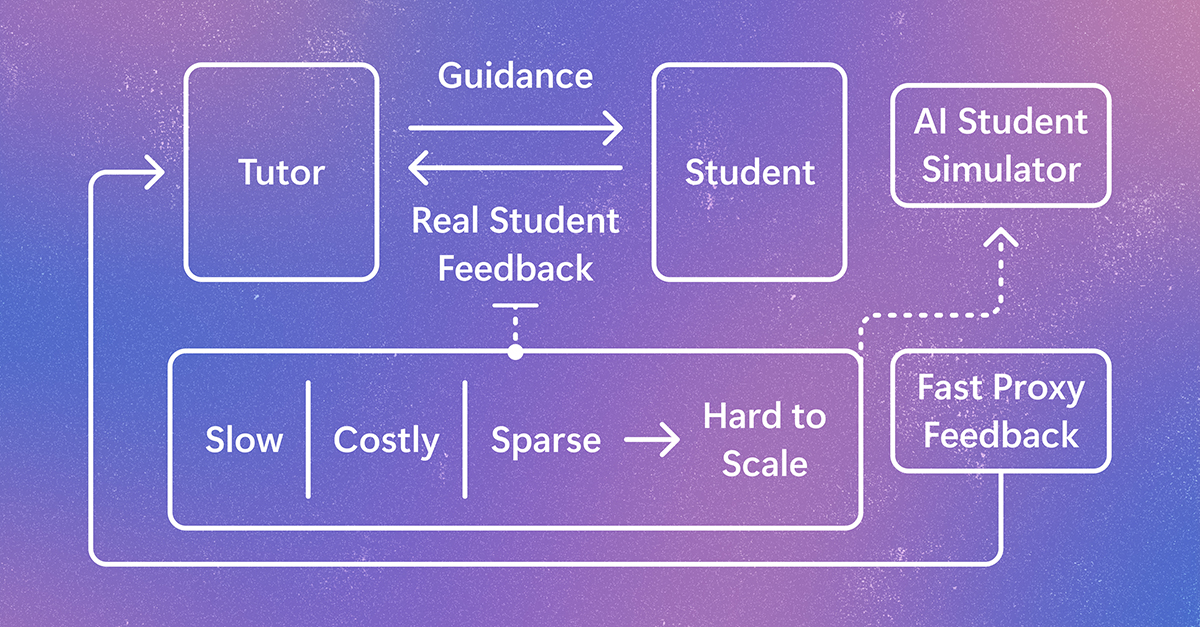
StudentSim is a research system for evaluating and improving AI tutoring tools before they are tested with learners. It models how individuals may engage with tutors, giving feedback to improve tutor performance across subjects like chess, writing, and mathematics. The post Simulating student learning for better AI tutoring appeared first on Microsoft Research.
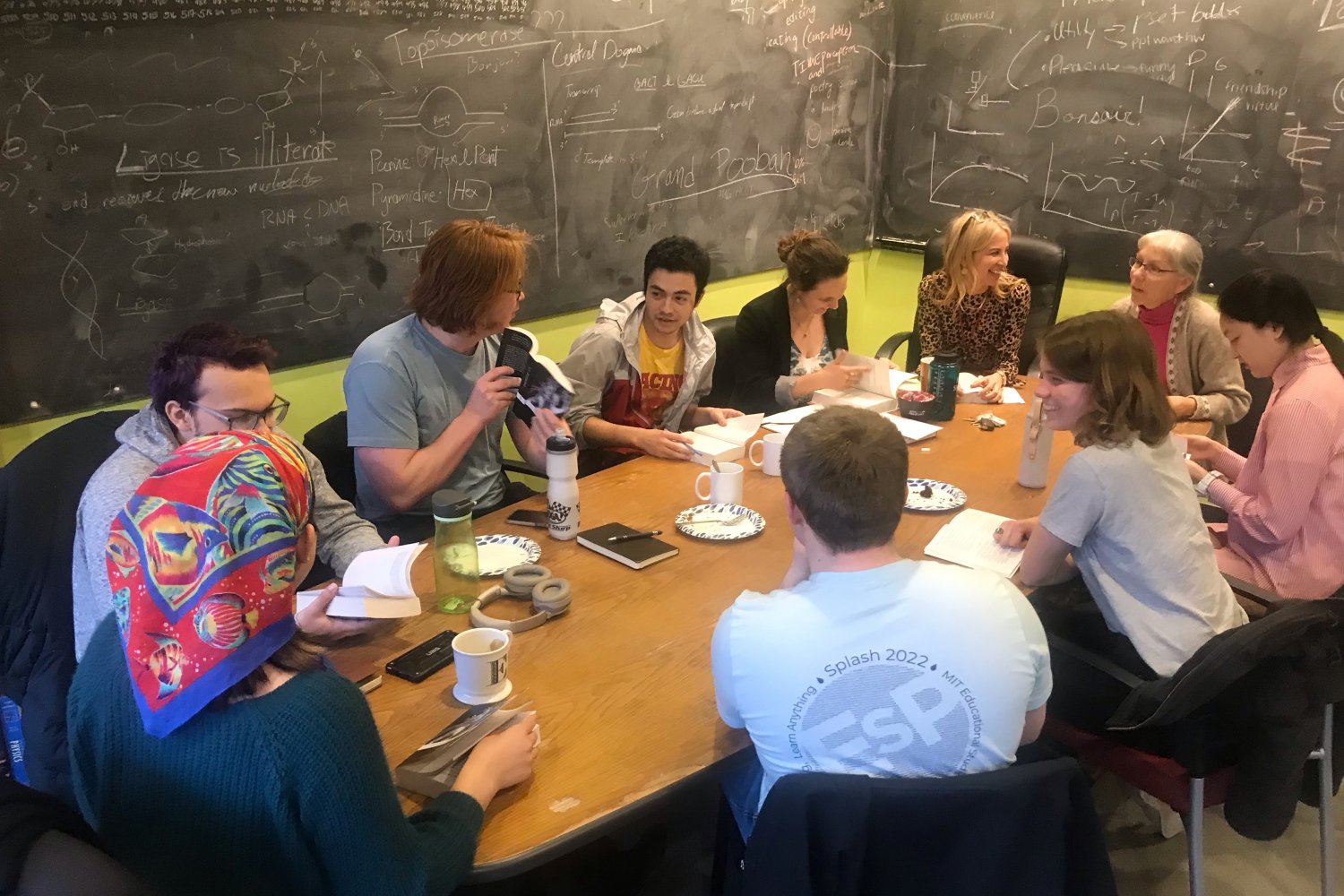
Students in MIT’s Concourse program delve deeply into the human condition, debate challenging questions, and learn to develop judgment about issues that can’t be quantified.
We use cookies to run the site and, with your consent, for analytics and to show ads. See our Cookie Policy.