Low-dose computed tomography (LDCT) is critical for minimizing radiation exposure, but it often leads to increased noise and reduced image quality. Traditional denoising methods, such as iterative optimization or supervised learning, often fail to preserve image quality. To address these challenges, we introduce PPORLD...
Debopom Sutradhar, Ripon Kumar Debnath, Mohaimenul Azam Khan Raiaan et al.· Biomedical Signal Processing...· 0 citations
This study critically investigates the evolving role of artificial intelligence (AI) in financial forecasting through a systematic literature review conducted across multiple reputable academic databases, and identifies persistent limitations, including model opacity, data quality concerns, and compliance challenges.
Wasiu Eyinade· World Journal of Finance and...· 0 citations
Artificial Intelligence and Machine Learning for Business Management is an academic textbook that presents an integrated understanding of artificial intelligence (AI), machine learning (ML), business analytics, managerial decision-making, strategy, digital transformation, responsible AI, governance, sustainability, and...
M Loganathan· Zenodo (CERN European Organi...· 0 citations
Reach audiences
Advertise in front of researchers, engineers, and readers.
In recent years, graph-based machine learning techniques, such as reinforcement learning and graph neural networks, have garnered significant attention. While some recent studies have started to explore the relationship between the graph structure of neural networks and their predictive performance, they often limit th...
Yash Arya, Sang Hoon Lee· Journal of the Korean Physic...· 0 citations
HiRAD is proposed, a hierarchical RL framework for continuous-space AGV routing with real-time guarantees that reduces makespan by 45 percent to 63 percent and shortens end-to-end runtime.
Yun-Jie Huang, Rui-Zhong Wu, Meng-Xuan Zhang et al.· 0 citations
This paper proposes a novel Reinforcement Learning–Based Intelligent Control (RL-IC) algorithm for energy-efficient and emission-aware optimization in industrial power systems. Unlike conventional rule-based or model-predictive controllers that rely on fixed dynamics, RL-IC employs a hierarchical dual-objective learnin...
Jian-Feng Zhong, Yigang Lou, Jiang-Sen Fei et al.· International Conference on...· 0 citations
Supplementary materials data set for the paper tilted “Planning for Leakage-Aware Collaborative Carbon Mitigation: Optimizer-Informed Multi-Agent Reinforcement Learning in Shandong’s Dual Metropolitan Areas”
Tourism recommendation systems use artificial intelligence (AI), machine learning (ML), and data analytics to support travel decisions. This systematic literature review examines decision types, disciplinary distribution, themes, and research gaps in AI-based tourism recommendation research. Following the Preferred Rep...
Learn how Google DeepMind and GovTech Singapore uses lightweight on-device Gemma models to intercept conversational scams in private chats with zero cloud data egress.
MIT News · Artificial Intelligence· news.mit.eduOct 13, 2026
Machine-learning networks can learn without detailed instructions from a designer. Those that do may offer insight into how the brain reorganizes itself during learning.
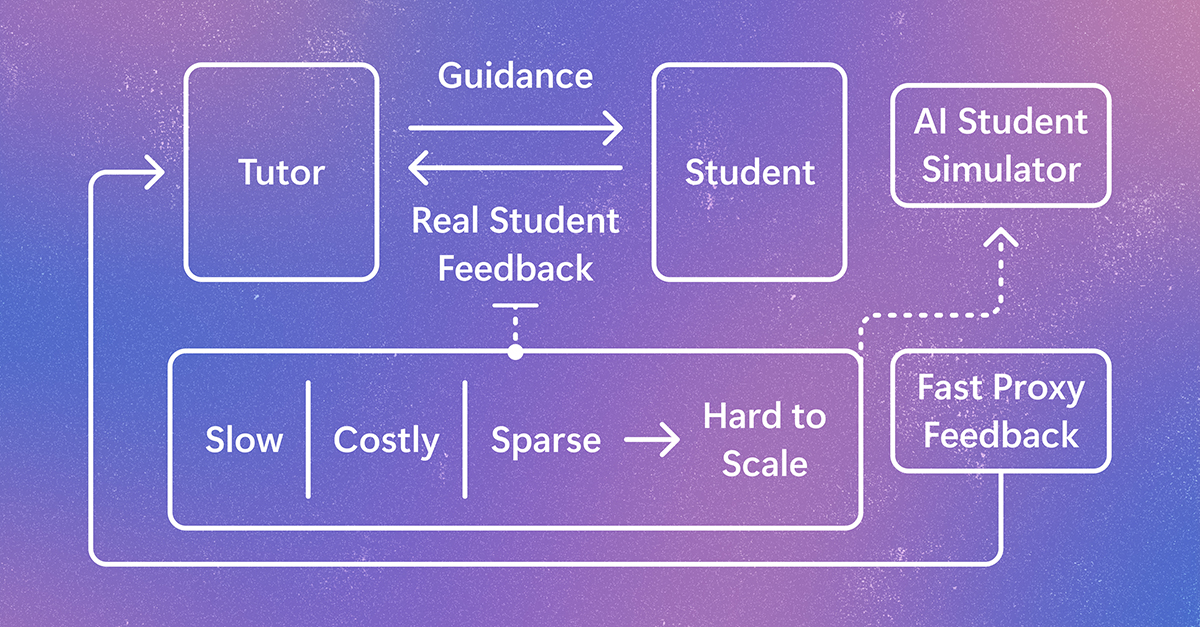
StudentSim is a research system for evaluating and improving AI tutoring tools before they are tested with learners. It models how individuals may engage with tutors, giving feedback to improve tutor performance across subjects like chess, writing, and mathematics. The post Simulating student learning for better AI tutoring appeared first on Microsoft Research.
MIT News · Artificial Intelligence· news.mit.eduOct 7, 2026
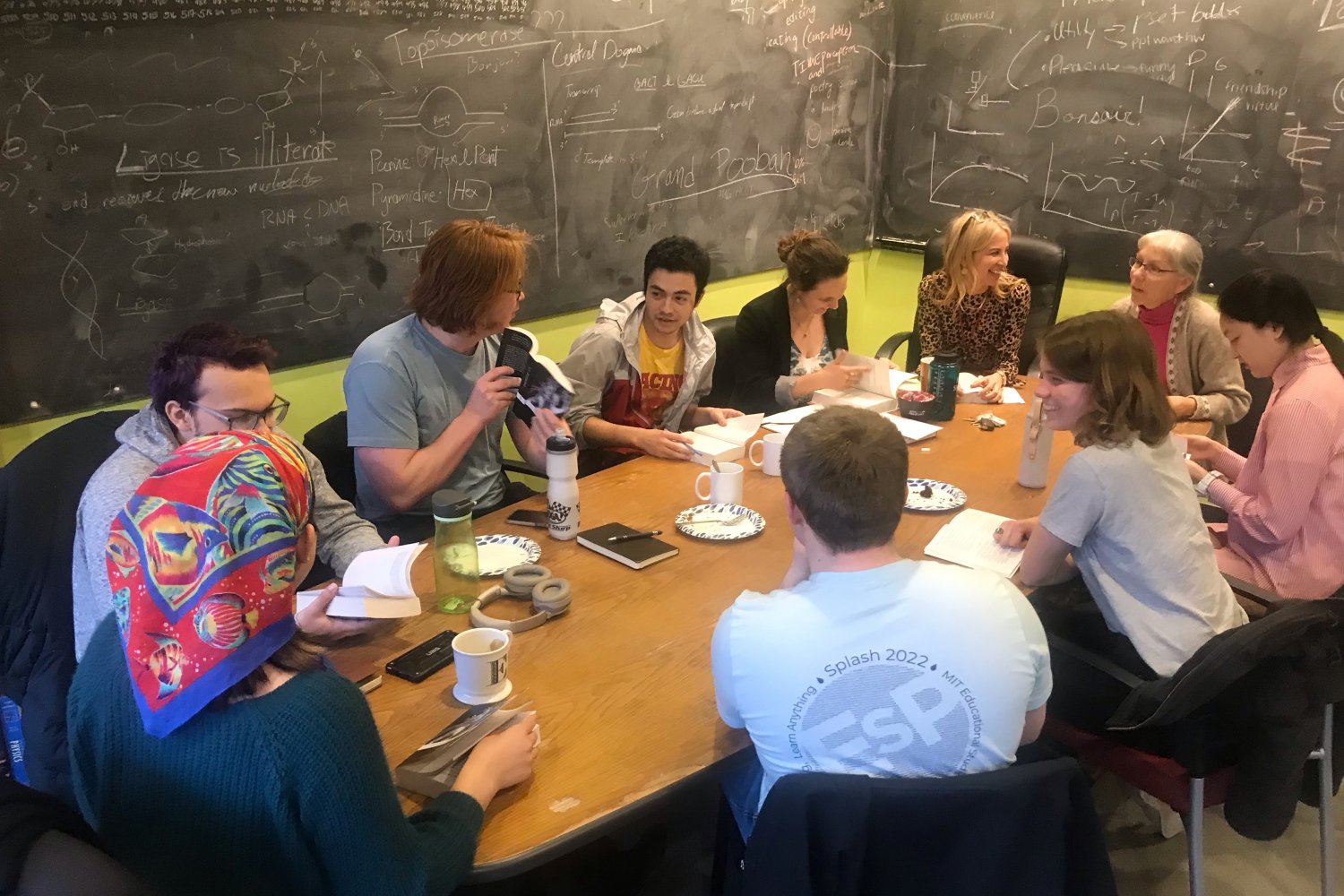
Students in MIT’s Concourse program delve deeply into the human condition, debate challenging questions, and learn to develop judgment about issues that can’t be quantified.
We use cookies to run the site and, with your consent, for analytics and to show ads.
See our Cookie Policy.