Modeling the response of driven many-body quantum systems from input--output data is difficult: the dynamics are nonlinear, history dependent, and expensive to simulate as system size grows. A paradigmatic case is High-Harmonic Generation~(HHG), where a strong field drives a medium to emit radiation that is highly sens...
Abhijit Sen, B. Parida, Shital Chauhan et al.· 0 citations
Evaluating near-term quantum-kernel support vector machines on practical network-security classification tasks and using quantum oracle sketching (QOS) to study a longer-term memory advantage for classification with streaming classical samples shows how quantum computing may contribute to network-security classificatio...
This work leverages Stein's lemma and Lipschitz concentration bounds for Gaussian random variables to provide an analytical lower bound of the variance of the gradient and a probabilistic concentration bound of the deviation of the gradient from its mean.
Gennaro De Luca, Vinayak Sharma, Aviral Shrivastava· arXiv.org· 2 citations
We study the sample complexity of shadow tomography in the high-precision regime under realistic measurement constraints. Given an unknown $d$-dimensional quantum state $\rho$ and a known set of observables $\{O_i\}_{i=1}^m$, the goal is to estimate expectation values $\{\mathrm{tr}(O_i\rho)\}_{i=1}^m$ to accuracy $\ep...
Senrui Chen, Weiyuan Gong, Sisi Zhou· 0 citations
Reach audiences
Advertise in front of researchers, engineers, and readers.
Unnormalized probability distributions are central to modeling complex physical systems across various scientific domains. Traditional sampling methods, such as Markov Chain Monte Carlo (MCMC), often suffer from slow convergence, critical slowing down, poor mode mixing, and high autocorrelation. In contrast, likelihood...
Simulation-based quantum system inference is introduced, a unified, likelihood-free framework that learns parameter posteriors directly from classical simulation data to reduce data-acquisition requirements in quantum experiments and accelerates parameter inference, providing a practical route to characterizing and imp...
Hang Zou, A. F. Kockum, Martin Rahm et al.· 0 citations
Understanding quantum phases of matter has long relied on physicists' intuition and mathematical tools such as symmetry and topology. Remarkably successful as these approaches have been, they provide no universal way to explore a Hamiltonian space whose organizing principle is not known in advance. In this work, we int...
Shiyu Zhou, Yuxuan Zhang, Sebastian Wetzel et al.· 0 citations
It is confirmed that an ideal sequential and terminal measurement schedule delivers the same complete bit string distribution under matched causal operations, while normalized postselection can amplify perturbations inversely with prefix acceptance.
Bhvain Makwana, Kashyap Patel, Manjunath Joshi et al.· 0 citations
In materials machine learning, closely related retained structures can sustain accurate property predictions even after removing a specific record, rendering post-deletion prediction error an ambiguous metric for machine unlearning. To resolve this ambiguity, we define the deletion floor as the expected target loss und...
Can Polat, Mustafa Kurban, Erchin Serpedin et al.· 0 citations
How many directions in weight space does training need? The intrinsic dimension answers this with the smallest number of random directions in which training still reaches a target accuracy, and small values have motivated parameter-efficient methods such as LoRA. We measure it for variational Monte Carlo (VMC), which t...
Lu Wei, Yu-Feng Wang, Chen-Feng Cao et al.· 0 citations
Scientific code generation can produce executable programs that fail to compute the intended scientific object. We study this problem in language-model synthesis of Clifford circuits, which prepare the stabilizer states used in quantum error correction and admit exact classical verification. In our target-conditioned f...
Lu Wei, Yufeng Wang, Chenfeng Cao et al.· 0 citations
Classical continuous-space neural networks fundamentally struggle to lock into exact formal rules, whether mathematical, such as modular arithmetic and non-Abelian group algebra, or linguistic, such as systematic compositional generalization. To approximate these discrete logical rules, they often rely on massive param...
Jennifer Neville did not want to go into computer science—but that’s exactly where she landed. Neville discusses the starts and stops that led to her professional sweet spot and her work identifying “surprising failures” making it hard for AI to handle complexity. The post What AI gets wrong and what failure teaches us appeared first on Microsoft Research.
MIT News · Artificial Intelligence· news.mit.eduOct 2, 2026
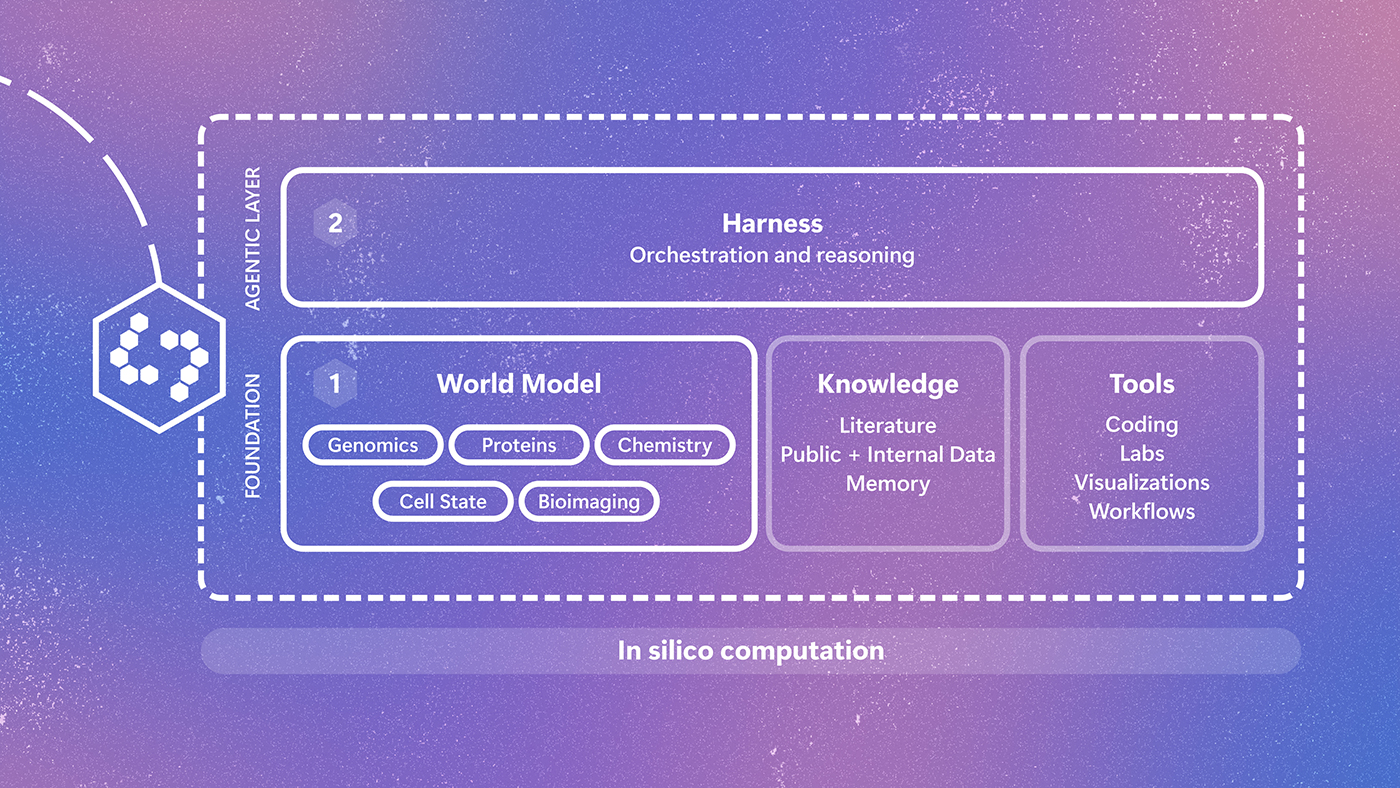
Biology doesn't operate in silos, and neither should the AI representation of it. Quine is an early-stage research effort to create a multimodal world model of biology. By connecting insights across biological scales and modalities, Quine helps scientists computationally search a space far larger than intuition allows and prioritize hypotheses before they reach the lab. Experimental results provide important feedback, helping researchers sharpen future research directions. The post Introducing Q…