This work introduces QC-Stark, a benchmark for evaluating large language models (LLMs) on 11 quantum computing (QC) tasks, spanning circuit construction, debugging, compilation, error correction, and simulation, and finds that overall rankings mask substantial per-task variation.
Recent advances in quantum computing are opening new opportunities for computationally intensive decision problems. This paper studies how quantum computing can improve Monte Carlo tree search (MCTS) in the fixed-confidence setting, where the goal is to identify a near-optimal move in a given game tree with high probab...
Quantum computing remains in the Noisy Intermediate-Scale Quantum (NISQ) era, with performance constrained by noise. Addressing this limitation requires hardware-facing capabilities beyond gate sequences: mid-circuit measurement and classical feedback for quantum error correction (QEC), precise timing for dynamical dec...
Encrypted training relies on keeping server-side updates low-degree. This constraint traditionally excludes models whose weights inhabit a compact Lie group (notably variational quantum circuits, where every trainable weight is an $\mathrm{SU(2)}$ rotation). Expressed in Euler angles or discrete alphabets, these update...
Marcel Mordarski, N. Mani, Arshad Patel et al.· 0 citations
Reach audiences
Advertise in front of researchers, engineers, and readers.
We present a focused and reproducible study of multi-horizon forecasting on the Lomnicky Stit neutron monitor (LMKS) time series. Our evaluation suite covers simple seasonal baselines, modern deep sequence models, and functional and quantum-inspired architectures, including Seasonal Naive, Long Short-Term Memory (LSTM)...
A scalable hybrid Quantum Diffusion Model is presented, based on a Discrete-Time Quantum Walk algorithm, executed on a real quantum device, to model the forward dynamics of the diffusion model, and its use for medical image analysis is evaluated.
Francesco Aldo Venturelli, Stefano Martina, Marco Parigi et al.· 0 citations
We propose a variational quantum implementation of self-attention (QSA)-the core operation in transformers and large language models-which predicts future elements of a sequence by forming overlap-weighted combinations of past data. At variance with previous approaches, our QSA realizes the required nonlinearity throug...
This work forms a Markov Decision Process for the problem and uses double deep Q-networks with Message Passing Neural Networks, experience replay buffers, and curriculum training to obtain policies, indicating a promising method for interpretable policy extraction for large quantum networks, where direct training becom...
L. Rode, Sumeet Khatri, Supartha Podder· 0 citations
High Performance Computing (HPC) and Quantum Computing (QC) systems are increasingly converging towards unified High Performance Computing-Quantum Computing (HPCQC) infrastructures, driven by a growing need to bridge classical and quantum workflows, which affects all levels of the system stack, from the hardware to com...
Andre Youssefi, Ercüment Kaya, Minh Chung et al.· 0 citations
The framework connects benchmark performance to experimentally actionable diagnoses of reservoir encoding, measurement choice, classical representation, and shot allocation and introduces task-resolved Fisher spectroscopy, in which prediction targets define orthonormal score coordinates on the stationary distribution o...
Hybrid quantum-classical neural networks have emerged as a promising approach for leveraging quantum computing in machine learning while mitigating current hardware limitations. This paper presents Sim-HVQC, a hybrid Deep Quantum Neural Network that couples an adaptive, parameter-free SimAM weighting module with classi...
Context-sensitive behavior can be modeled by enriching an internal state, by allowing a response rule to access context directly, or by preserving a shared state while introducing an auxiliary criterion or control variable. This paper isolates an information-theoretic constraint on the third architecture. Let $C$ denot...
Jennifer Neville did not want to go into computer science—but that’s exactly where she landed. Neville discusses the starts and stops that led to her professional sweet spot and her work identifying “surprising failures” making it hard for AI to handle complexity. The post What AI gets wrong and what failure teaches us appeared first on Microsoft Research.
MIT News · Artificial Intelligence· news.mit.eduOct 2, 2026
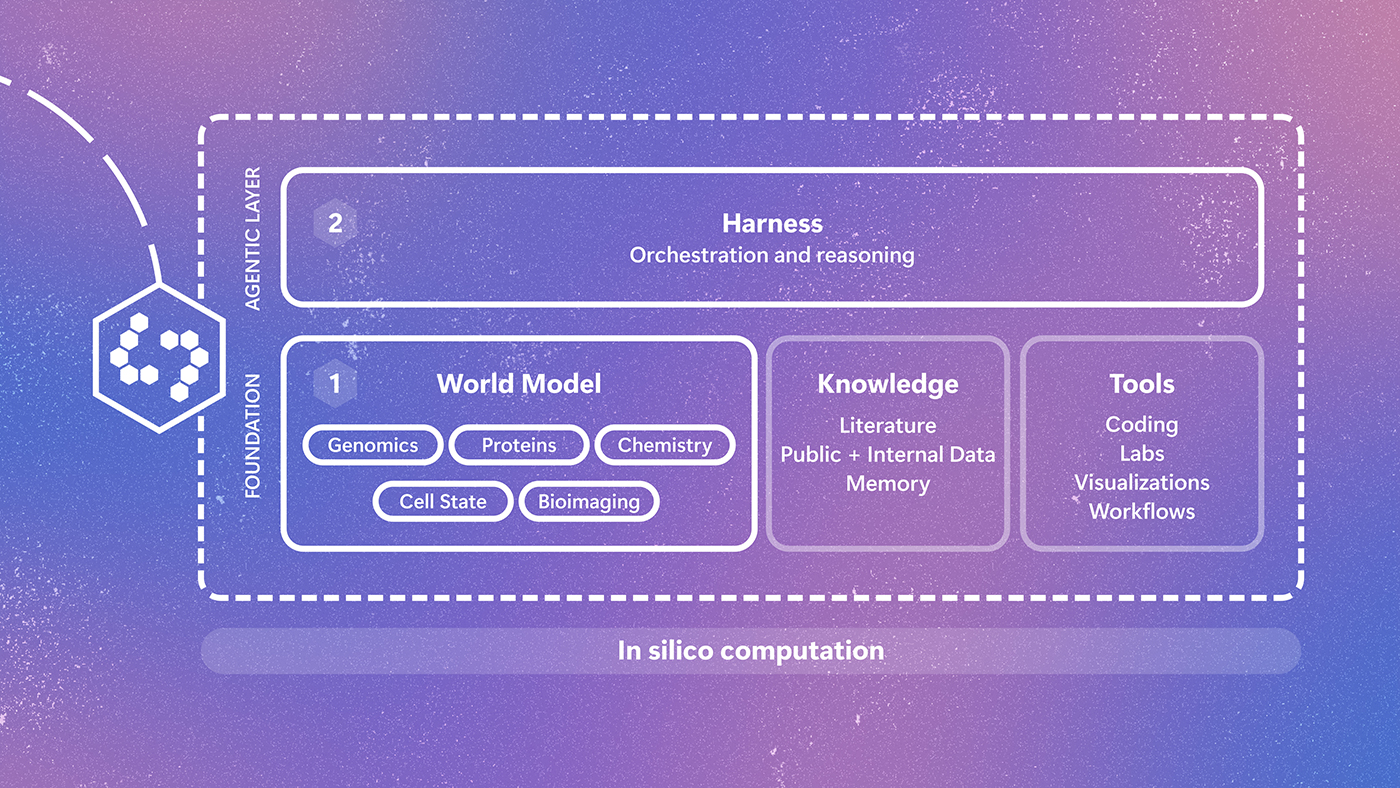
Biology doesn't operate in silos, and neither should the AI representation of it. Quine is an early-stage research effort to create a multimodal world model of biology. By connecting insights across biological scales and modalities, Quine helps scientists computationally search a space far larger than intuition allows and prioritize hypotheses before they reach the lab. Experimental results provide important feedback, helping researchers sharpen future research directions. The post Introducing Q…