The term “post-truth” has become a ubiquitous yet contentious descriptor of our contemporary socio-political landscape. This paper delves into the heart of the debate, examining whether post-truth represents a novel epistemic condition—a fundamental shift in how we know and what we believe—or if it is merely a rhetoric...
Kwan Hong TAN· Zenodo (CERN European Organi...· 0 citations
The term “post-truth” has become a ubiquitous yet contentious descriptor of our contemporary socio-political landscape. This paper delves into the heart of the debate, examining whether post-truth represents a novel epistemic condition—a fundamental shift in how we know and what we believe—or if it is merely a rhetoric...
Kwan Hong TAN· Zenodo (CERN European Organi...· 0 citations
The question of whether algorithms can be considered epistemic agents represents one of the most profound challenges at the intersection of philosophy of mind, epistemology, and artificial intelligence. This paper develops a novel theoretical framework for understanding algorithmic epistemic agency through the introduc...
Kwan Hong TAN· Zenodo (CERN European Organi...· 0 citations
The question of whether algorithms can be considered epistemic agents represents one of the most profound challenges at the intersection of philosophy of mind, epistemology, and artificial intelligence. This paper develops a novel theoretical framework for understanding algorithmic epistemic agency through the introduc...
Kwan Hong TAN· Zenodo (CERN European Organi...· 0 citations
Reach audiences
Advertise in front of researchers, engineers, and readers.
The question of whether moral facts are real or constructed has dominated metaethical discourse for centuries, with traditional positions including moral realism, anti-realism, and constructivism offering competing accounts of moral ontology. This paper introduces four novel theoretical frameworks that transcend tradit...
Kwan Hong TAN· Zenodo (CERN European Organi...· 0 citations
The question of whether moral facts are real or constructed has dominated metaethical discourse for centuries, with traditional positions including moral realism, anti-realism, and constructivism offering competing accounts of moral ontology. This paper introduces four novel theoretical frameworks that transcend tradit...
Kwan Hong TAN· Zenodo (CERN European Organi...· 0 citations
Proposals that physical states and laws jointly determine one another are often presented through fixed-point equations. Yet any ordinary fixed-law theory can be rewritten in joint fixed-point form by adding a constant law-update map. Fixed-point form alone therefore carries neither empirical content nor a distinctive...
Kwan Hong TAN· Zenodo (CERN European Organi...· 0 citations
Proposals that physical states and laws jointly determine one another are often presented through fixed-point equations. Yet any ordinary fixed-law theory can be rewritten in joint fixed-point form by adding a constant law-update map. Fixed-point form alone therefore carries neither empirical content nor a distinctive...
Kwan Hong TAN· PhilPapers (PhilPapers Found...· 0 citations
This article develops a joint state-law fixed-point method for self-consistent quantum models. A physical model is represented by a density operator and a finite-dimensional vector of effective law parameters; admissible dynamics consist of a state-update channel and a law-update map. A recursive solution is their join...
Kwan Hong TAN· Zenodo (CERN European Organi...· 0 citations
This article develops a joint state-law fixed-point method for self-consistent quantum models. A physical model is represented by a density operator and a finite-dimensional vector of effective law parameters; admissible dynamics consist of a state-update channel and a law-update map. A recursive solution is their join...
Kwan Hong TAN· Zenodo (CERN European Organi...· 0 citations
Deep reinforcement learning for quantum circuit optimization faces three bottlenecks: replay buffers that overlook temporal difference (TD) target reliability, curriculum-based architecture search requiring a full quantum-classical evaluation after every edit, and the discard of noiseless trajectories when retraining u...
Frozen language models (LMs) are increasingly used as fixed feature extractors for downstream reranking, scoring, and preference modeling, raising a practical question: how should a compact module represent interactions among features in a fixed low-dimensional bottleneck? Common linear and low-rank adapters remain lin...
E. Roh, Hyojun Ahn, Hoyeong Lee et al.· 0 citations
Jennifer Neville did not want to go into computer science—but that’s exactly where she landed. Neville discusses the starts and stops that led to her professional sweet spot and her work identifying “surprising failures” making it hard for AI to handle complexity. The post What AI gets wrong and what failure teaches us appeared first on Microsoft Research.
MIT News · Artificial Intelligence· news.mit.eduOct 2, 2026
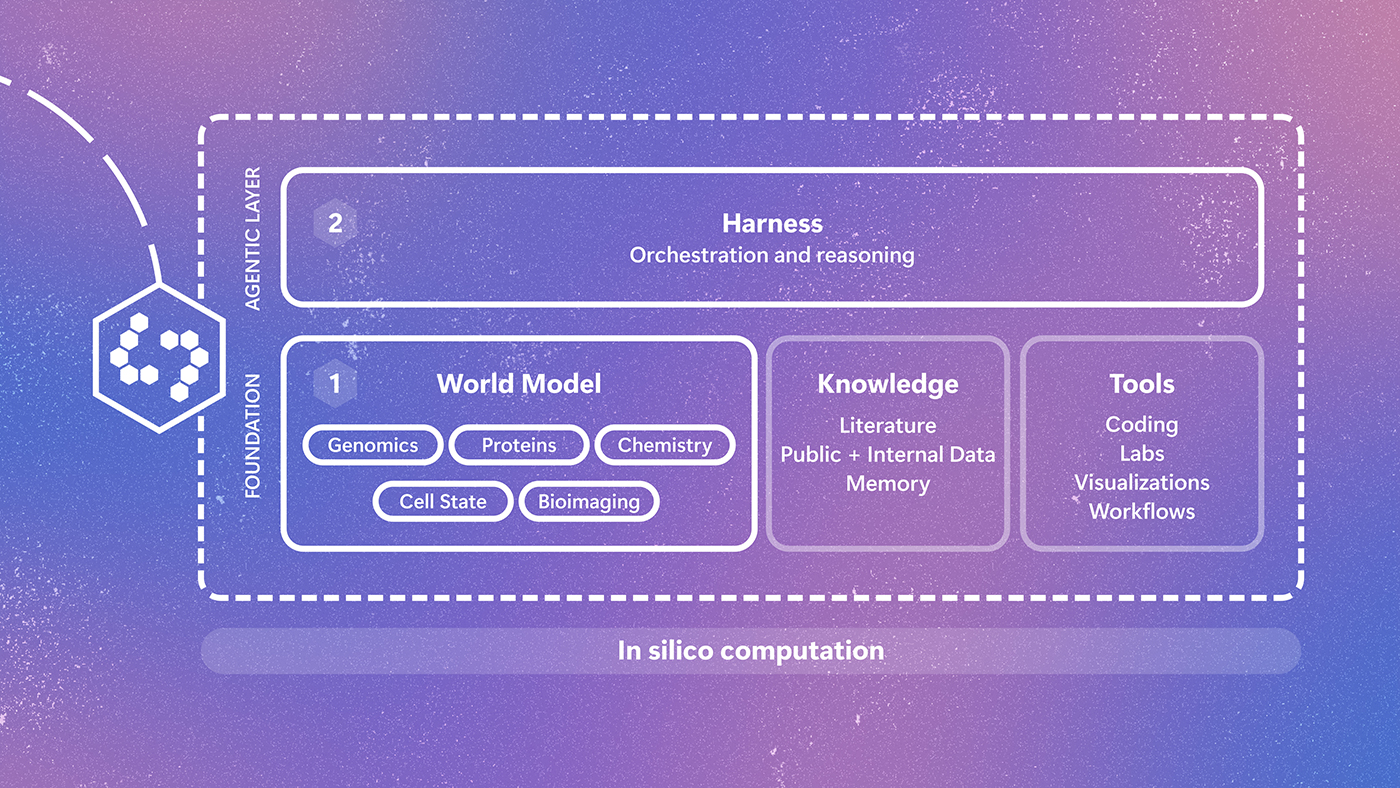
Biology doesn't operate in silos, and neither should the AI representation of it. Quine is an early-stage research effort to create a multimodal world model of biology. By connecting insights across biological scales and modalities, Quine helps scientists computationally search a space far larger than intuition allows and prioritize hypotheses before they reach the lab. Experimental results provide important feedback, helping researchers sharpen future research directions. The post Introducing Q…