How many directions in weight space does training need? The intrinsic dimension answers this with the smallest number of random directions in which training still reaches a target accuracy, and small values have motivated parameter-efficient methods such as LoRA. We measure it for variational Monte Carlo (VMC), which trains a neural network to represent the ground state of a quantum many-body system. VMC is a demanding test, because the network generates its own training samples and every gradient is noisy, and a revealing one, because the exact answer is known and every run can be scored. We train only a small latent vector that a frozen random map turns into the network's weights, with no change to the standard natural-gradient optimizer. We find that a small dimension can be misleading, while the stability it brings is real. On a magnet with a hard sign pattern, a network that cannot represent signs reaches its best energy in 8 of 28,642 directions, but only because no such network can go lower; once signs are learnable, neither the signs nor the magnitudes are cheap. The dimension rises across a quantum phase transition, so it tracks how difficult a state is at far less compute than fitting a scaling law, yet it never falls below a floor set by the random subspace itself, even where the ground state is nearly trivial. Training in the subspace, in contrast, never diverged in our experiments, whereas full-parameter training with the same settings did, and a control with matched solvers attributes the difference to the reduced dimension.

This publication proposes a definition and a classification of agile software development approaches and analyses ten software development methods that can be characterized as being "agile" against the defined criterion.
P. Abrahamsson, O. Salo, Jussi Ronkainen et al.· arXiv.org· 727 citations· ⚡54
The study shows that agile practices improve both informal and formal communication, but indicates that, in larger development situations involving multiple external stakeholders, a mismatch of adequate communication mechanisms can sometimes even hinder the communication.
M. Pikkarainen, Jukka Haikara, O. Salo et al.· Empirical Software Engineeri...· 401 citations· ⚡48
The results indicate that software engineering work practices are chosen opportunistically, adapted and configured to provide value under the constrains imposed by the startup context.
Nicolò Paternoster, Carmine Giardino, M. Unterkalmsteiner et al.· Information and Software Tec...· 394 citations· ⚡54
The possibility of inferring high-dimensional data inference in a model that consists of a prior and an auxiliary differentiable constraint given some additional information is considered, thereby allowing a range of potential applications in adapting models to new domains and tasks.
Alexandros Graikos, Esmeralda S. Whitammer, N. Jojic et al.· Neural Information Processin...· 316 citations· ⚡15
It is proved that any global minimizer of the trajectory balance objective can define a policy that samples exactly from the target distribution, and empirically demonstrate the benefits of the trajectories balance objective for GFlowNet convergence, diversity of generated samples, and robustness to long action sequenc...
Esmeralda S. Whitammer, Moksh Jain, Emmanuel Bengio et al.· Neural Information Processin...· 302 citations· ⚡60
Related blog posts
MIT News · Artificial Intelligence· news.mit.eduOct 2, 2026
A weeklong summer workshop brought higher education faculty to campus to explore how AI and machine learning materials can be adapted for their classrooms.
MIT News · Artificial Intelligence· news.mit.eduAug 27, 2026
A new machine-learning framework aims to improve the success rate of computational protein design while moving away from results that reproduce sequences found in nature.
Microsoft Research Blog· microsoft.comAug 20, 2026
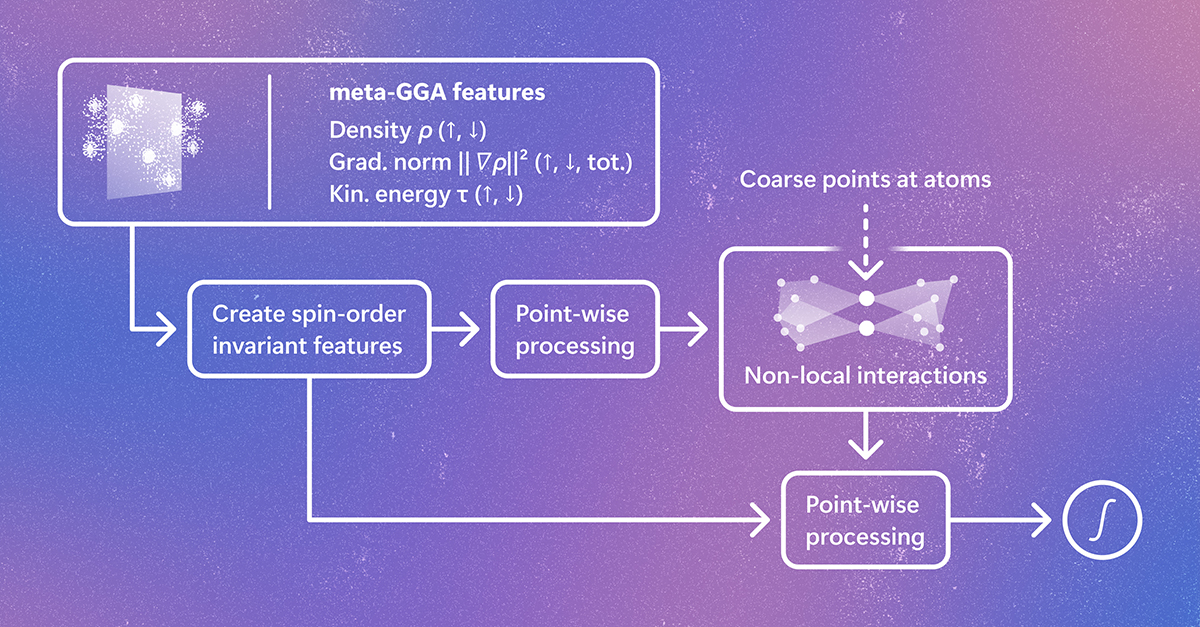
Skala 1.1, the updated deep-learning exchange-correlation functional from Microsoft Research, provides greater accuracy, expanded accessibility across the computational chemistry ecosystem, and a living benchmark to track computational performance. The post Broadening access to Skala creates a faster path to predictive DFT appeared first on Microsoft Research.
We use cookies to run the site and, with your consent, for analytics and to show ads.
See our Cookie Policy.