The DRHIN platform provides a code-free portal supporting three key predictive tasks: discovering drug-disease associations, repurposing existing drugs for new indications, and identifying potential therapies for specific diseases, making analyses accessible and reproducible.
Bowei Zhao, Dongxu Li, Yue Yang et al.· Journal of Chemical Informat...· 10 citations· ⚡1
MCGLPPI, a novel geometric representation learning framework that combines graph neural networks (GNNs) with the MARTINI molecular coarse-grained (CG) model to predict overall PPI properties accurately and efficiently, offers an effective and efficient solution for PPI overall property predictions.
Yang Yue, Shu Li, Yihua Cheng et al.· bioRxiv· 15 citations
The results indicate that this fully automated, open-source system holds potential value for improving the efficiency and sustainability of molecular synthesis, and the integration of organic and enzymatic synthesis enhances molecule construction efficiency.
LiTEN achieves state-of-the-art accuracy on standard benchmarks, consistently outperforming leading approaches in both precision and speed, and enables comprehensive modeling tasks, ranging from geometry optimization to free energy surface construction, with high computational efficiency for large biomolecules.
Qun Su, Kai Zhu, Qiaolin Gou et al.· Nature Communications· 2 citations
Reach audiences
Advertise in front of researchers, engineers, and readers.
RSGPT, a generative model pre-trained on ten billion data points, achieving state-of-the-art performance for synthesis planning, and introduces reinforcement learning to capture the relationships among products, reactants, and templates more accurately.
Yafeng Deng, Xinda Zhao, Hanyu Sun et al.· Nature Communications· 18 citations· ⚡2
ERAM aligns pre-trained molecular representations from Protein Language Model with the knowledge of enzyme catalysis by modeling enzymatic reactions as multi-relational data, and demonstrates its potential as a versatile and effective tool for enzyme catalysis research.
This study introduces LaMGen, an LLM-powered framework that leverages large-scale protein-ligand data and rotation-aware molecular encoding to rapidly produce chemically plausible multi-target candidates, achieving strong zero-shot generalization, superior molecular quality, and robust performance across dual- and trip...
Qun Su, Qiaolin Gou, Hui Zhang et al.· Nature Communications· 1 citation
The Biotoxins Database (BioTD) is the largest open-source database for toxins, offering open access to 14,607 data records (8,185 activity records), covering 8,975 toxins sourced from 5,220 references and patents across over 900 species.
Gaoang Wang, Hang Wu, Yang Liao et al.· Journal of Chemical Informat...· 0 citations
An integrated computational workflow that combines enhanced sampling techniques and machine learning collective variables to identify druggable conformations of the AR-NTD and elucidate the binding mechanism of its modulator, EPI-002 is introduced.
Kai Zhu, Huating Wang, Jin-Tu Zhang et al.· Nature Communications· 0 citations
While LLM-based multi-agent systems show potential for large-scale software development, successful integration requires addressing challenges such as memory limitations, hallucinations, and code smells, alongside a practitioner-centric perspective.
Z. Rasheed, Muhammad Waseem, Kai-Kristian Kemell et al.· 31 citations
The proposed LLM-based multi-agent system automates qualitative data analysis process, creating opportunities for researchers and practitioners, and future improvements focus on enhancing multilingual performance and integrating continuous expert feedback.
Z. Rasheed, Muhammad Waseem, Aakash Ahmad et al.· arXiv.org· 41 citations
This work designs and operationalizes a governance-aware, multi-tenant AI sandbox that supports structured experimentation and produces reusable evaluation evidence across stakeholders and yields lessons learned and practical considerations that inform deployment and future evolution of governance-aware sandbox platfor...
Muhammad Waseem, M. Islam, Md Nasir Uddin Shuvo et al.· arXiv.org· 0 citations
Jennifer Neville did not want to go into computer science—but that’s exactly where she landed. Neville discusses the starts and stops that led to her professional sweet spot and her work identifying “surprising failures” making it hard for AI to handle complexity. The post What AI gets wrong and what failure teaches us appeared first on Microsoft Research.
MIT News · Artificial Intelligence· news.mit.eduOct 2, 2026
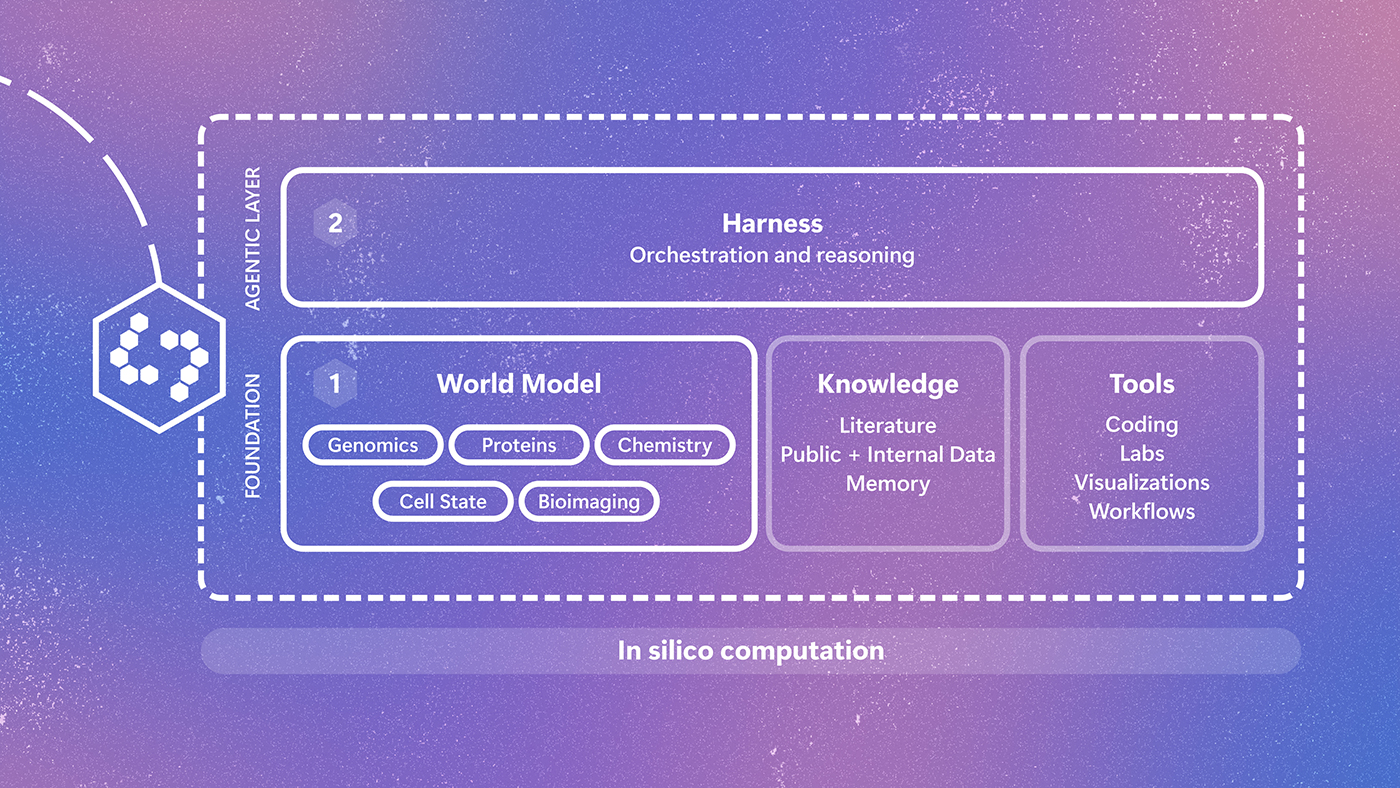
Biology doesn't operate in silos, and neither should the AI representation of it. Quine is an early-stage research effort to create a multimodal world model of biology. By connecting insights across biological scales and modalities, Quine helps scientists computationally search a space far larger than intuition allows and prioritize hypotheses before they reach the lab. Experimental results provide important feedback, helping researchers sharpen future research directions. The post Introducing Q…