Jan 2026· Journal of Chemical Physics· Vol 164 2· 1 citation· 44 references
Medicine
TL;DR
These results suggest that it will be much time-saving to utilize RAMD with high random force for interaction pathway exploration for both the pathway obvious and unobvious systems if the protein keeps stable in the simulation if the protein keeps stable in the simulation.
Abstract
It is evidenced that many elaborately designed molecules that can interact well with the binding pocket of their target fail to exhibit activity in wet-lab experiments. This may associate with the interacting process of drug-target recognition. To efficiently characterize the drug-target interacting process, various enhanced sampling technologies have been proposed; yet, very few studies have systemically investigated whether the settings of these simulations are favorable to characterize the purposed tasks. Here, by comparing two popular enhanced sampling technologies, namely, the well-temped metadynamics and random acceleration molecular dynamics (RAMD), we systemically investigate the strategies to efficiently characterize the dissociating process of protein-ligand interactions. Two target families are employed for the analysis, including the kinase family (represented by TRK1) that represents the interaction-pathway obvious systems and the nuclear receptor family (represented by THRβ) that represents the interaction-pathway unobvious systems. Our results suggest that (1) in terms of maintaining stability of the protein structure, MetaD at various simulation conditions and RAMD with a large random force are good choice; (2) drug residence time derived from both MetaD and RAMD based on various parameters shows reasonable correlation to the experimental binding strength of the ligands, but RAMD usually runs with much less simulation time; and (3) both enhanced sampling methods result in reasonably consistent pathway preference for the two target families. Taken together, it will be much time-saving to utilize RAMD with high random force for interaction pathway exploration for both the pathway obvious and unobvious systems if the protein keeps stable in the simulation; otherwise, MetaD with a high bias factor is proposed to balance the computational accuracy and efficiency for the exploration.
Whether binding specificity and partner selection in protein-protein interactions (PPIs) can be reliably inferred from static structures or require more dynamic, pathway-resolved energetic analyses remains an open question. To explore this, we focus on the ornithine decarboxylase (ODC)-antizyme isoform 1 (Az1)-antizyme inhibitor (AzIN) system, a well-characterized competitive PPI network that plays a critical role in regulating polyamine homeostasis. By combining extensive all-atom molecular dynamics simulations with biochemical experiments and the development of a new tool, we uncover key dynamic features of the static and recognition pathway interaction. Based on these, we designed novel antizyme isoforms (NAZs). Our analysis, using residue-resolved energetic landscapes, reveals critical determinants of binding specificity and partner selection that static structures alone cannot capture. These insights guide the engineering of NAZs that either directly engage ODC or modulate Az1 availability. This work provides a new perspective, demonstrating that dynamic energetic landscapes, rather than static structures, are key to understanding and modulating competitive protein recognition. Additionally, our DyResEL tool enables broader, more detailed analyses of energetic contributions, offering a versatile approach for exploring PPIs in various biological contexts.
Baolin Guo, Qian Xue, Fan Yang et al.· Journal of Chemical Informat...· 0 citations
This study comprehensively analyzes how various inhibitors bind to the SARS-CoV-2 macrodomain Mac1, a key protein implicated in hampering the host's immune response following viral infection. In this study we used volume-based metadynamics simulations to investigate the binding mechanisms of ADP-ribose and two Mac1 inhibitors: the adenine-analogue GS-441524 and the non-adenine-analogue S09. By combining free-energy simulations with a bioinformatic analysis, we aimed at determining whether the binding patterns observed for the selected ligands can be generalized across Mac1 inhibitors and can be exploited to guide a rational design for future therapeutics. Our simulations show the pivotal role of the adenosine moiety in Mac1 recognition. However, for small molecules, like S09 and GS-441524, the oxyanion hole also emerged as an alternative and essential stabilizing region. This site, which preferentially accommodates electronegative groups, is engaged by approximately 76% of reported Mac1 inhibitors, making it a key target for Mac1 inhibition. In addition, we demonstrate that the unstructured loops 1 and 2 shape ligand entry, with loop 2 functioning as a dynamic gateway. Within this loop, Leu126, part of the virus-specific P-L-L-S motif, serves as a key anchoring residue for potent inhibitors. Collectively, these findings suggest that targeting both the oxyanion hole and Leu126 may enhance both the specificity and affinity of next-generation Mac1 inhibitors.
Verena Weber, Sarah Knapp, Patricia Korn et al.· International Journal of Bio...· 0 citations
A protocol for discovering protein‐binding peptides using a very large, target‐agnostic yeast surface display library containing approximately 6.1 × 10⁹ unique clones and providing broad coverage of short peptide sequence space is described.
J. D. Hurley, Andrew C. Kruse· Current Protocols· 0 citations
Structure-based virtual screening of chemical libraries is an established and widely used strategy for identifying novel ligands for G-protein-coupled receptors. An enhancement based on integrating protein–ligand interaction with docking has previously been proposed, but its actual impact on improving screening outcomes has remained unclear. Here, we present a comprehensive assessment based on systematic benchmarking using a diverse set of class A G-protein-coupled receptors and different approaches to represent protein–ligand, including dynamic patterns extracted from molecular dynamics simulations. Our results demonstrate that the combined approach overall improves the efficacy bias of selected ligands as compared to docking alone (ranking by scoring function). All tested variations prove broadly functional; however, the most sophisticated one─incorporating simulation and a learning model─emerges as the most robust alternative for a prospective setting. The analysis of two prospective cases, the design of both agonists and antagonists of CNR1 and the more challenging search for CXCR4 nonpeptidic agonist, reveals both great potential and inherent structural limitations, highlighting the need for an accurate and suitable three-dimensional structure.
Luca Chiesa, G. Bret, Severine Schneider et al.· Journal of Chemical Informat...· 0 citations
This work highlights how distinct inhibitors exploit different conformational states of cKIT and demonstrates the value of integrating structural analyses, biophysical measurements, calculations and molecular simulations to define the mechanism of kinase inhibition.
Irene Cipollone, Carmen Gratteri, C. Talarico et al.· International Journal of Bio...· 0 citations
A structural database that systematically maps the complete activation trajectories of pharmaceutically relevant targets, encompassing TS, IS, and all connecting conformational ensembles is presented, offering multiple strategic advantages for drug discovery.
A new machine-learning framework aims to improve the success rate of computational protein design while moving away from results that reproduce sequences found in nature.
MIT News · Artificial Intelligence· news.mit.eduJul 22, 2026
Known for his clear and elegant writing style, Bertsekas shaped fields from control and optimization to large-scale computation and artificial intelligence.
Microsoft Research Blog· microsoft.comAug 31, 2026
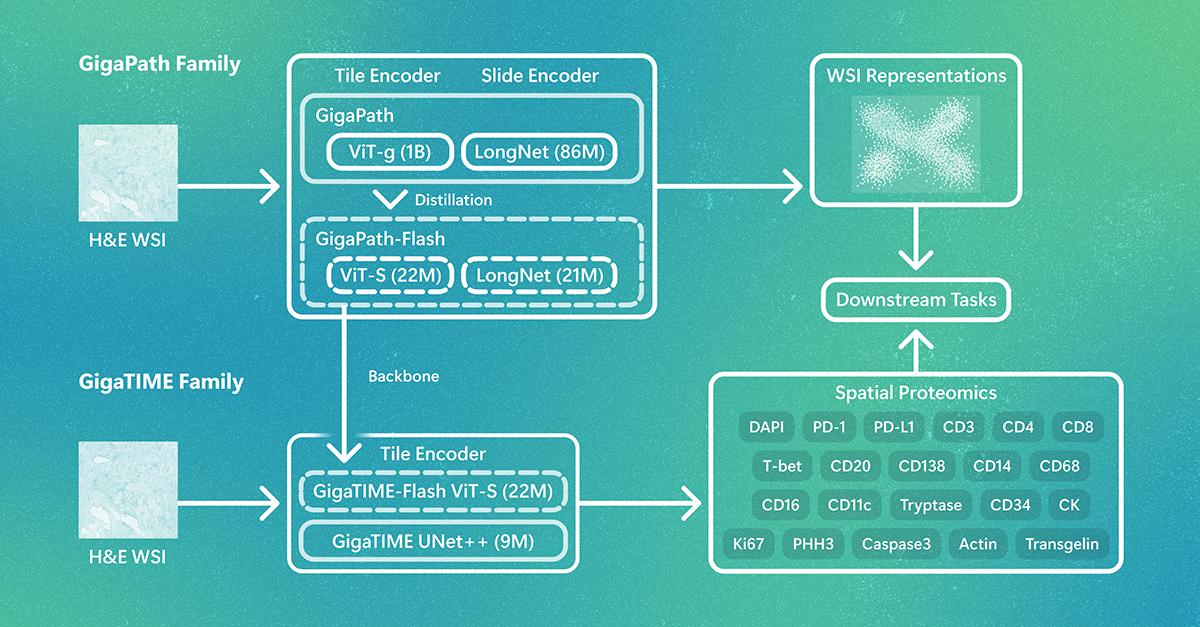
What if pathology foundation models could do more with less? GigaPath-Flash and GigaTIME-Flash cut computational demands while maintaining strong performance, opening the door to larger studies and broader exploration. The post GigaPath-Flash and GigaTIME-Flash: Toward population-scale discovery with efficient pathology foundation models appeared first on Microsoft Research.
MIT News · Artificial Intelligence· news.mit.eduAug 31, 2026
With millions of users across the world, Julia has been used to conduct cutting-edge research and to design new drugs, jet engines, heat pumps, and more.
We use cookies to run the site and, with your consent, for analytics and to show ads.
See our Cookie Policy.