May 2025· Journal of Chemical Information and Modeling· Vol 65, pp. 5481-5494· 2 citations· 58 references
MedicineComputer Science
TL;DR
This study established a unified model (NRIGN) based on the deep graphic architecture to discriminate agonists and antagonists targeting 26 successful or in-clinical-trial NR targets and achieves an excellent prediction accuracy and is robust enough to be applied in various real-world scenarios.
Abstract
To fulfill functions for differentially regulating the downstream signaling pathways, functional ligands (i.e., agonists or antagonists) targeting nuclear receptors (NRs) are designed to stabilize different conformations (active or inactive) of the proteins. However, in practical applications, it is usually difficult to determine the molecular category of an NR ligand because these molecules all bind in the same location of an NR protein, namely, the ligand-binding pocket (LBP). Considering that ligands with different properties (agonists or antagonists) prefer to bind with differential conformations of NRs, it is possible to identify the molecular type of a given ligand through the differential binding environment (active or inactive conformations) of the protein-ligand interaction. Therefore, in this study, we established a unified model (NRIGN) based on the deep graphic architecture to discriminate agonists and antagonists targeting 26 successful or in-clinical-trial NR targets. Our result shows that NRIGN achieves an excellent prediction accuracy (ACC >0.95) and is robust enough to be applied in various real-world scenarios, such as predicting the molecular type of ligands in crystallized NR structures, ligands with multiple NR activities, and ligands with their types altered by target mutations. The proposed model is expected to promote rational design of drugs targeting NR proteins.
Peptide-activated G protein-coupled receptors (GPCRs) play crucial roles in numerous diseases, but remain difficult therapeutic targets due to the challenges in developing small-molecule drugs. Here, we explore structure-based strategies to identify small-molecule agonists of neurotensin (NTS) receptors, which hold promise for developing non-opioid analgesics. Chemical libraries of drug-like molecules are first designed based on a receptor-peptide complex, and then 14.5 million compounds are computationally docked to the orthosteric binding site of the NTS1 receptor. A set of 39 top-ranked compounds is synthesized, and seven of these are experimentally confirmed to activate the NTS1 receptor. Structure-guided optimization yields NTS1 ligands with signaling signatures distinct from the endogenous peptide, and these compounds also exhibit high affinity for the NTS2 receptor. High-resolution crystal structures of two agonists bound to the NTS1 receptor confirm predicted binding modes and reveal key determinants of activation. In vivo, the compounds produce robust antinociception in rodents without inducing hypotension, consistent with a contribution of NTS2 receptor activity. To facilitate broader application of our virtual screening approach to peptide-binding GPCRs, we provide access to tailored chemical libraries containing billions of readily synthesizable compounds. In this work, small-molecule ligands of neurotensin receptors were identified using structure-based virtual screening, leading to the discovery of potent agonists with in vivo antinociceptive effects and to insights into the molecular basis of receptor activation.
Nicolas Panel, D. D. Vo, Harald Hübner et al.· Nature Communications· 0 citations
This study maps the landscape of GPCR classification and function by translating the majority of the GPCR structures into structure graphs and analyzing over 2 million structural contacts to capture key aspects of the structural communication within the GPCR superfamily with implications in drug discovery.
Sara Gentile, Angelo Felline, Sara Mazzali et al.· JACS Au· 0 citations
A dynamics-aware molecular descriptor, LDR, is developed that can be a key factor in quantifying partial agonism arising from small-molecule ligand drift away from the primary orthosteric site and it is found that adding constraints on pose diversity and allowing receptor flexibility can improve LDR’s ability to distinguish full from partial agonists.
Ying-Ting Lin, Yung-Ting Shih· Journal of Chemical Informat...· 0 citations
G protein-coupled receptors (GPCRs) mediate a variety of signaling pathways and represent the most common class of pharmaceutical target. While advances in structural biochemistry have provided deep functional insights into key receptors, many of the 800+ human GPCRs remain understudied. We introduce a versatile “deep receptor scanning” platform that can be used to experimentally characterize 766 human GPCRs and 174 known GPCR splice variants in parallel. We use this platform to quantitatively characterize the relative abundance of canonical and alternative receptor transcripts, their translational efficiency, and the plasma membrane expression of each receptor in the context of a recombinant pool of HEK293T cells expressing individual GPCRs. We then employ machine learning to identify specific structural features that are strongly associated with variations in GPCR expression. Our results show that many highly-expressed receptors exhibit systematic differences in hydrophobicity and secondary structure. This experimental platform and informatic approach are compatible with a variety of assays and can be used to efficiently explore the biochemical and pharmacological properties of the GPCRome.
A. Tedman, Muskan Goel, Sohan S. Shah et al.· Nature Communications· 0 citations
Structure-based virtual screening of chemical libraries is an established and widely used strategy for identifying novel ligands for G-protein-coupled receptors. An enhancement based on integrating protein–ligand interaction with docking has previously been proposed, but its actual impact on improving screening outcomes has remained unclear. Here, we present a comprehensive assessment based on systematic benchmarking using a diverse set of class A G-protein-coupled receptors and different approaches to represent protein–ligand, including dynamic patterns extracted from molecular dynamics simulations. Our results demonstrate that the combined approach overall improves the efficacy bias of selected ligands as compared to docking alone (ranking by scoring function). All tested variations prove broadly functional; however, the most sophisticated one─incorporating simulation and a learning model─emerges as the most robust alternative for a prospective setting. The analysis of two prospective cases, the design of both agonists and antagonists of CNR1 and the more challenging search for CXCR4 nonpeptidic agonist, reveals both great potential and inherent structural limitations, highlighting the need for an accurate and suitable three-dimensional structure.
Luca Chiesa, G. Bret, Severine Schneider et al.· Journal of Chemical Informat...· 0 citations
The convergence of docking, dynamics, and free-energy results prioritized PM2, PM3, and PM4 as promising MAP3K8 hit candidates, which require further experimental validation and lead optimization.
Md Ataul Islam, A. Iqbal, M. A. Ali et al.· Molecular diversity· 0 citations
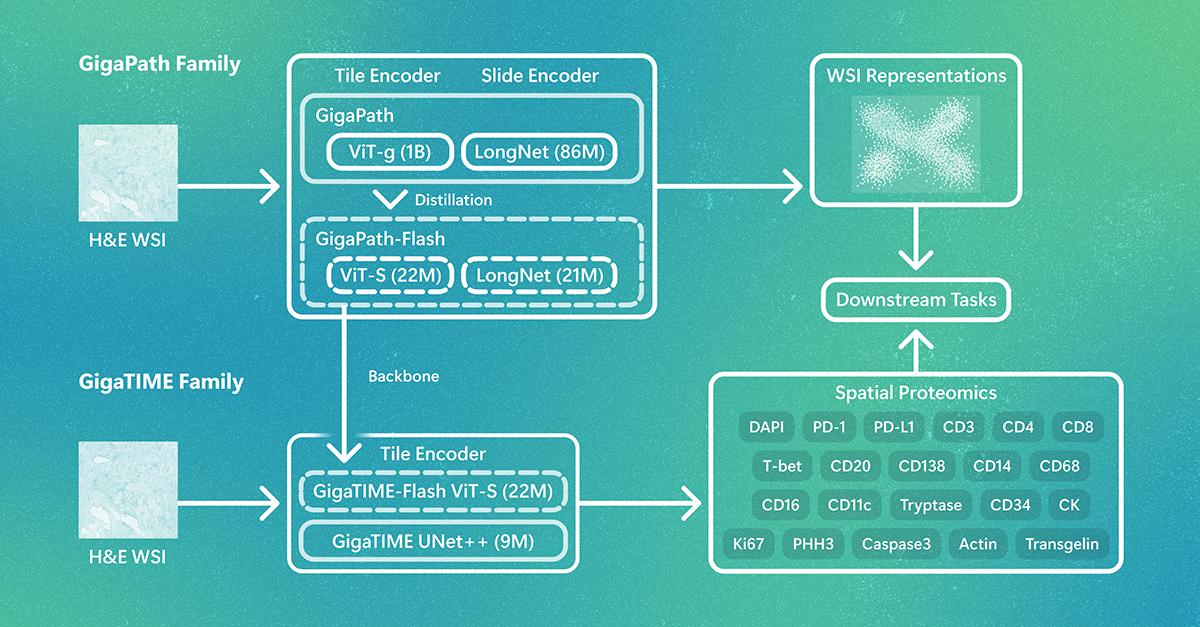
What if pathology foundation models could do more with less? GigaPath-Flash and GigaTIME-Flash cut computational demands while maintaining strong performance, opening the door to larger studies and broader exploration. The post GigaPath-Flash and GigaTIME-Flash: Toward population-scale discovery with efficient pathology foundation models appeared first on Microsoft Research.