In the span of four decades, quantum computation has evolved from an intellectual curiosity to a potentially realizable technology. Today, small-scale demonstrations have become possible for quantum algorithmic primitives on hundreds of physical qubits. Nevertheless, there are significant outstanding challenges in quan...
Masoud Mohseni, Artur Scherer, K. Grace Johnson et al.· 0 citations
Foundation models for ground states in spin-1/2 systems are a promising method for problems ranging from quantum chemistry to identifying new phase diagrams. Nearly all such models are currently pure-states that condition on the Hamiltonian's parameters, whose Monte Carlo samples give energy estimates according to the...
Timothy Heightman, Elena Orlova, Philip Mantrov et al.· 0 citations
Quantum game theory is an extension of classical game theory that uses quantum principles in game theory. The Eisert-Wilkens-Lewenstein (EWL) quantum game is an early example of the two-player classical Prisoner's Dilemma transformed into a quantum Prisoner's Dilemma. In the EWL game, the players choose pure quantum st...
These results establish a Grover-based realization of path-integral slow thinking: the interior target preserves exploratory path diversity, and ensemble-level interference converts it into verified performance.
Xian-Sheng Cai, Xiu-Hao Deng, Kun Chen· 0 citations
Reach audiences
Advertise in front of researchers, engineers, and readers.
This work measured how far three hardware-reconstructed Gram matrices depart from an exact statevector reference for one frozen four-qubit ZZ feature map on N = 24 observation windows from an indoor air-quality time series.
The classical Kolmogorov--Arnold representation theorem states that any continuous multivariate function can be exactly decomposed into a finite composition of univariate continuous functions and addition operations.
This foundational result has recently inspired the development of Kolmogorov--Arnold Networks (KANs)...
A layout-based marginalisation fix is implemented, merged into the GitHub codebase as Pull Request \#1041, that makes \texttt{SamplerQNN} postprocessing forward-compatible with current and upcoming hardware.
Soraya V. Panambalom, Edoardo Altamura, Nicholas Chancellor et al.· 0 citations
The Willow processor, the first to operate below the surface-code threshold, allows the first independent evaluation of NVIDIA's Ising pre-decoder on hardware, at code distances below its training receptive field and via a mapping onto the lattice on which it was trained.
Shay J. Manor, Leila S. Erhili, Yassine Jebbouri· 0 citations
This paper studies how spectral geometry emerges in quantum learning models and how it can be diagnosed with physically grounded probes. In graph-regularized quantum networks, training reorganizes the output similarity graph, increases the effective spectral dimension Delta S = +0.23, and reshapes the Laplacian spectru...
This work releases AxQM, 1,019 kernel-checkable proof-synthesis tasks over 479 items drawn from the textbook Quantum Computation and Quantum Information by Nielsen and Chuang, which is the largest proof-synthesis benchmark in physics by a factor of four.
W. Yin, Jacob M. Taylor, D. Englund et al.· 0 citations
Qlippy is presented, a retrieval-augmented GenAI assistant embedded in the development environment that grounds its responses in a curated corpus of quantum-software-engineering knowledge and gives explicit control over the scope and provenance of the assistant's responses and reduces reliance on model scale, which poi...
This paper presents a meta-synthesis that draws together four constituent studies covering adversarial machine learning, AI-powered anomaly detection in cloud environments, automated vulnerability patching by multi-agent large language model (LLM) pipelines, and the broader landscape of securing AI systems across their...
Harsh Verma· International Journal of Sci...· 0 citations
Jennifer Neville did not want to go into computer science—but that’s exactly where she landed. Neville discusses the starts and stops that led to her professional sweet spot and her work identifying “surprising failures” making it hard for AI to handle complexity. The post What AI gets wrong and what failure teaches us appeared first on Microsoft Research.
MIT News · Artificial Intelligence· news.mit.eduOct 2, 2026
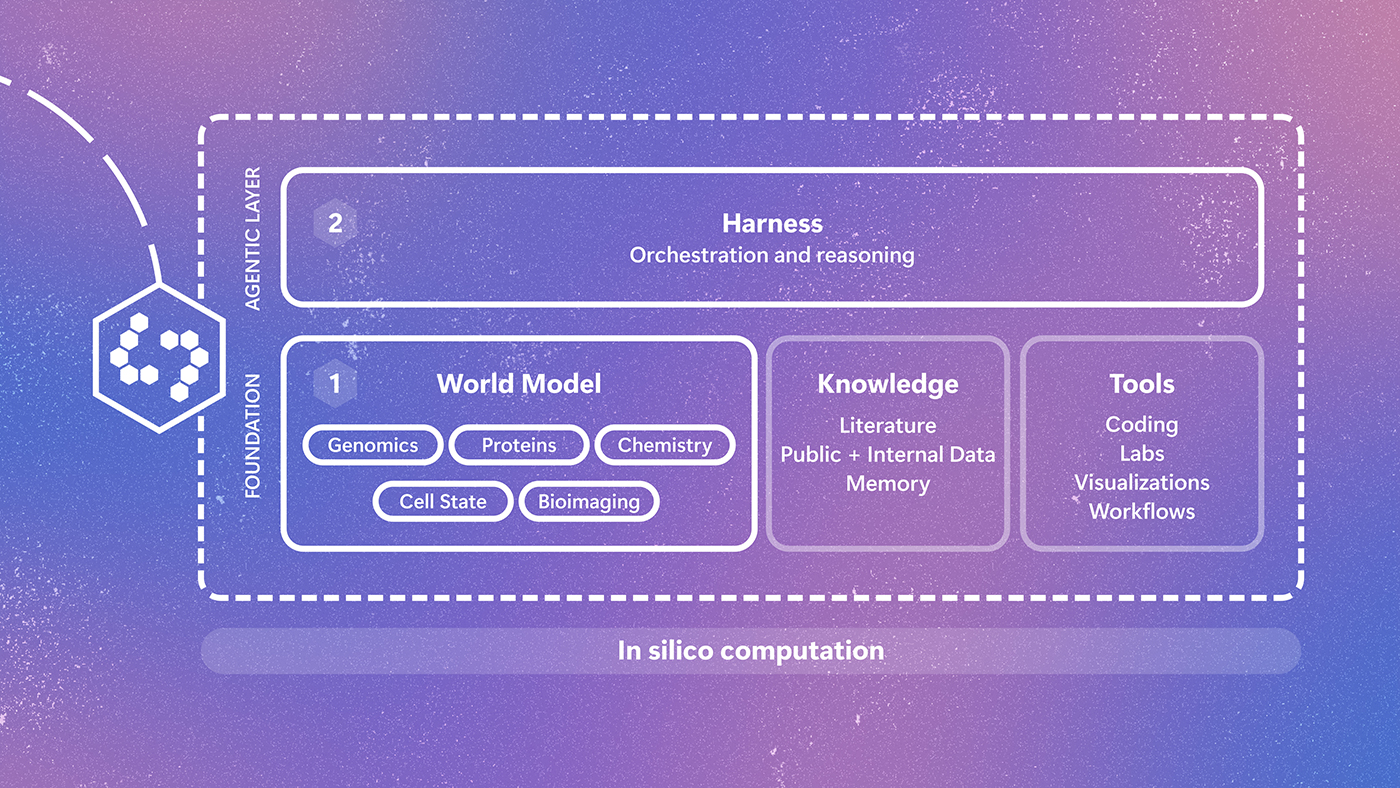
Biology doesn't operate in silos, and neither should the AI representation of it. Quine is an early-stage research effort to create a multimodal world model of biology. By connecting insights across biological scales and modalities, Quine helps scientists computationally search a space far larger than intuition allows and prioritize hypotheses before they reach the lab. Experimental results provide important feedback, helping researchers sharpen future research directions. The post Introducing Q…