Skip to content

Impact of Data Loss in Postprocessing on Training and Inference of Quantum Neural Networks

Sep 2026 · 0 citations · 18 references
Physics Computer Science

TL;DR

A layout-based marginalisation fix is implemented, merged into the GitHub codebase as Pull Request \#1041, that makes \texttt{SamplerQNN} postprocessing forward-compatible with current and upcoming hardware.

Abstract

As quantum hardware scales to larger devices, the classical software layers that interface with it must evolve in step. Postprocessing routines developed and tested primarily in simulator settings can encode assumptions that no longer hold on utility-scale devices, leading to data loss that can be difficult to detect from high-level model outputs alone. We present a case study of \texttt{SamplerQNN}, the sampling-based quantum neural network class in the Qiskit Machine Learning library. Here, the postprocessing method applies a filter that assumes measurement bit-strings are in virtual qubit space. On our quantum hardware runs, where bit-strings span over 100 physical qubits, this filter led to the loss of 85 to 99.6\% of valid measurement shots, depending on the transpiler's qubit placement. The resulting probability vector is unnormalised, allowing distorted prediction and loss values to propagate through the model without an API-level warning. We demonstrate the impact across five experiments on two IBM backends: for inference, accuracy drops from 0.94 to 0.39 on the same raw measurements; for training, the loss signal is compressed by 22 to 27$\times$, substantially reducing the sensitivity of the optimiser to the objective landscape. The behaviour arises in all released versions of the library (0.8.4 to 0.9.0). We implemented a layout-based marginalisation fix, merged into the GitHub codebase as Pull Request \#1041, that makes \texttt{SamplerQNN} postprocessing forward-compatible with current and upcoming hardware.
View source

Similar papers

Book Open access Aug 2026

Machine Learning Enhanced Post-selection in Quantum Networks

Quantum networks are being developed to support secure communication and distributed computation, but their performance is limited by noise in both local operations and transmission. Quantum error correction (QEC) is the standard tool for managing noise, and post-selection adds a frontend stage to the QEC pipeline: ins...

Huiping Lin, Zheng-Feng Ji · 0 citations
Preprint Sep 2026

Experimental evidence of generalization in quantum machine learning in small-data regime

This work develops a hardware-compatible QCNN with mid-circuit measurement and classical feed-forward, and shows on a binary handwritten-digit task that strong test performance is achievable from as few as 10 training samples, with the generalization error decreasing as the training set grows.

Leena Anthony, Artemiy Burov, N. Piro et al. · 0 citations
Preprint Sep 2026

Quantum Machine Learning for Cybersecurity Applications: Simulation and Hardware Validation

Under tight feature and compute budgets, classical threat detection pipelines often degrade on near-decision-boundary events. Small quantum processors are now available, but existing work inadequately shows whether quantum components improve end-to-end threat detection under the above resource constrained conditions. T...

Zi-Rui Zhu, Zi-Sheng Chen, Xiang-Yang Li · 0 citations
#machine learning Preprint Sep 2026

On Evaluating Quantum Kernel Robustness for Low-Resource Cross-Corpus Audio Deepfake Detection

Synthetic speech detection is critical for audio security, but performance can degrade when labeled data are scarce and evaluation conditions differ from training. This study examines quantum kernel methods and lightweight neural models for cross-corpus audio deepfake detection under limited training data. We compare a...

Lisan Al Amin, Lei Zhang, V. Janeja · 0 citations
Preprint Sep 2026

Discretization-Aware Fine-Tuning for Quantum Machine Learning with Chemical Foundation Models

This work introduces discretization-aware fine-tuning (DAFT), a method that adapts a pre-trained chemical foundation model to produce representations that remain informative after quantization, and evaluates both quantum and classical models under a controlled setting in which they receive identical discretized bit-str...

Shunji Matsuura, S. Johri · 0 citations

Related blog posts

MIT News · Artificial Intelligence Oct 28, 2026

Making machines that can listen

Professor Paris Smaragdis develops computers with superhuman hearing for applications like speech recognition, music understanding, and environmental monitoring.

Microsoft Research Blog Oct 12, 2026

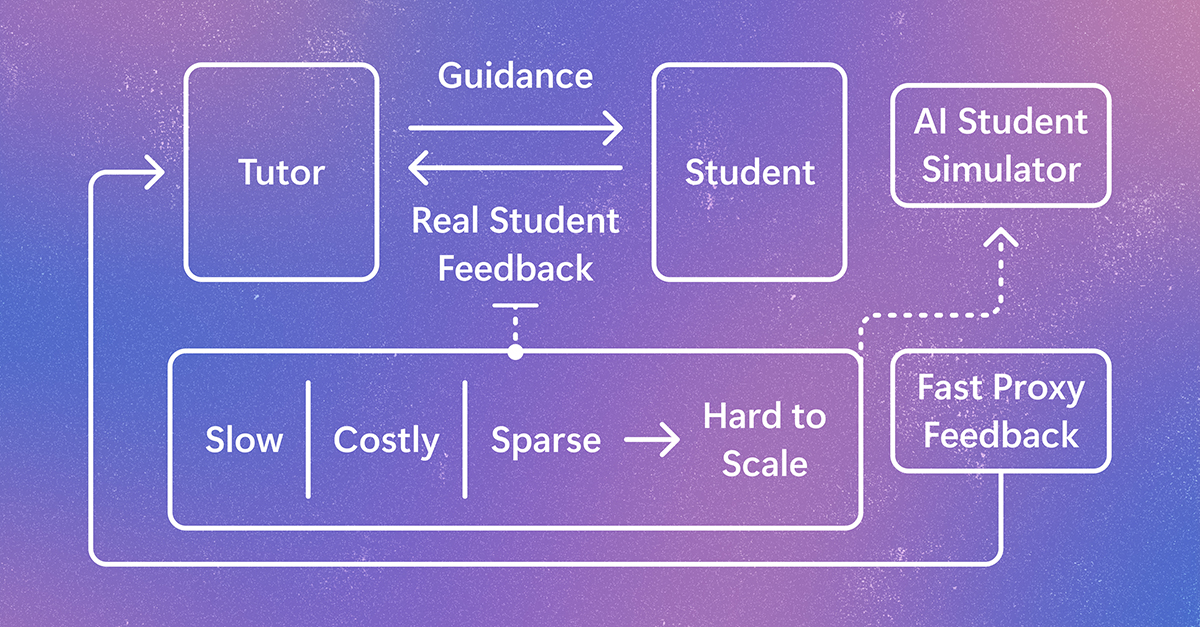
Simulating student learning for better AI tutoring

StudentSim is a research system for evaluating and improving AI tutoring tools before they are tested with learners. It models how individuals may engage with tutors, giving feedback to improve tutor performance across subjects like chess, writing, and mathematics. The post Simulating student learning for better AI tutoring appeared first on Microsoft Research.

We use cookies to run the site and, with your consent, for analytics and to show ads. See our Cookie Policy.