It is shown that how the 8 input features are chosen matters: Random Forest importance-guided selection reaches F1 = 0.523, while encoding maximally uncorrelated features drops it to 0.496, demonstrating that the circuit amplifies informative structure rather than creating it from scratch.
Menachem Finkelstein, Diana Levy, Z. Yakhini et al.· 0 citations
It is argued that confidence should combine formal checking, human reconstruction, independent mathematical use, and a public record supporting correction of both proofs and reviews, to combine formal checking, human reconstruction, and a public record supporting correction of both proofs and reviews.
A low-overhead fidelity-aware scheduling framework for multi-QPU systems based on a Graph Neural Network that estimates, before compilation, the expected fidelity of each circuit on each available QPU, and a tunable scheduler uses these estimates to control the trade-off between execution fidelity and parallelism.
Innocenzo Fulginiti, Antonio Tudisco, Salvatore Zammuto et al.· 0 citations
We introduce a probability-wave framework for modeling the collective behavior of interacting adaptive agents, deriving testable eigenmodes through a generalized behavioral intelligence (GBI) nonlocal probability-wave equation. This framework captures a broad range of human intelligence behaviors with analytical mechan...
Hao-Chen Li, Xin-Shuai Guo, Jing Ouyang et al.· 0 citations
Reach audiences
Advertise in front of researchers, engineers, and readers.
The attention mechanism forms the foundation of many modern AI models such as the Transformer. In one subclass of problems where attention is used, inputs and outputs are bound to the probability simplex so that all outputs sum to one. In this setting, softmax attention admits an exact, component-by-component quantum r...
Generative models for quantum data pose significant challenges but hold immense potential in fields such as chemoinformatics and quantum physics. Quantum denoising diffusion probabilistic models (QuDDPMs) enable efficient learning of quantum data distributions by progressively scrambling and denoising quantum states. H...
Quoc Hoan Tran, Koki Chinzei, Yasuhiro Endo et al.· 0 citations
Energy-efficient AI should be evaluated across the full application pipeline, not only by lowest error or shortest training time. We study this through nonlinear time-series forecasting using simulated quantum reservoir computing (QRC) as an emerging-computing case study. Our evaluation spans 33 forecasting configurati...
Avyay Kodali, Priyanshi Singh, Pranay Pandey et al.· 0 citations
While parameterized quantum computations have shown success in standard reinforcement learning (RL), whether these advantages adapt to hierarchical RL (HRL) remains a critical open question. This work demonstrates that variational quantum circuits (VQCs) can effectively enhance HRL agents based on the option-critic arc...
Yu-Ting Lee, Samuel Yen-Chi Chen, Fu-Chieh Chang· 0 citations
A local-valley (LV)-centered approach to assessing the quality of sampling from Restricted Boltzmann Machines (RBMs) was applied to the latest generation of the D-Wave quantum annealer, revealing some potential for improvement, e.g., using a combined classical–quantum approach.
Abdelmoula El Yazizi, S. U. Khan, Y. Koshka· Entropy· 1 citation
An end-to-end expected learning guarantee is proved where the approximation term is determined by the omitted Fourier mass, while a normalized unbiased estimator yields an explicit statistical bound for empirical truncations.
Taha Hoseinpour Asli, Sajjad Hashemian, Ebrahim Ardeshir-Larijani· 0 citations
We study state tomography when each measurement acts on at most $k$ fresh copies and no quantum memory is retained between blocks. We prove a lower bound matching the upper bound in [arXiv:2510.07788]. Thus the copy complexity of estimating an arbitrary $d$-dimensional state to trace distance $\epsilon$ is, up to absol...
U. Keskin, Jason Luo, Mahbod Majid et al.· 3 citations· ⚡2
Quantum Machine Learning (QML) has shown rapid advances by utilizing quantum computing for machine learning tasks. Meanwhile, the privacy risks accompanying QML is also starting to be studied, which inherit privacy leakage channels from"classical"ML and also quantum-unique risks. Existing work on privacy-preserving QML...
Li-Ou Tang, James B. D. Joshi, Ashish Kundu· 0 citations
Jennifer Neville did not want to go into computer science—but that’s exactly where she landed. Neville discusses the starts and stops that led to her professional sweet spot and her work identifying “surprising failures” making it hard for AI to handle complexity. The post What AI gets wrong and what failure teaches us appeared first on Microsoft Research.
MIT News · Artificial Intelligence· news.mit.eduOct 2, 2026
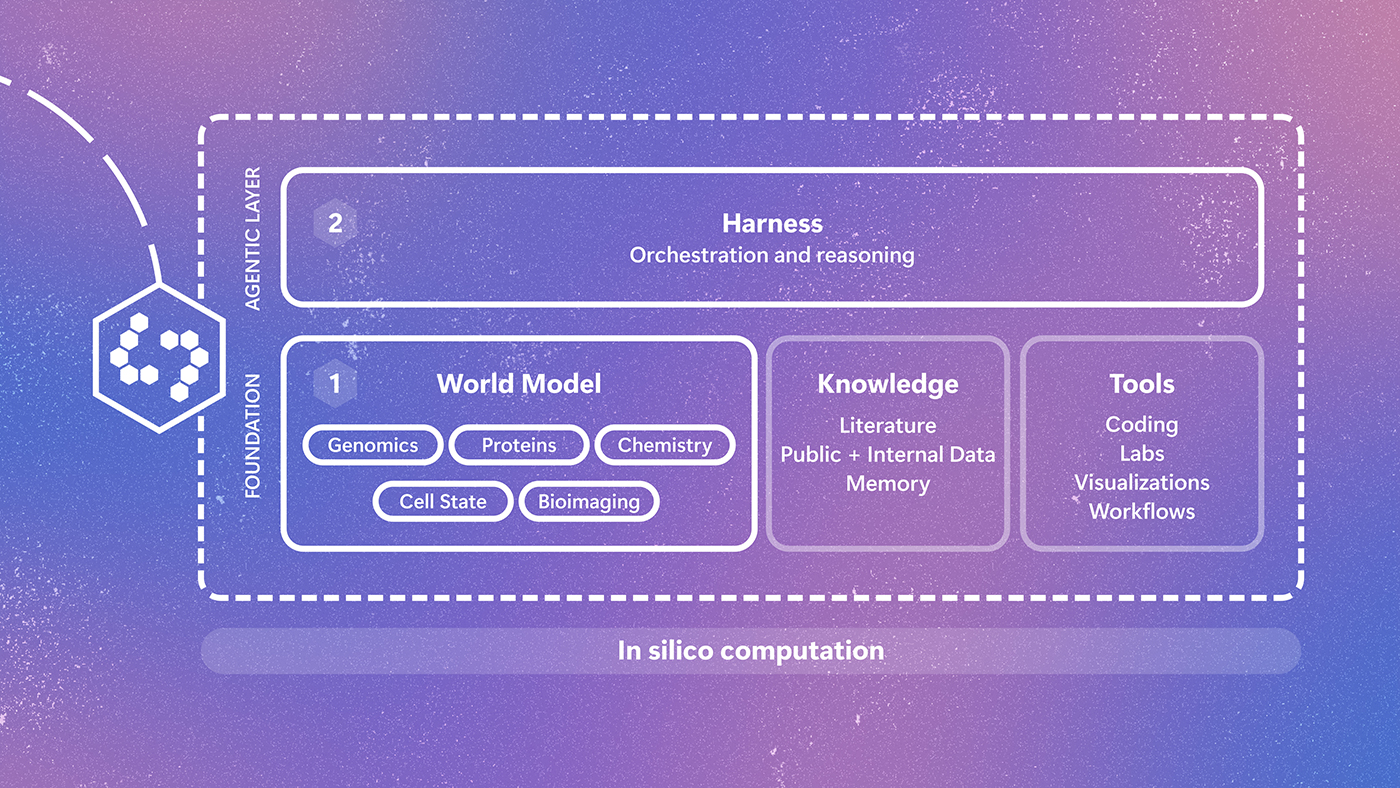
Biology doesn't operate in silos, and neither should the AI representation of it. Quine is an early-stage research effort to create a multimodal world model of biology. By connecting insights across biological scales and modalities, Quine helps scientists computationally search a space far larger than intuition allows and prioritize hypotheses before they reach the lab. Experimental results provide important feedback, helping researchers sharpen future research directions. The post Introducing Q…