Skip to content

Noise-Robust Quantum State Characterization for Remote State Preparation with Deep Learning

Sep 2026 · 0 citations · 98 references
Physics Computer Science

TL;DR

A Transformer-based Quantum State Characterizer model is proposed for noisy RSP experiments that enables accurate tomographic characterization under dynamic noise and provides physically grounded post-hoc insights, holding promise for intelligent quantum information processing applications.

Abstract

Quantum communication underpins secure information processing and scalable quantum networks. In particular, remote state preparation (RSP) enables efficient quantum state transfer, but accurately estimating target states under complex noise remains challenging. Here, we propose a Transformer-based Quantum State Characterizer (TQSC) model for noisy RSP experiments. Our model reconstructs experimentally prepared pure and mixed photonic polarization states from noisy measurements in complex scattering environments, while its attention patterns provide physically grounded insights into correlations among the measured observables. The method achieves a mean estimator-target fidelity exceeding 99.999% under complex scattering and dynamic Gaussian noise, while its robustness and generalization are further examined using Qiskit-simulated Bloch-ball states. Furthermore, in a practical MNIST image transmission task with held-out states, the decoded bit error rate is reduced from 50.34% to zero after TQSC post-processing. The TQSC model enables accurate tomographic characterization under dynamic noise and provides physically grounded post-hoc insights, holding promise for intelligent quantum information processing applications.

View source

Similar papers

Preprint Oct 2026

Decoy-state optical quantum information processing with coherent states

Photonic qubits play an important role in quantum information processing. However, to date, efficient high-speed single photon sources and photon number resolving (PNR) detectors are still difficult to make. Here, we use phase-randomized coherent states and threshold detectors, combined with decoy-state post-processing...

Wen-Yuan Wang, H. Chau · 0 citations
Aug 2026

Purity estimation of experimental Werner states via machine learning

This work presents a machine-learning-based protocol to quantify the purity of an arbitrary two-qubit Werner state without requiring knowledge of its underlying ideal form using only nine measurement bases.

Wei Zhou, Meng-Hui Mao, Xin-Hui Li et al. · 0 citations
Preprint Sep 2026

Efficient quantum state preparation on Quantinuum hardware

Preparation and verification of specific quantum states is an important capability for quantum devices to realise advantages over classical computations and algorithms. In this work, we have demonstrated an end-to-end framework that combines resource-efficient quantum state preparation with rapid, robust fidelity verif...

Archie Butterworth, Josh Green, Yu-Sen Wu et al. · 0 citations
Preprint Oct 2026

Neural Correlation Learning for Quantum-Enhanced Sensing with Time-Independently Driven Rydberg Atom Arrays

Quantum-enhanced sensing typically relies on preparing specific entangled states. However, engineering these states in scalable many-body systems remains challenging due to the difficulty of designing robust preparation protocols and accounting for realistic noise. We show that evolving a simple product state under nat...

Tao Zhang, Xiao-Tian Nie, Ling-Hui Chen · 0 citations
Preprint Sep 2026

Efficient quantum state tomography with two complementary projective measurements

A novel QST protocol that utilizes Kirkwood-Dirac (KD) quasiprobability to reconstruct quantum states, which enables state reconstruction with only two complementary rank-one projective measurements, thus significantly reducing the measurement cost.

Xiang Li, Yong Wang, Li-Jun Liu et al. · 0 citations
Open access Sep 2026

Gap-closing experimental estimation of quantum Fisher information

Estimating the quantum Fisher information (QFI) is a central task in quantum science and technology, underpinning the benchmarking of measurement devices and the certification of metrological advantages. Owing to the highly nonlinear dependence of the QFI on the quantum state, achieving efficient estimates that reliabl...

Qian-Xi Zhang, Qi-Ming Ding, Hu Chen et al. · 0 citations

Related blog posts

MIT News · Artificial Intelligence Aug 27, 2026

Looking beyond natural sequences

A new machine-learning framework aims to improve the success rate of computational protein design while moving away from results that reproduce sequences found in nature.

Microsoft Research Blog Aug 20, 2026

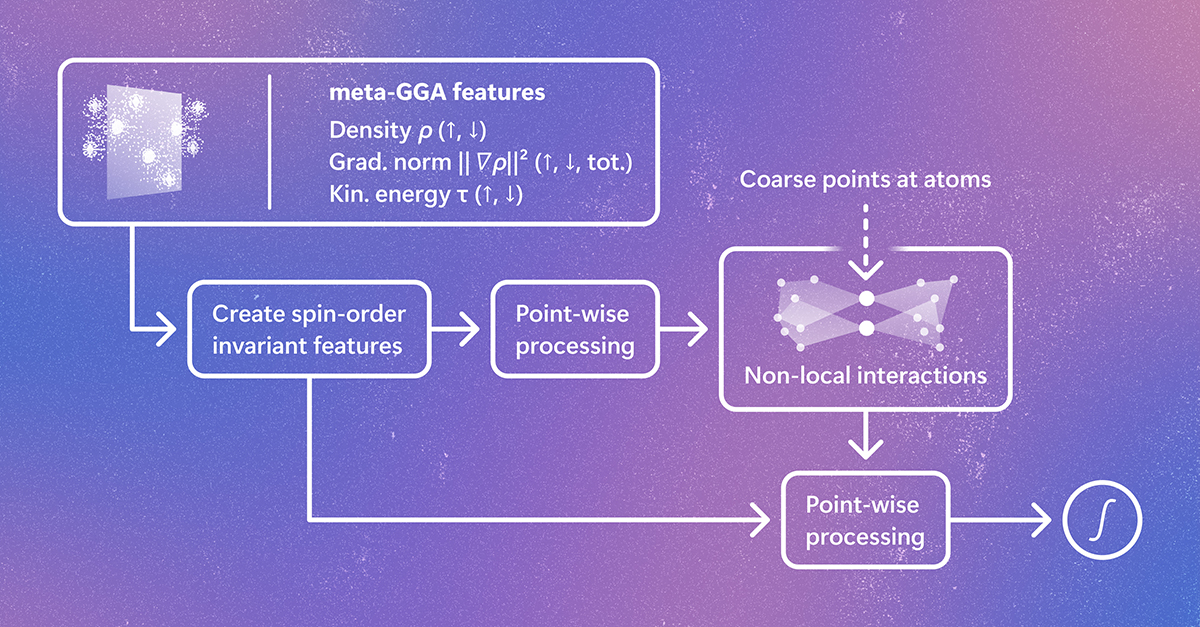
Broadening access to Skala creates a faster path to predictive DFT 

Skala 1.1, the updated deep-learning exchange-correlation functional from Microsoft Research, provides greater accuracy, expanded accessibility across the computational chemistry ecosystem, and a living benchmark to track computational performance. The post Broadening access to Skala creates a faster path to predictive DFT  appeared first on Microsoft Research.

We use cookies to run the site and, with your consent, for analytics and to show ads. See our Cookie Policy.