A fundamental question in physics is: When does classical behavior emerge from quantum systems? Bosonic Gaussian states provide a natural setting to explore this quantum-classical boundary, as they capture both the classical field behavior and the intrinsic quantum nature of light. Here, we address this problem from a...
Senrui Chen, A. A. Mele, Francesco Anna Mele et al.· 0 citations
We construct the first type of non-Euclidean non-autoregressive neural quantum state (NQS) in the form of the hyperbolic Restricted Boltzmann Machine (HRBM), which is studied in the variational Monte-Carlo (VMC) setting of the Quantum Sherrington-Kirkpatrick (QSK) model whose ground state exhibits volume-law entangleme...
BOPS is presented, a generative model based on Schrodinger bridges, using a custom denoiser architecture, that learns a transformation from a source circuit into an equivalent optimized circuit, opening up the quantum compilation stack to learned optimization along multiple axes.
L. Hofstetter, Lia Yeh, Prakash Murali· 0 citations
Results demonstrate that a trainable quantum receiver can recover task-relevant semantic information from noise-distorted quantum states and maintain high classification performance, highlighting a distinction between physical-state recovery and semantic-feature recovery.
Melek Krichen, Nikhitha Nunavath, R. Bassoli et al.· 0 citations
Reach audiences
Advertise in front of researchers, engineers, and readers.
We present Hybrid Quantum Root Cause Analysis (HQ-RCA), an industrially grounded workflow for root cause analysis in banking IT operations, built on a hybrid Quantum Graph Neural Network (QGNN): the classical backbone of DynEdge (the IceCube neutrino-reconstruction GNN, which we call standalone DynEdge), with its class...
Antonio Greco, Riccardo Paoletti, Roberto Cappuccio et al.· 0 citations
Together, these contributions show how learned representations, statistical control, and hardware constraints shape the exchange between quantum computing and machine learning.
Language models can be adapted by changing the computations applied to individual tokens. Quantum circuits offer one such approach, but evaluating wider circuits inside a large model can be computationally demanding. Here we introduce HyperQ, which adds token-conditioned quantum residual branches to a frozen masked-dif...
Xiaoqiang Wang, Mengyang Xiong, Jun Dai et al.· 0 citations
This paper presents an online detector of charge jumps for superconducting qubits, based on a dilated causal convolutional neural network (DCCNN) designed for in-the-loop deployment on the Quantum Instrumentation Control Kit (QICK) platform, enabling adaptive protocols that respond to radiation-induced events in situ.
Daniel Gaytan-Villarreal, P. Meiring, D. Baxter et al.· arXiv.org· 1 citation
Graph Neural Networks (QGNNs) offer a promising approach to combining quantum computing with graph-structured data processing. While classical Graph Neural Networks (GNNs) are scalable and robust, existing QGNNs often lack flexibility due to graph-specific quantum circuit designs, limiting their applicability to divers...
Arthur M. Faria, Ignacio F. Gra\~na, Savvas Varsamopoulos· 0 citations
We propose a quantum implicit neural representation (QINR)-based autoencoder (AE) and variational autoencoder (VAE) for image reconstruction and generation tasks. Our purpose is to demonstrate that the QINR in VAEs and AEs can transform information from the latent space into highly rich, periodic, and high-frequency fe...
It is indicated that for small structured datasets, classifiers based on quantum computing have not yet surpassed well-tuned classical counterparts, though not on malignant-class recall, where the VQC in particular performed worse than the classical baselines.
Multi-shift SR (MS-SR), which averages independent ridge solves at data-adaptive shifts to form a richer, lower-variance spectral filter, is shown, which lowers validation risk and update variance relative to the fixed-shift SR baseline.
Jennifer Neville did not want to go into computer science—but that’s exactly where she landed. Neville discusses the starts and stops that led to her professional sweet spot and her work identifying “surprising failures” making it hard for AI to handle complexity. The post What AI gets wrong and what failure teaches us appeared first on Microsoft Research.
MIT News · Artificial Intelligence· news.mit.eduOct 2, 2026
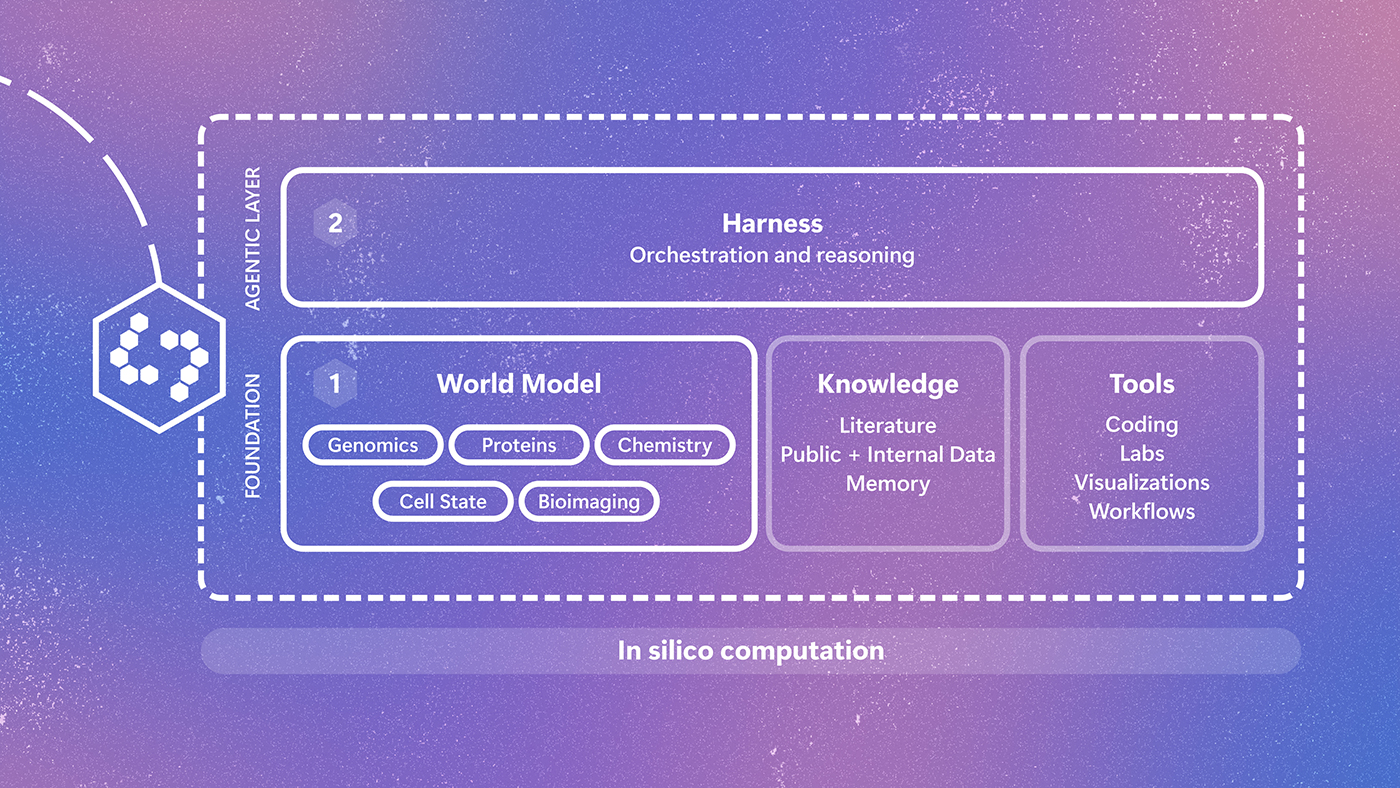
Biology doesn't operate in silos, and neither should the AI representation of it. Quine is an early-stage research effort to create a multimodal world model of biology. By connecting insights across biological scales and modalities, Quine helps scientists computationally search a space far larger than intuition allows and prioritize hypotheses before they reach the lab. Experimental results provide important feedback, helping researchers sharpen future research directions. The post Introducing Q…