For reliable large-scale quantum computation, quantum error correction (QEC) is essential to protect logical information distributed across multiple physical qubits. Taking advantage of recent advances in deep learning, neural network-based decoders have emerged as a promising approach to improve the reliability of QEC...
Seong-Joon Park, Hee-Youl Kwak, Yongjune Kim· 0 citations
Learning with data in the form of quantum states is of current interest and has led to a variety of problems that boil down to interaction with the available data via quantum measurement and classical post-processing of observed classical outcomes. In quantum measurement PAC learning, one is given a sequence of unknown...
Variational autoencoders are powerful representation learning models that map complex data into low-dimensional latent spaces, enabling the discovery of interpretable and disentangled factors. Such representations can facilitate the interpretation and controllable generation of data describing complex scientific system...
Gaoyuan Wang, Jerry Tan, Mark Gerstein· 0 citations
We study stabilizer state testing and learning with limited coherent quantum memory. Here an algorithm sequentially receives copies of an unknown $n$-qubit state, but may keep only $k$ qubits of coherent quantum memory between measurements. With unrestricted memory, seminal work of Gross, Nezami and Walter showed how t...
Srinivasan Arunachalam, Louis Schatzki· 0 citations
Reach audiences
Advertise in front of researchers, engineers, and readers.
Long-horizon prediction of a chaotic system is governed by fidelity to its invariant measure, and which parts of that measure a learned predictor needs is a physical question not known in advance. We establish a quantum statistical memory advantage for interrogating it. A quantum statistical prior (Q-Prior), trained on...
Maida Wang, Xiao Xue, Minh Chung et al.· 0 citations
We study quantum differential privacy (QDP) by defining a notion of the order of informativeness between two pairs of quantum states. In particular, we show that if the hypothesis testing divergence of the one pair dominates over that of the other pair, then this dominance holds for every $f$-divergence. This approach...
Naqueeb Ahmad Warsi, Ayanava Dasgupta, Masahito Hayashi· 0 citations
We study agnostic tomography of pure bosonic Gaussian states: given copies of an arbitrary $n$-mode bosonic state $\rho$, the goal is to output a pure Gaussian state whose infidelity with $\rho$ is at most $\mathrm{opt} + \epsilon$, where $\mathrm{opt}$ is the minimum infidelity achievable by any pure Gaussian state....
Alvan Arulandu, Sitan Chen, Ziyun Chen et al.· 0 citations
Learning the Hamiltonian of a many-body system from its dynamics is a central task in quantum science, yet the algorithms with the strongest provable guarantees assume some level of quantum control--fast, arbitrary single-qubit gates interleaved with time evolution, and measurements in arbitrary bases--that is beyond t...
W. Gong, Mu-Zhou Ma, Si-Tan Chen et al.· 0 citations
Near-term quantum natural language processing (QNLP) experiments often run on classical simulators, so simulator cost is part of the field's practical compute burden, yet accuracy tables do not show it. We measure that cost for a variational quantum classifier (VQC) on binary SST-2 sentiment classification, using Penny...
Gaussian-process limits are powerful in describing overparameterized machine learning models, yet their validity in structured tensor-network architectures remains unclear. Here we analytically present a moment-based approach that identifies precise conditions for the emergence and breakdown of Gaussian universality in...
Preparing quantum states from classical data can cost more than the computation they serve; most loaders tailor a circuit to each input. Here we show that the signals of a real dataset share structure that can be learned once and reused. Our quantum-native loader learns a low-dimensional description of a dataset and pr...
Pablo Herrero G\'omez, Antonio Jimeno Morenilla, David Mu\~noz-Hern\'andez et al.· 0 citations
Physics simulators can support the discovery of quantum experiments by predicting the states generated by experimental configurations. When these simulators are computationally expensive, repeated simulator calls can limit the search for experiments that generate a desired quantum state. Here, we develop a physics-insp...
Jennifer Neville did not want to go into computer science—but that’s exactly where she landed. Neville discusses the starts and stops that led to her professional sweet spot and her work identifying “surprising failures” making it hard for AI to handle complexity. The post What AI gets wrong and what failure teaches us appeared first on Microsoft Research.
MIT News · Artificial Intelligence· news.mit.eduOct 2, 2026
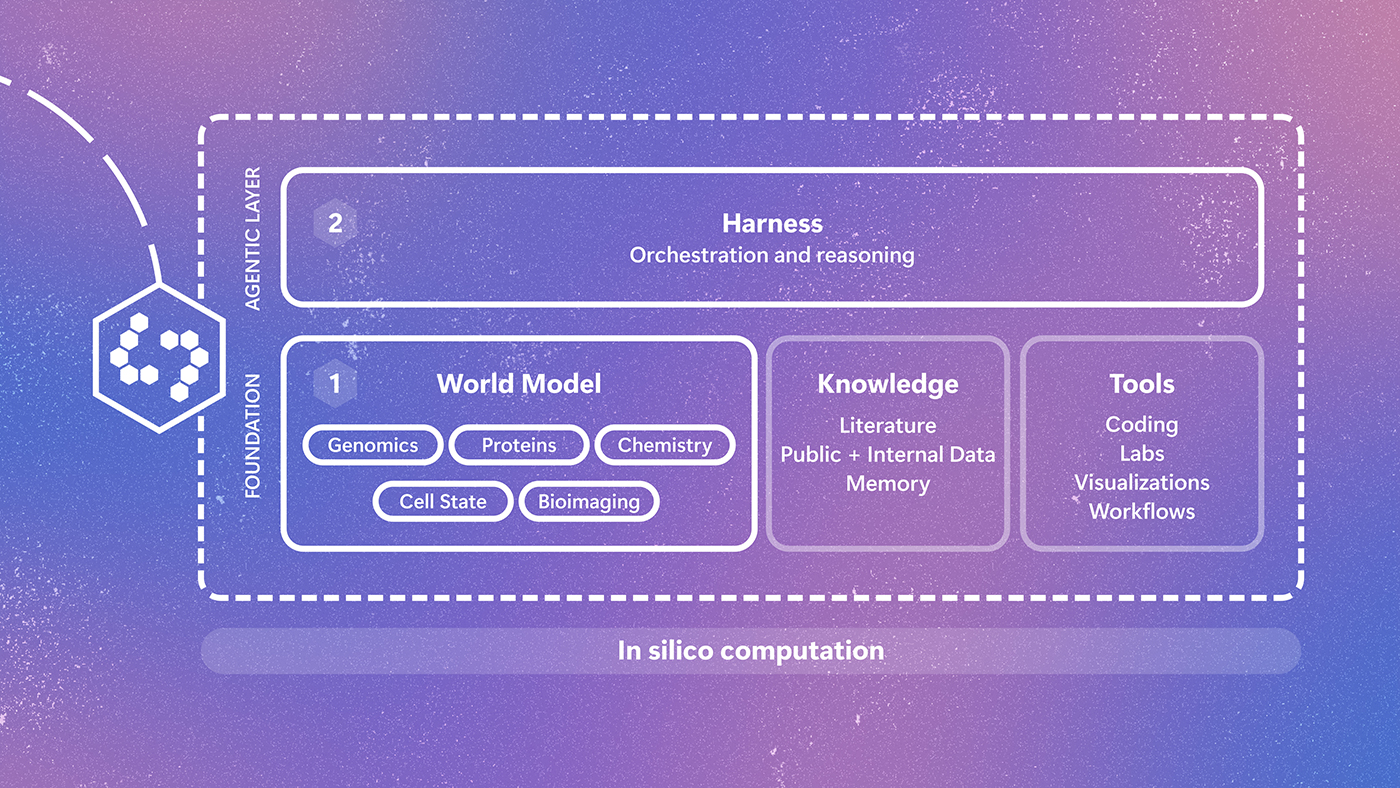
Biology doesn't operate in silos, and neither should the AI representation of it. Quine is an early-stage research effort to create a multimodal world model of biology. By connecting insights across biological scales and modalities, Quine helps scientists computationally search a space far larger than intuition allows and prioritize hypotheses before they reach the lab. Experimental results provide important feedback, helping researchers sharpen future research directions. The post Introducing Q…