Q-PhotoMarket: A Design Space Exploration Framework for Photonic Hybrid Quantum Neural Networks in Financial Market Prediction
Alberto MarchisioHanzalah Mohamed SirajMuhammad KashifNouhaila InnanMuhammad Shafique
Oct 2026
Machine LearningQuantum Computing
Abstract
Photonic quantum computing has recently emerged as a promising platform for hybrid quantum machine learning due to its native realization of linear-optical circuits and the computational complexity of boson sampling. However, despite growing interest in quantum methods for finance, the influence of photonic circuit design choices on predictive performance remains largely unexplored. Existing studies typically evaluate a single architecture, leaving the broader photonic design space unexamined. In this work, we present Q-PhotoMarket, a systematic design space exploration (DSE) framework for photonic hybrid quantum neural networks (HQNNs) applied to financial market prediction. We explore over 5,000 valid photonic configurations spanning input photon states, circuit architectures, entangling models, and measurement strategies across their compatible computation spaces, for U.S., Indian, and cryptocurrency markets. To improve search efficiency, the exhaustive exploration is complemented with Bayesian optimization. We further incorporate threshold calibration and prediction-collapse diagnostics to enable reliable evaluation under increasingly imbalanced return thresholds. Experimental results show that systematic exploration of more than 5,000 photonic HQNN configurations reveals consistent architectural patterns across financial markets, identifies robust high-performing designs, and demonstrates competitive performance relative to classical machine learning baselines.

This publication proposes a definition and a classification of agile software development approaches and analyses ten software development methods that can be characterized as being "agile" against the defined criterion.
P. Abrahamsson, O. Salo, Jussi Ronkainen et al.· arXiv.org· 727 citations· ⚡54
The study shows that agile practices improve both informal and formal communication, but indicates that, in larger development situations involving multiple external stakeholders, a mismatch of adequate communication mechanisms can sometimes even hinder the communication.
M. Pikkarainen, Jukka Haikara, O. Salo et al.· Empirical Software Engineeri...· 401 citations· ⚡48
The results indicate that software engineering work practices are chosen opportunistically, adapted and configured to provide value under the constrains imposed by the startup context.
Nicolò Paternoster, Carmine Giardino, M. Unterkalmsteiner et al.· Information and Software Tec...· 394 citations· ⚡54
The possibility of inferring high-dimensional data inference in a model that consists of a prior and an auxiliary differentiable constraint given some additional information is considered, thereby allowing a range of potential applications in adapting models to new domains and tasks.
Alexandros Graikos, Esmeralda S. Whitammer, N. Jojic et al.· Neural Information Processin...· 316 citations· ⚡15
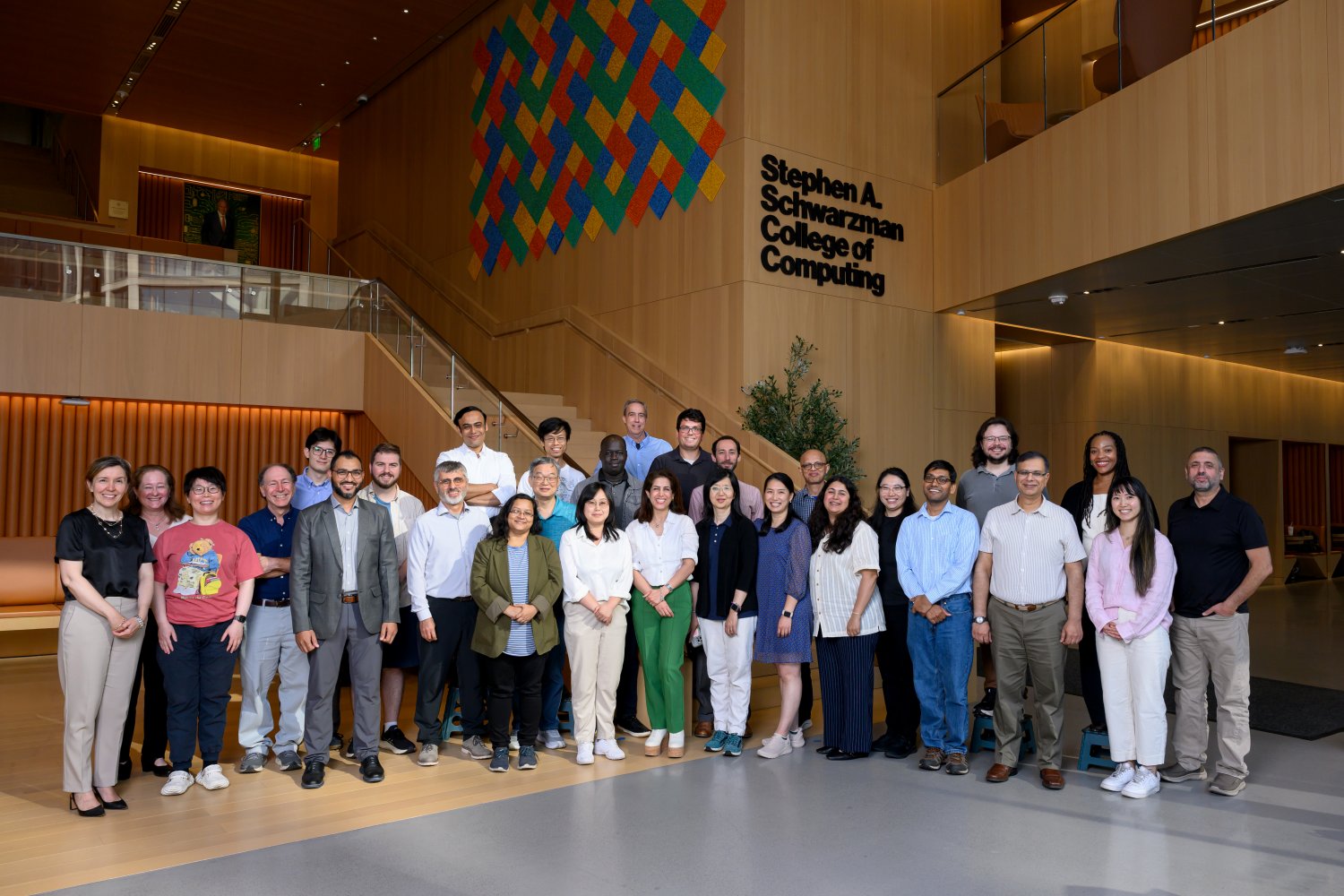
A weeklong summer workshop brought higher education faculty to campus to explore how AI and machine learning materials can be adapted for their classrooms.
MIT News · Artificial Intelligence· news.mit.eduAug 27, 2026
A new machine-learning framework aims to improve the success rate of computational protein design while moving away from results that reproduce sequences found in nature.
Microsoft Research Blog· microsoft.comAug 20, 2026
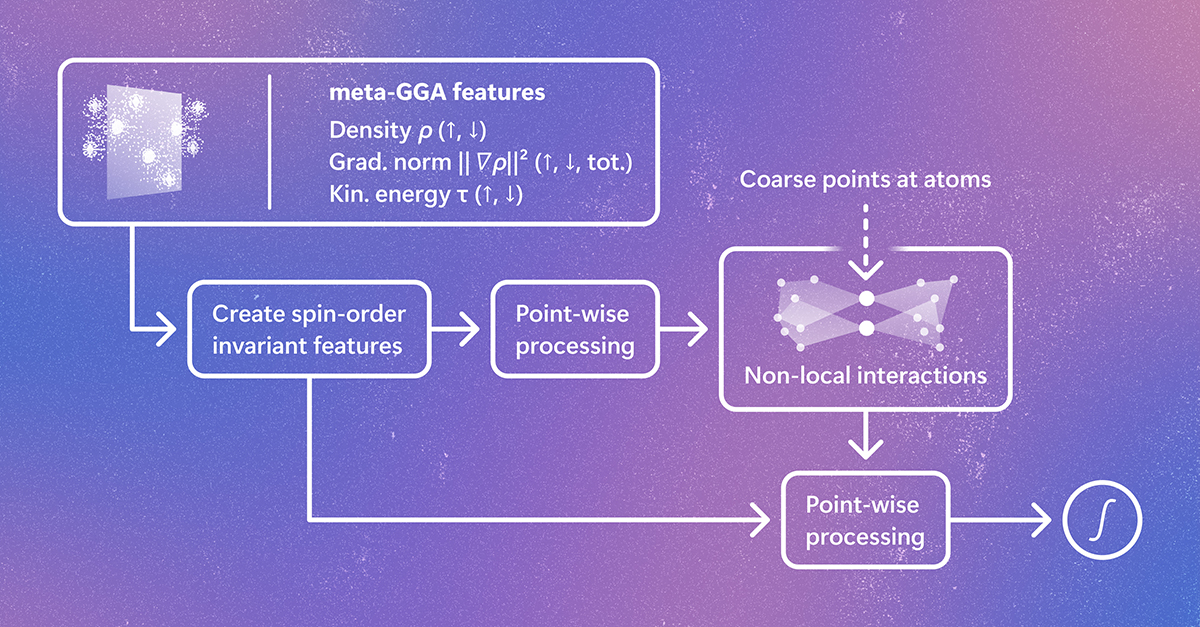
Skala 1.1, the updated deep-learning exchange-correlation functional from Microsoft Research, provides greater accuracy, expanded accessibility across the computational chemistry ecosystem, and a living benchmark to track computational performance. The post Broadening access to Skala creates a faster path to predictive DFT appeared first on Microsoft Research.
We use cookies to run the site and, with your consent, for analytics and to show ads.
See our Cookie Policy.