Quantum kernel methods are leading candidates for a practical quantum advantage in machine learning, but assessing that potential requires two quantities usually reported separately: how well a kernel performs on the task, and how far its geometry departs from the classical kernels available for the same problem. We introduce a fully unsupervised, multi-objective protocol that optimises simultaneously the normalised pseudo discrepancy (NPD), a label-free proxy for anomaly detection quality, and the geometric difference (GD) to a tuned classical reference kernel, selecting models from the resulting Pareto front. We apply it to malware beaconing detection in real network traffic, using a one-class support vector machine with fidelity and projected quantum kernels over four data encodings, on simulators and on IQM's 20-qubit Garnet processor. NPD-guided selection alone finds a fidelity kernel that beats the tuned classical baseline, but with a geometric difference too small to certify the gain as quantum. Projected kernels reach far larger geometric differences; the Pareto-selected one only marginally exceeds the baseline (AUC $0.782$ versus $0.765$, $g_{C\to Q}\approx 89>\sqrt{N}$ relative to that reference kernel), still below the NPD-selected fidelity kernel ($0.840$).

This publication proposes a definition and a classification of agile software development approaches and analyses ten software development methods that can be characterized as being "agile" against the defined criterion.
P. Abrahamsson, O. Salo, Jussi Ronkainen et al.· arXiv.org· 727 citations· ⚡54
The study shows that agile practices improve both informal and formal communication, but indicates that, in larger development situations involving multiple external stakeholders, a mismatch of adequate communication mechanisms can sometimes even hinder the communication.
M. Pikkarainen, Jukka Haikara, O. Salo et al.· Empirical Software Engineeri...· 401 citations· ⚡48
The results indicate that software engineering work practices are chosen opportunistically, adapted and configured to provide value under the constrains imposed by the startup context.
Nicolò Paternoster, Carmine Giardino, M. Unterkalmsteiner et al.· Information and Software Tec...· 394 citations· ⚡54
The possibility of inferring high-dimensional data inference in a model that consists of a prior and an auxiliary differentiable constraint given some additional information is considered, thereby allowing a range of potential applications in adapting models to new domains and tasks.
Alexandros Graikos, Esmeralda S. Whitammer, N. Jojic et al.· Neural Information Processin...· 316 citations· ⚡15
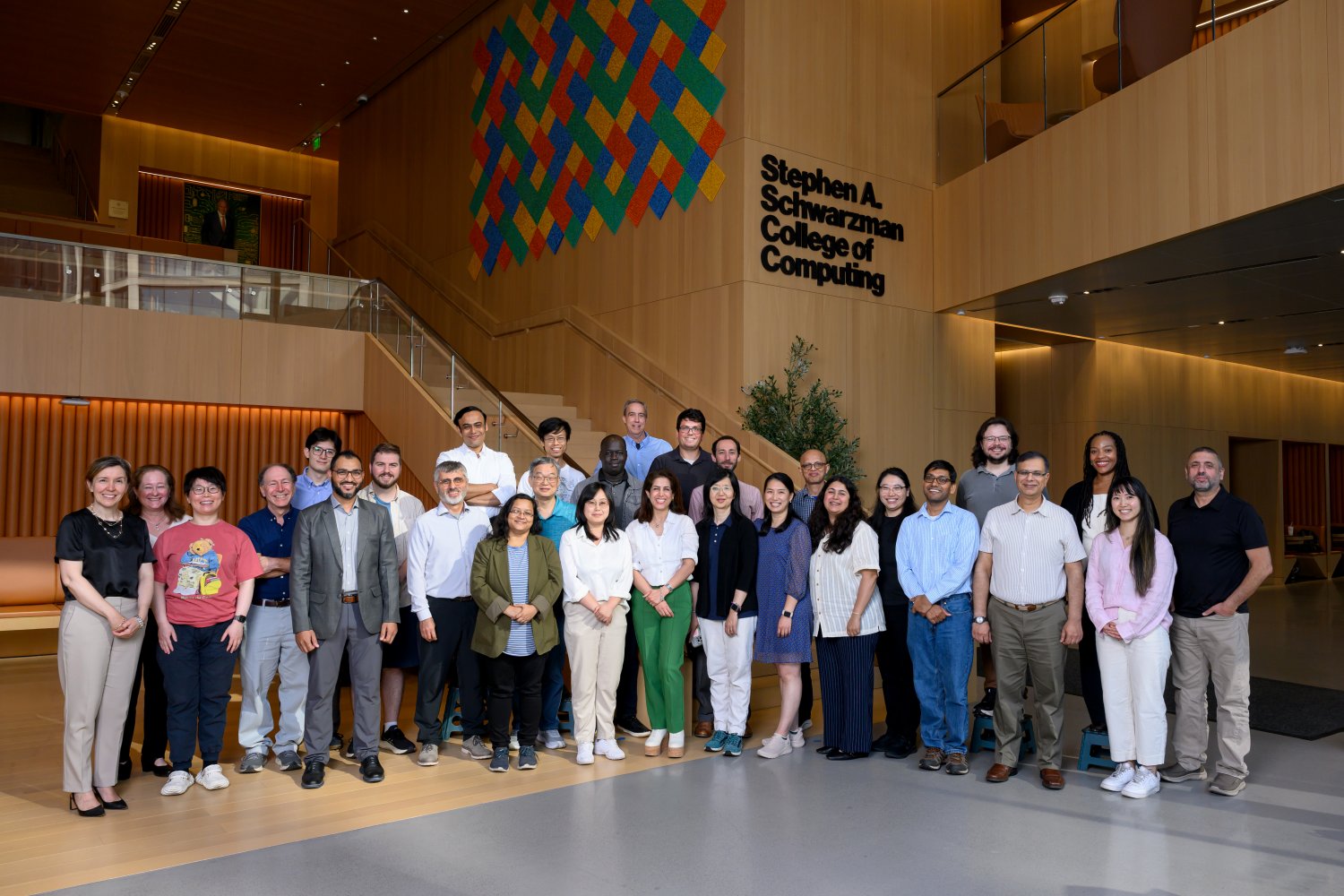
A weeklong summer workshop brought higher education faculty to campus to explore how AI and machine learning materials can be adapted for their classrooms.
MIT News · Artificial Intelligence· news.mit.eduAug 27, 2026
A new machine-learning framework aims to improve the success rate of computational protein design while moving away from results that reproduce sequences found in nature.
Microsoft Research Blog· microsoft.comAug 20, 2026
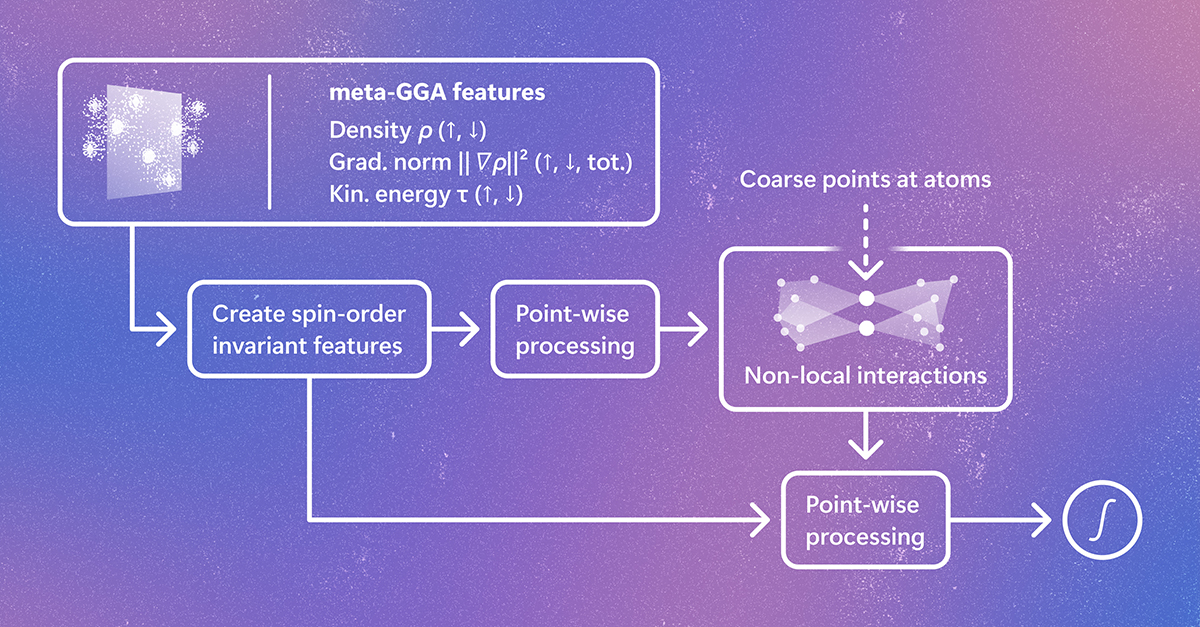
Skala 1.1, the updated deep-learning exchange-correlation functional from Microsoft Research, provides greater accuracy, expanded accessibility across the computational chemistry ecosystem, and a living benchmark to track computational performance. The post Broadening access to Skala creates a faster path to predictive DFT appeared first on Microsoft Research.
We use cookies to run the site and, with your consent, for analytics and to show ads.
See our Cookie Policy.